
The so-called silent era officially spanned from 1895 to 1927, even though those dates are still controversial, from the first films being shown by Lumière brothers, Thomas Edison, etc. until the release of The Jazz Singer (USA, 1927), which is considered the first talkie. Let’s just not focus on other landmarks and use those dates to delimit the silent era.
Many people claim they cannot understand silent films properly. Nevertheless, films made at the end of silent era (after the main American studios like Universal, Fox, Paramount, etc were founded) are easier to understand, as narrative structures were already consolidated. Films like The Big Parade (USA, 1925), Ben Hur (USA, 1925), Wings (USA, 1927), Sunrise (USA, 1927), Metropolis (Germany, 1927) and so on and so forth, can be much more technologically advanced than we can expect. In other words, their stories are told according to standards that can be comparable with modern films.
However, when we see the films produced in first years of silent era, until around 1915, when D.W. Griffith revolutionized film making with the highly controversial The Birth of a Nation (USA, 1915), we realize they are much more difficult to understand. It happens for some reasons, one of them is that it took a while until cinema got to develop its own “language” and “grammar,” so films were really connected to popular forms of culture, such as vaudeville, circus, magic, fair attractions, magic lantern, which were very popular ways people had fun in the end of XIX century, beginning of XX century. Such representations were opposed to more classic forms of art, such as literature and painting, theatre, etc.
Therefore, it really comes as no surprise that in those first years films were not shown in places where they were the only attraction, they shared the same space as other types of mass distraction, such as vaudevilles and burlesque shows. Mass media was advancing, so, for instance, newspapers had been much more common since XIX century already, news were spread more easily, novels were being read by more people and in many countries urbanization was advancing, which represented a small revolution in the typical peasant life. So, films were a result of all those changes brought about by industrialization and technology. In other words, a completely new world opened up for people and they felt deeply insecure at first.
Sensationalism also started being more widespread, especially because it did help sell more newspapers (some things don’t ever change, huh?). but it was not only that. The grotesque sensationalism was not only connected with economic exploitation, but it was also a way of people representing their feeling of vulnerability and insecurity in this new urban environment.
Thus, many references of early films can be seen in elements of popular culture like current jokes, news, songs, famous plays, novels, etc. So, the audience somehow already knew the plot. Some films that represent this trend are Uncle Tom’s Cabin (USA, 1903); Tom, Tom, the Piper’s Son (USA, 1905); The Whole Dam Family and the Dam Dog (USA, 1905), etc.
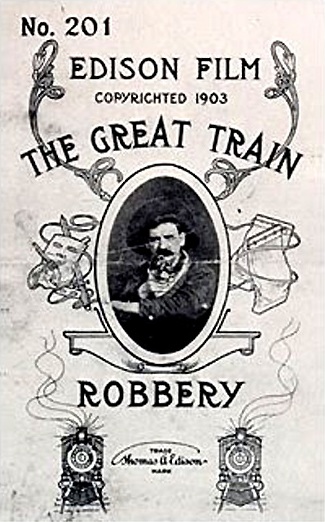
Everyday life was shown in many short films since the first short films were shot by Lumière (for example: Démolition d’un mur (1896), among others) and Edison. An aspect of private life that was particularly highlighted was public spaces, as in films like The Great Train Robbery (1903) and Romance of the Rail (1903). One might say those very early silents are hard to understand by nowadays’ standards, but we must keep in mind that cinema has evolved very fast, particularly in its first 3 decades.
Something that can be easily noticed in those films is that life at that time compared with the one we have nowadays clearly revolved around manual labor, both to men and women.
This can be easily noticed, in slapstick films in general, such as Mabel Normand’s films by Keystone Studios. She was a rather athletic actress, who did most of her own stunts, which was not uncommon in early Hollywood and already in 1910ies we can see a long list of daredevil stars who did so. At that time not even domestic duties were a piece of cake. Many women used entire days to simply wash their clothes, for example. We also may not forget that in countries like the United States, in the first years of cinema, especially until 1915, when feature films established themselves, most of the audience of those short films were laborers and immigrants, the ones who were more involved with that manual labor.
Those events were not only related to rural life and habits, but also to news and urban life. An example of technology being readily shown in films is that trains were commonplace throughout the silent era, from Leaving Jerusalem by Railway (1896) to standard Hollywood productions like The General (1926). After all, cinema itself was a result of fast industrialization that started in the Northern Hemisphere as of middle XIX century, so it is natural that it portrays the wonders of recent inventions.
Let’s take a look at one of Normand’s films and briefly analyze some factors. In the short film A Dash Through the Clouds (1912), Normand in the beginning of the film enters an airplane that is rather fragile for nowaday’s standards.
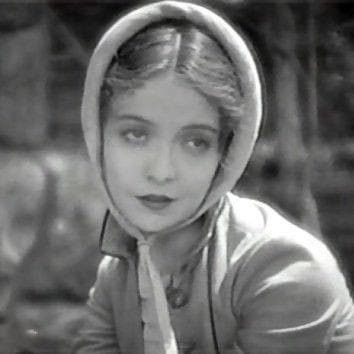
Those films were somehow important for women’s rights, especially because women were commonly depicted as brave and intelligent enough to be out of trouble due to their own ingenuity, rather than being rescued by a protective man. An example of this new type of heroine can be seen in the serial The Hazards of Helen, released between 1914 and 1917. Even though in other films women were still portrayed as fragile little creatures who fainted at every little difficulty, we can consider it good progress towards acknowledging women could be as skilled and strong as men. Evidence of that is the featured image of this article. Despite being usually shown as a Victorian beauty, a little girl, always kind and fragile, Actress Mary Pickford (1892-1979) in real life was a real pioneer and responsible for many aspects of film making and the first female superstar Hollywood ever produced. But that is another story.

 Silent Beauties
Forgive my autistic/OCD pedantry on this but personally I would say the “end” of the silent era would officially be 1929 as that was when Hollywood went sound exclusive; you can count on one hand the number of silent films the US released after that (Europe and Asia persisted for a few more years), whislt sound took a while to be implemented before its eventual take over. 😉
Regarding this post, Europe was so far ahead of the US in terms of exploring and developing the medium of film during this period it isn’t funny; if it wasn’t for French and Italian innovations, people like Griffith would have been further behind the curve than they were if they hadn’t learned from them and took their ideas further.
LikeLike
Yes and even in Brazil the first surviving sound film dates back to 1933 (Ganga Bruta) and in Japan it was made in 1936, if I’m not mistaken (due to the benshi tradition). I also love the fact that the cinema got really popular in Brazil at the same time as the so-called “radio era” and in the USA it was way before it. Another point is the early American talkies and actors so stiffy because it took a while for them to get used to the microphones and, at first, the quality of sound wasn’t so pristine. So, maybe those countries that implemented talkies later than the USA were actually lucky, then. In some early American talkies we can even notice some actors looking up as if they were trying to look for the microphone. Not very natural, actually.
LikeLiked by 1 person
Japn;s first talkie was apparently a short “Reimai” in 1926 (which by pre-dating The Jazz Singer by a year begs the question why this isn’t more well known?) whilst the first sound feature was “Fujiwara Yoshie no furusato” in 1930.
As you said, they weren’t successful and it took them a few years to iron out the kinks before they and the public were satisfied with things.
The problem with early Hollywood talkies was they had fixed mics and their range was limited so the actors couldn’t move about.
One story features The Marx Brothers “The Coconuts” in 1929. Apparently, a scene at the hotel desk was problematic as the paper rustling was picked up by the mic, so they had to wet it to stay silent, but then the cast couldn’t read the text on it on hold it properly! >.<
LikeLike