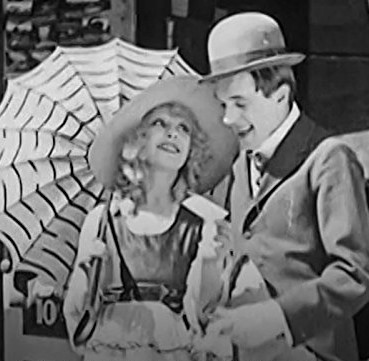
Just Rambling Along (USA,1918)

Although this film is rather simple and not particularly innovative, it has a big historic value. It is a example of one of first films Stan Laurel made for Hal Roach before being paired with Oliver Hardy and reaching international fame. It was in Hal Roach studios where Laurel and Hardy started working together in the 1920s and where many of their films were made. 

This film is also noteworthy because it shows actress Clarine E. Seymour in a comedy. She became famous for her association with dramas by director D.W. Griffith, which also gave her a chance to work with famous actors like Robert Harron and Lillian Gish. Her career seemed to be promising, but we will never know how it would develop because she died at only 21 years old in 1920. Seymour’s most famous film is probably True Heart Susie, by Griffith, which was made in 1919. 

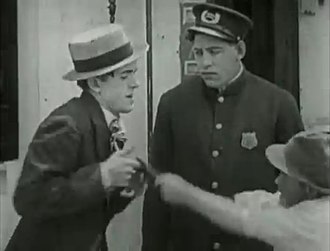
This film shows a amoral character, played by Stan Laurel, who has some resemblance with Chaplin in both body language and for being a kind of society’s outcast. After a fight with a kid about who would take a wallet that was found on the sidewalk, Laurel followed a beautiful woman into a restaurant and started to flirt with her. Actually, many men followed the woman and it seems she had flirted with them on purpose in order to attract clients to the restaurant. 

However, to go to the restaurant Laurel supposed to have money to pay for the food. Apparently, he was previously known to employees of the place and not welcome there. Laurel solved his financial problem by stealing the money from a kid on the street. The woman was not really flattered with Laurel’s advancements and ignored him completely, but he did not give up. In addition to flirt with the woman, Laurel also did all he could to get as much food as possible without paying and his plan worked well at first. 

But when the bill finally arrived, Laurel did not have enough money to pay for it and he ran away from the restaurant. Unfortunately, on his way out, he bumped into a cop who has been called by the kid whose money he had stolen before entering the restaurant. In an attempt to hide from the cop, he returned to the restaurant and the employees took revenge on Laurel by beating him up. 

Roughest Africa (USA, 1923)

Another film by English actor Stan Laurel before his successful regular pairing with Oliver Hardy. Laurel had been in films for around 10 years before he started working with Hardy, mostly in films that did not stand out both in quality or humor. Perhaps, were not for the Laurel & Hardy duo, if those comedians kept on working on their own, they could ran the risk of not having their proper place in the history of cinema.

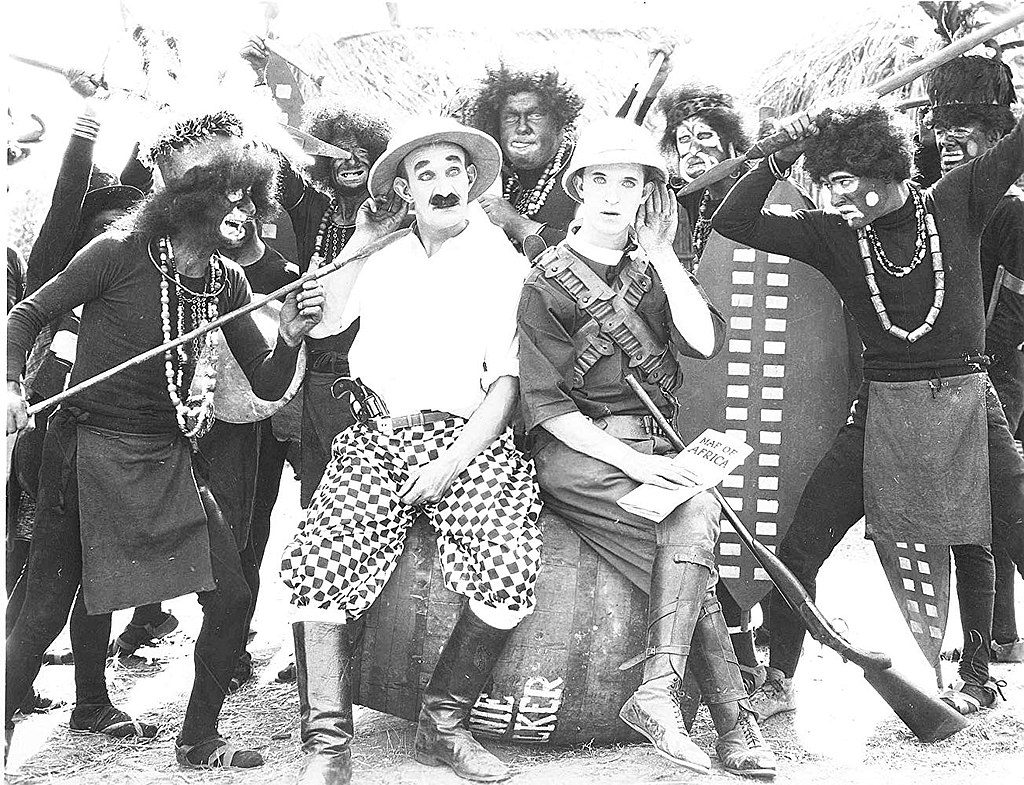
Despite having a kinda original plot for a situational comedy, the material of this film has average quality and does not provide much laughter. It is a politically incorrect film for nowadays’ standards because the characters are supposed to hunt animals, including a scene where Laurel tries to shoot a elephant. Although the animal was not hurt, such scene would be of bad taste for current standards. The scene where the elephant swallows a gun is also far from pleasant.

The film remains interesting, as it spoofs  travelogues that showed “exotic” parts of the world, their native populations, wildlife, landscapes, etc, often with a imperialist tone. Such documentaries were into fashion in the first decades of XX century.

Some pioneers are in Africa, although they really lack the bravery they were supposed to have. The scenery and natives look terribly fake already on first sight. The natives, for instance, were white acctors in black face, with make up that was far from sophisticated even to its own era. 

The pioneers face unfriendly natives and wild animals. Not surprisingly, they really lack any hunting skill whatsoever and it is apparently easier to them to shoot each other than to shoot a animal. 

Still talking about animals, it is not hard for nowadays’ audiences realize that neither bears nor Asian elephants are native species of Africa and even the fauna around the actors sometimes look really like the fauna of Northern America. A mistake that would not really go unnoticed in a current film. 

The interaction between people and animals in the jungle and the attempt of pioneers to film the animals provide the input to the gags of this film. The plot became old with time, but this film retains some historical value of an era when hunting animals to death was considered an accomplishment and socially acceptable.

Unaccustomed As We Are (USA, 1929)

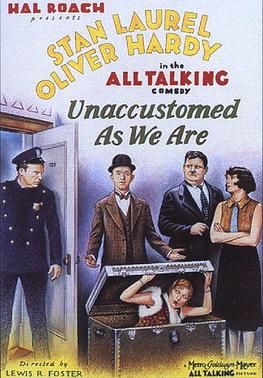
Although this film was Laurel and Hardy’s first talkie, some silent versions of this film with intertitles were also released. So, both silent and talkie versions of Unaccustomed As We Are can still be seen nowadays, even in DVD. And it was the silent version that was watched before writing this review.


The acting of Laurel and Hardy did not change very much compared with their previous silent films. Both actors had a more situational-oriented acting, not resorting too much on physical gags, even in the silent era, therefore sound films were actually quite favorable to those comedians. They also had pleasant voices, Stan Laurel even had an extensive experience on stage back to his native England (where he even worked with Charles Chaplin) and was pretty much used to dialogue in his career.


The themes of battle of sexes, henpecked husbands and rebelling wives have already been widely explored throughout the 1920s domestic situational comedies. Thus, the plot of this film was not really innovative, but it stands out due to the reliable acting of experienced comedians.


Oliver Hardy brings his good friend, Stan, to have dinner at his home to taste the delicious food of Mrs. Hardy. But unfortunately Oliver forgot to let his wife know about the visit in advance, so she could have proper time to make the arrangements. Mrs. Hardy got furious with that and says she will not cook for another crazy friend of Oliver and she leaves home rather angry, claiming she would spend some time in her mother’s house.


Oliver decides to cook for Stan, although he does not seem to be a skilled or experienced cook. Stan tries to help him, but he did not seem to be skilled with the housework either. Oliver’s next door neighbor, Mrs. Kennedy, realized both men were having problems and offered help for them to cook. However, there was an accident with Mrs. Kennedy while she was at Oliver’s house and her dress caught fire. When she was on her way back home to put on another dress, Mrs. Kennedy’s husband (Officer Kennedy) returned home.


Her husband was a though cop and Mrs. Kennedy was afraid that he would think she was actually cheating on him and would not believe she was half naked only because her dress was accidentally on fire. At first, Oliver volunteered to tell the truth to Officer Kennedy, but then he was also afraid of his neighbor’s reaction and the only solution was Mrs. Kennedy hiding herself in a trunk at Oliver’s house.

Since the silent era comedies could often revolve around misunderstandings it was not different in this film. Regretting her rant, Mrs. Hardy returned home very sad, determined to be in good terms with Oliver. She even said she would cook for Stan, but Mrs. Kennedy was locked in a trunk and had to leave the house. To disguise the delicate situation, Oliver claimed he was leaving Mrs. Hardy to go to South America and tried to go away from home taking the trunk with him.


Mrs. Hardy was furious, blaming Stan for Oliver’s decision and she got very angry again. In the middle of this chaos, Officer Kennedy arrived at Oliver’s house. Officer Kennedy volunteered to talk to Oliver, so Oliver would not abandon his wife.


He immediately realized Oliver was hiding a woman in the trunk and took it to his house, so Mrs. Hardy would not find it out what was truly happening with Oliver. What Officer Kennedy could not really imagine was it was his own wife who was in the trunk and he inadvertently started to talk to Oliver about his extramarital affairs, claiming he met some cute girls while out of home and that Mrs. Kennedy had never a clue about it.


Mrs. Kennedy heard everything while inside the trunk and was obviously furious. As soon as Officer Kennedy returned home she started arguing with her husband and even broke things on him. On the other hand, Officer Kennedy was furious with Oliver and Hardy, blaming them both for his marital problems.


Actress Telma Todd (Mrs. Kennedy) managed to show her good comedic time, funny facial expressions and a beauty that was very much within the 1930s standards. Although she was already acting back to the silent era, it was only in talkies where she could show off her comedic skills. Although she was mysteriously murdered in the 1930s, Todd made a name to herself.


Australian actress Mae Bush (Mrs. Hardy) was already an experienced comedienne when this film was made and had been in films since the 1910s. The same applies to Edgar Kennedy (Officer Kennedy), who worked with some of the best film comedians of Hollywood and had the distinction of being one of original Keystone Cops back to the 1910s. During silent era he also worked for both Mack Sennett and Hal Roach, who were among the most famous producers of comedies at the time.
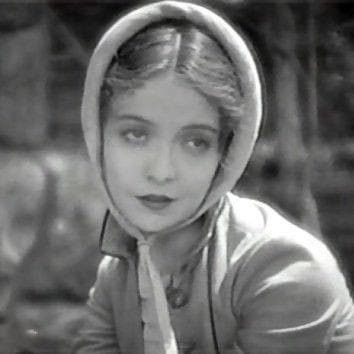
Frauds and Frenzies (USA,1918)

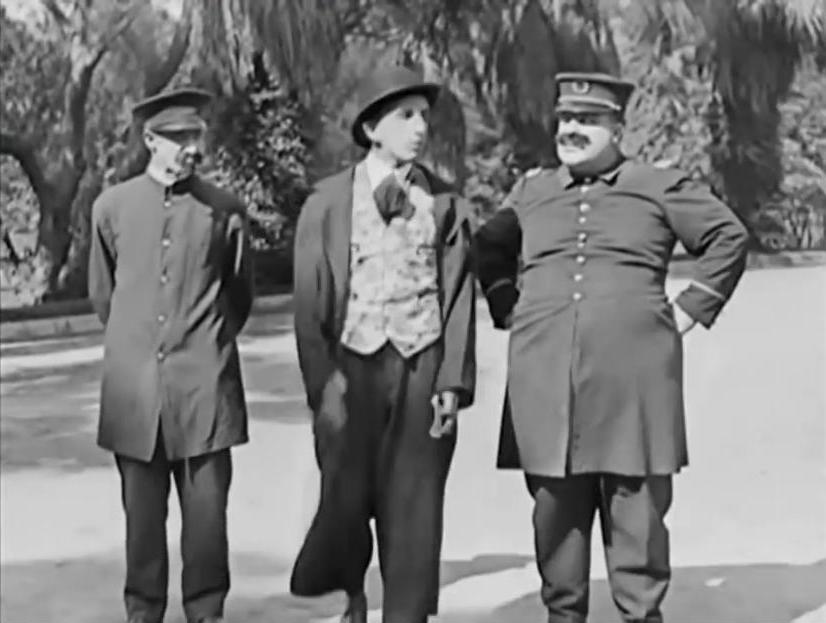
The theme of convicts trying to escape prison was relatively common in silent comedies. And comedies –specially slapstick ones – portraying policemen and authorities (who were usually incompetent, slow and lazy) were also abundant both in the USA and Europe. The laughter such films provided was also a relief to audiences, considering that a plenty of cinema goers belonged to working classes, who could laugh at those who had a more prominent position in society. 

Although not particularly innovative, this film had some funny physical gags, which can still be universally understood by modern audiences, regardless of culture. This is particularly true in the beginning of the film, when the convicts were shown performing forced labor. Stan Laurel, despite having engaged in such gags, also subtly showed to have a more self-contained type of humor, which he would also have during his pairing with Oliver Hardy. Speaking of Hardy, Semon would also work with him prior to his pairing with Stan Laurel. 

One day both Semon and Laurel got to escape and they suddenly became rivals for the love of a beautiful girl (with curly hair and a big umbrella, very much according to 1910s fashion standards). Such love interest is prone to make the former convicts having problems with the police again because the girl turned out being the daughter of one of policemen. At this point we can observe an ethnically insensitive gag, when they tried to kiss the girl, but it was actually a black woman below the umbrella, which makes both Semon and Laurel run away in disgust. Such gags were also common in silent comedies and not considered by some people as gross as it is considered nowadays. 

As usual, Semon happily engages in his cartoon-like special effects and gags of big proportions. There is even a chase (which is a type of gag considered by some laymen audience members as the symbol of silent films in general). It is also noteworthy that Stan Laurel gets less screen time in the second half of the film. Laurel had claimed that Semon reduced his time in the film in fear of being upstaged after a comment that Laurel was funnier than himself. 

Although not well-remembered nowadays, Larry Semon was a famous comedian in his day. He would pass away around one decade after this film, while in poor financial and health situation, but a plenty of his films are preserved nowadays and his distinctive cinematic style still stands out. 

Create a website or blog at WordPress.com

Up ↑