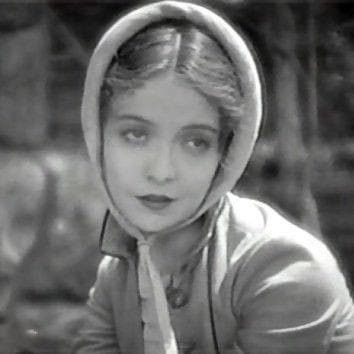
The Wedding March (USA, 1928)

Eric von Stroheim does earn his reputation as a director. Despite the lavish production of his films, the narrative is quite often fluid and smooth, without tiring the audiences. Even the background music gives an impression to the audiences that they are indulging in a ballet dancing, where the characters are always portrayed with all their human faults, but with a pinch of sarcasm and humor too.

At the same time, he deals with love in a romantic way, but not forgetting about realism. Another noteworthy point of Stroheim’s films is that they always look modern, no matter if the setting is in a distant era. This is probably because the audiences can still relate to the feelings portrayed on screen and also due to beautiful wardrobe and scenery, that are still a feast for the eyes and stood up the test of time very well.

As an Austrian, Stroheim wanted to show the end of nobility days and of gentleman values in Vienna, all of those things coming to a brutal end with the beginning of WW1.

The setting of this film is Vienna, 1914 in the eve of WW1. Stroheim also takes part in this film as an actor, where he plays the role of Nikki, a noble man in financial crisis due to his spendthrift and the solution for him to recover financial power is marrying a rich woman for her money. He is willing to do so, but things change a little after the Corpus Christi procession, an important religious and military celebration. The nobleman meets a girl (Mitzi) in the middle of the crowd and it was love at first sight, even though the woman had a quite obnoxious fiancé, a butcher called Schani.
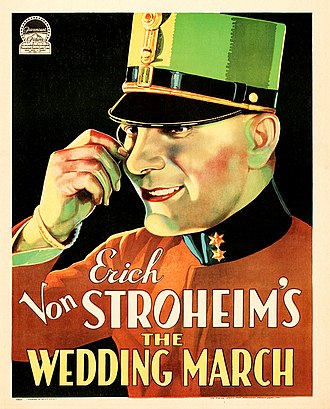
Unfortunately, there is an accident with Mitzi and the nobleman visits her at the hospital.  Later, they meet again in the restaurant where she works as a harpist. Love flourishes, but Schani is threatening towards Nikki all along, which scares Mitzi and, in exchange for Nikki’s safety, she ends up leaving him and the two lovers move on to their previous love commitments, Nikki marries a rich woman and Mitzi and Schani remain committed.

After the two lovers having enjoyed bliss and fulfillment through true love, their happiness is disrupted by social obligations, a situation quite similar to the disruption of happiness in dear old Austria before the horrors of WW1 reached the country. An entire lifestyle was lost forever, but the memory of the happy days would remain forever in the hearts of those who lived it.

Show People (USA, 1928)

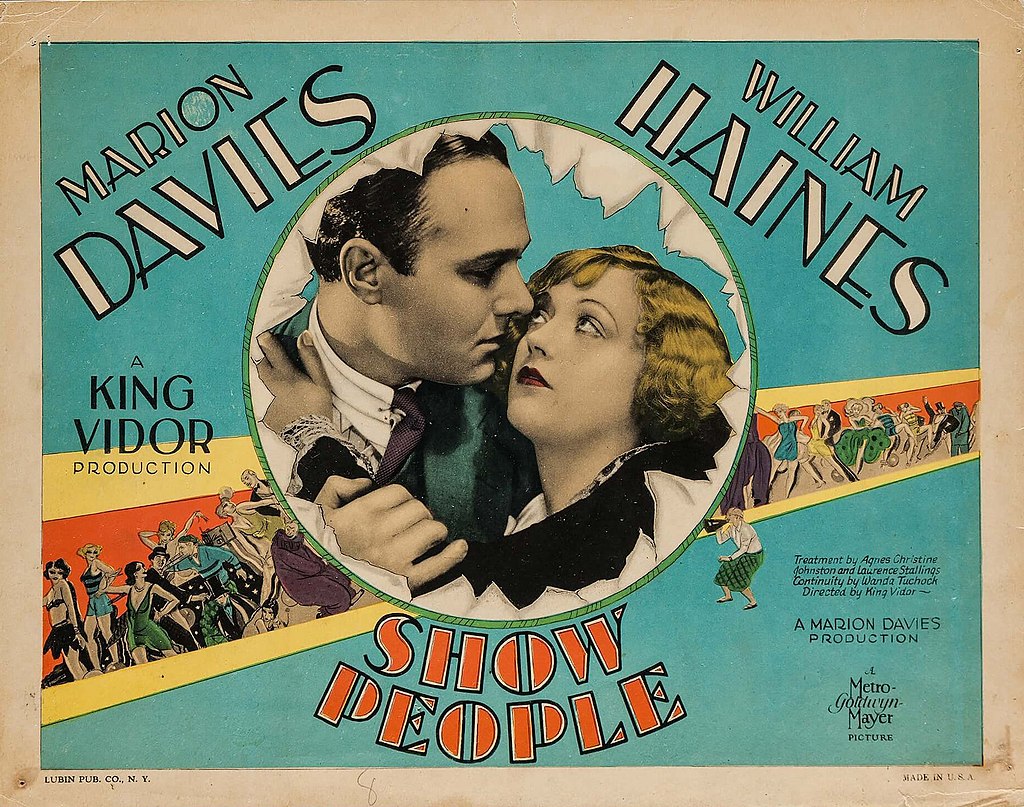
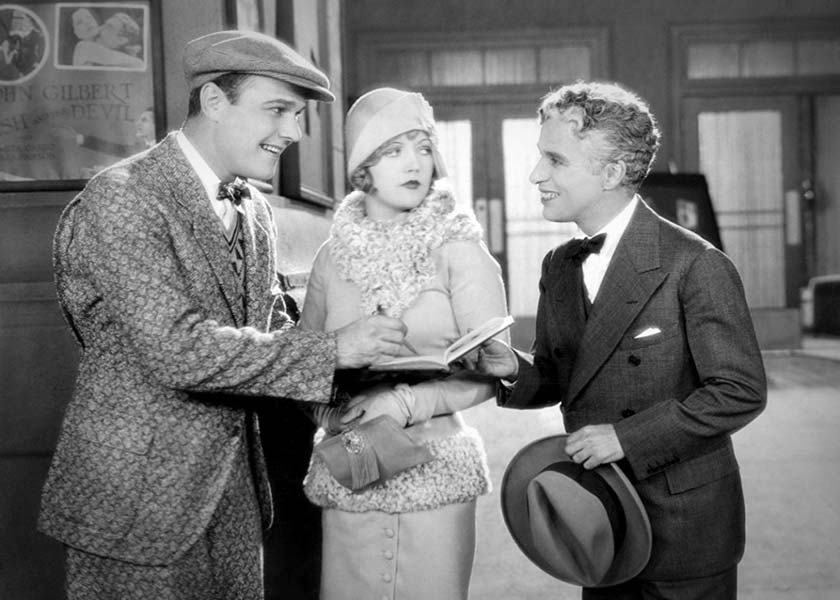
Hollywood making fun of itself, already a magical place at late 1920s, full of stars and lively parties, this film even included the cameos of real Hollywood stars as themselves, like Charlie Chaplin, Douglas Fairbanks and John Gilbert. This film also shows the traps of fame and pride and how fast things could change to the best or the worst. A delicious comedy, with impeccable comedy timing, showing that MGM was not only good with dramas and epic movies, but also with comedies.

Marion Davies became infamous by her long-term relationship with millionaire William Randolph Hearst and by the negative impact It had over her career. But, in reality, Davies had an innate talent as a comedian and in the few films where she could show such talents she never disappointed the audiences. Ironically, the film shows the dichotomy between drama x comedy and that some people thought that dramatic films and plays were superior to comedies, specially slapstick comedies.  The irony is that it was exactly the opinion Hearst had about Davies career, which would be unworthy of her dignity to act in comedies, and Hearst’s interference in her films did more harm than good to Davies in the long run.

A colonel from Georgia takes his young daughter (Peggy Pepper) to Hollywood in the hopes of showing the studios she is a good actress. Peggy gets immediately enchanted with Hollywood and upon her arrival she bumps into John Gilbert on the street. Yes, the man himself, already a mega star and famous all over the world. She seemed to be a rather naïve girl, not used with the bright lights of the big city and unaware of how competitive things were in Hollywood but she would soon realize it.

Peggy is befriended by a guy (Billy Boone) who helped her get into films in a small studio by acting in slapstick comedies. At first, Peggy was not happy with that because she expected to be into high-class dramatic films rather than in custard pie, physical comedies. But it turned out that her comedic talents were acknowledged and the audiences really liked Peggy’s films.

After a while, Peggy is “discovered” by a bigger studio, where she could act in the high-class dramas she had always dreamed about making.  At first, she hesitated to leave Billy behind, but, as time passed, she was induced by her new leading man to acquire a completely new personality and hanged out with new friends, ignoring Billy.  Meanwhile, Billy was still struggling in the same way he did before. Billy even tried to see Peggy, but she did not care very much. As her career progressed, she even pretended she did not know Billy.

Eventually, Peggy became so full of herself that her behavior even started interfering with her work in films, especially because she started to act like a royalty member rather than an actress who owed obedience to her bosses and had responsibilities to handle. And Billy would not let Peggy forgetting him easily, especially after knowing she was about to marry her new leading man. He tried to make Peggy come to her senses, but there was a fight involving a custard pie. The clash eventually had a good result and Peggy started to see things in a more reasonable way. She cancelled her convenience marriage and recommended Billy for a role in one of her films and, even more importantly, she was finally grateful for everything Billy had done for her in the old days. Then, they both realized their old good connection and love flourished between Peggy and Billy again. 

Hangman’s House (USA, 1928)

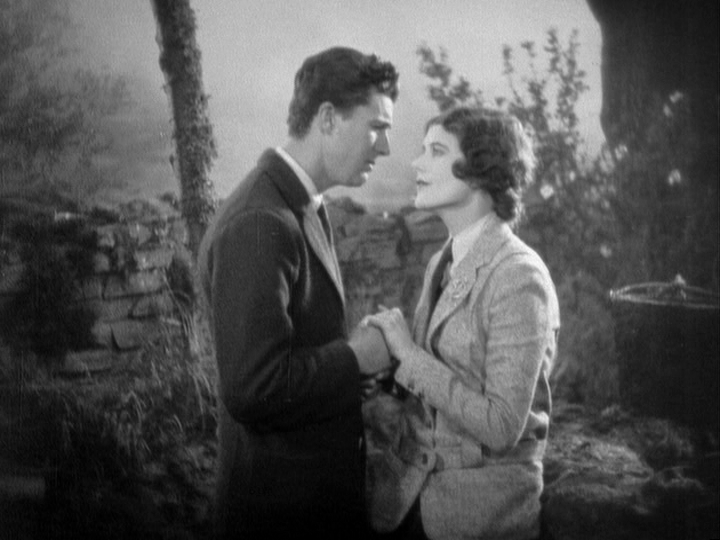
This film, despite its overt melodrama acting, also has some gothic elements, especially in the scenery, which is a type of thing that could be found in films by Ingmar Bergman decades later. The way the main characters express love and grief is through a stationary, stagy acting that was already out of fashion at late silent era. 

An army man (Citizen Hogan), who was actually an Irish patriot serving in Algeria, asks for a leave of absence so he can return home in Ireland because he had to kill a man despite the fact he was wanted by the law there due to his patriot activities. The reasons of Hogan’s return were not disclosed at the beginning of the film and would only be known a while later.

In Ireland, a hangman is about to pass away and is having huge crisis of conscience due to the people he sent to death. The flames on the fireplace of his living room can be taken as a symbolism of his life that was about to be over. 

His daughter loved a man dearly (Dermot McDermot) and he wanted to marry her. However, her father preferred that she married John D’arcy, a man of dishonest character, but with money and good social position. She detested D’arcy but eventually married him out of respect for her father’s wish. Dermot was devastated when he heard the sad news. Her father died a short time after the marriage. D’arcy started to drink and being completely nasty with his wife and she openly avoided him.

Meanwhile, a mysterious man showed up in town. It was the same army man showed in the beginning of the film and he was looking for John D’arcy.  They both had clearly met before, and whenever D’arcy put his eyes on that man he seemed to be really afraid and uneasy. In fact, D’arcy had already been married with the army man’s sister, but D’arcy had left his sister and she died right afterwards. This is why Citizen Hogan wanted revenge. 

D’arcy showed more and more signals of mental instability as time passed. Eventually, Citizen Hogan finally managed to confront D’arcy at his own house and it is suggested a duel. A fire started at the mansion and it attracts the attention of the entire neighborhood. Dermot McDermot and Citizen Hogan managed to leave the place on time, but D’arcy got trapped and is killed in the fire.

Hogan returned to the desert right afterwards, after having created a good friendship with Dermot. And both Demont and the hangman’s daughter could finally become together without anyone else’s interference, as she was now a widow.

The psychological profile, as well as reasons behind their attitudes could have been a bit deeper in this film. But this film has a good camera use, good sceneries and acting and a gloomy atmosphere that built up suspense well. The mansion and furniture had some interesting gothic touches, which is not something common to be seen in a dramatic film. Although not a particularly innovative film, it is convincing and well-acted. And it is also noteworthy for having shown John Wayne in his first recognizable role in films. As a uncreadited extra, he was a spectator in the horse racing who was so excited with the race that he ended up hitting the fence in front of him. 

Four Sons (USA, 1928)

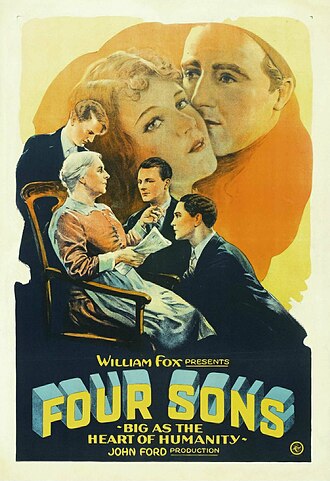
This film follows the same production and plot values of films like, The Big Parade (USA, 1925), among others. WW1 is shown irrespective of politics, focused on the impact of war in the lives of ordinary citizens, who for the first time in life have the deal with events completely beyond their control changing their future forever.

Without falling into melodrama, this film has a smooth, pleasant pace, quite familiar to modern-day audiences.  The fluid camera movement makes it looks like we are following those characters in real life. The film is so moving because it deals with facts with which most people can identify themselves quite easily, like the importance of having a harmonious family. 

Fox studios had recently hired prestigious German director F.W. Murnau. His influence can be observed in some scenes, for example, in the village, mobilized camera and mailman which is like the doorman in The Last Laugh (Germany, 1924).

The setting is Germany in the beginning of XX century and a widowed mother raising her four adult sons. The view of German lifestyle at that film is somehow stereotyped, as we can see even by the clothes of the village dwellers.  The Bavarian wearing their typical clothes everywhere all the time.

Then the war started. At first, the bothers are shown going to war in a rather romanticized way, as brave men who were fighting for the country and ideals and they left in a rather optimistic mood, saying they would be back in three months. At least, that was the atmosphere before the real horrors or death and suffering began. Three of those brothers fight for Germany, but the one of brothers had immigrated to the United States, being on the opposite side of his three other brothers. 

At first, the brother who immigrate to the USA had a calm life together with the family he formed there, after all the United States was neutral at first. But time passed and two of the brothers were unfortunately killed in action, which brought a huge grief to the mother. In addition to it, the life of the mother and her surviving son worsened terribly when they started being bullied by government authorities and things became hell after it was found out that her another surviving son is in America.

Finally, the last surviving brother in German soil is called to go to the army. At that point, the horrors of war were already undeniable. 

The mother eventually found her happiness again, after much struggle, when she managed to reunite in the United States with her surviving son, daughter in law and grandson. Things were not easy to her when she arrived, she was scared and sore, but after the entire family gathered together the wounds started to heal. Of course that to reach this happy end it was required a plenty of coincidences that we could only see in films. 

At the end we realize that it does not matter in which side of the war people are involved, the suffering and hardship affects everyone, family ties struggle and trauma is huge even in people who did not go to the front directly. 

The Broken Spring Rose (Sweden, 1912)

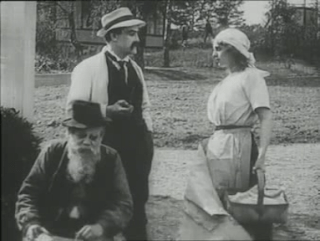
A fine melodrama, with good and subtle acting, good use of nature landscapes and a narrative, straight plot. That means the plot has a narrative style which would become the norm in cinema ever since, opposite to so-called “trick films” (like those made by French director Georges Méliès on early XX century). When it comes to acting, the plot developed without broad gestures or epic plot twists, differently from some other melodramas of the 1910s.

Although the plot may seem manicheist and outdated, it is not very different from what many other directors produced at the same era, such as D.W. Griffith in the United States, Urban Gad in Denmark, Yevgeni Bauer in Russia, among many others.

The film starts in a rather idyllic way, with good country people enjoying their lives in total connection with nature. The landscape helps to settle the atmosphere of tranquility to the audiences and gives an extra nostalgic touch to the film of an era that was already fading due to early XX century urbanization. Unfortunately, this tranquility is suddenly shattered due to an unsolved love story. 

The engagement between a wealthy boy and a girl who worked to his family was suddenly broken up by his father, which caused a big heartache on the couple. To make things worse, the boy’s father suddenly took an interest to the girl, until the point he started chasing her and raped her, which truly disgraced her life and made her fall into prostitution. The theme of the innocent girl who has a tragic fate due to circumstances had already been common both at the stage and cinema.

This film is also considered the first to ever be censored in Sweden. Although there were not any actual rape scenes and the event was mostly suggested rather than shown, this per se was enough to shock the censors. It was also considered a lost film for many decades until it was found in 1980 and it seems some scenes were removed from this printing compared with the original full film. 

The director Victor Sjöström, after already been successful in his native Sweden, became known worldwide in the 1920s due to his work in Hollywood, where he directed high-budget films and worked with the stars of his day. When the talkie era took over, he returned to Sweden and barely directed again, devoting himself solely to acting. This film shows that Swedish silents have already been quite well developed in the previous decade to such 1920s golden era and that professionals who went to Hollywood were already active and producing films at the same level of best silent films from Europe and the United States.

Create a website or blog at WordPress.com

Up ↑