City Girl (USA, 1930)

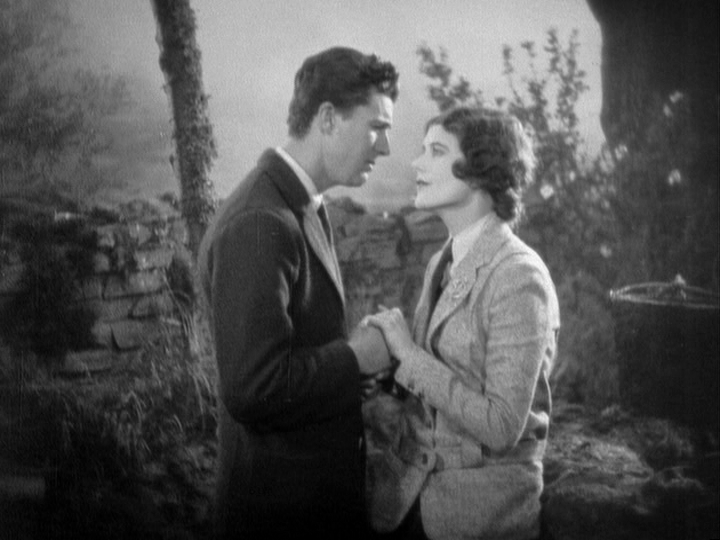
German filmmaker F. W. Murnau made a very good work in this film showing the clash between two worlds. Urbanization was already a undeniable reality in many countries of Northern hemisphere back to 1920s, including the United States. Although farms still existed in America and kept their original country lifestyle, the existence of big cities around them could no longer be denied. The stereotypes of innocence related to the countryside and excitement around city life are also challenged. At the same time, Murnau managed to keep his typical romantic style of showing two lonely souls falling in love despite all chaos, poverty and uncertainty around them.

Lem is a relatively naive son of a farmer from Minnesota, who went to Chicago in order to try to sell the wheat crop of his father’s farm for the best price possible. He met a sweet waitress in the big city called Kate and decided to marry her and take her to the farm with him. But things would not be easy. 
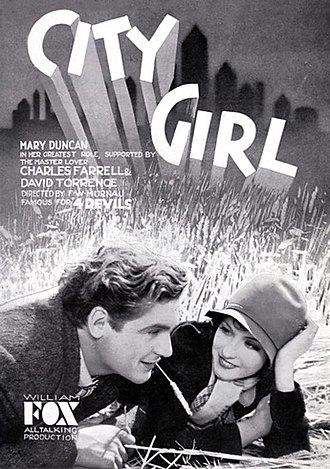
In addition to arrive back home as a married man, Lem could not sell the wheat for a good price and he ended up losing money. That was disastrous news to his father, as his family desperately needed the money of that transaction. They were facing financial difficulties in the farm and struggled to make ends meet. The timing of this film was also interesting, considering it was made at around the time of The Wall Street Crash of 1929. 

When Lem arrived back home with Kate, she was accepted and welcomed by his mother and sister, but not by his father. In addition of having his authority challenged by a marriage he had no idea about, he also resented Lem about the low price of wheat and instinctively blamed Lem’s bad transaction to his marriage with Kate. 
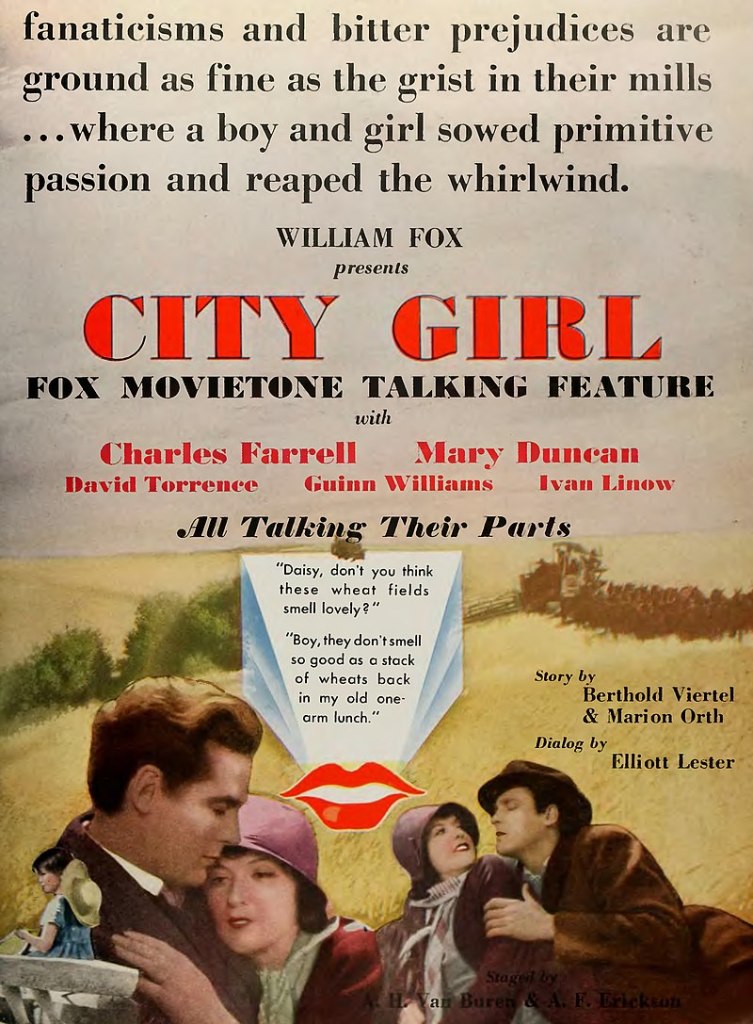
In addition to have a hard time to handling her dictatorial, even physically abusive father in law, Kate also had a problem to adjust to the lifestyle of a farm. Things went from bad to worse when she became a object of curiosity of other men of the country and one of them even made some advancements towards her. It led to a misunderstanding of Lem’s father thinking it was Kate who was encouraging those advancements. Even Lem started having doubts about his wife’s faithfulness. One night, after a particularly heated arguments, Kate decides to leave Lem. Lem got to find her and bring her back home, but not without running the risk of being involved in a huge tragedy.

A particularly interesting thing is that Kate’s difficulties in handling her marriage did not come from out of the countryside, but they all came from that apparently calm and idyllic environment. The country could also be a threatening environment, where people could no longer be trusted and safety could not be taken for granted.

Although the plot of this film is related to the loss of overall excitement in American society at the end of so-called roaring twenties, this film stood well the test of time. It shows with accuracy the difficulties of a recently-married couple in adjusting to each other and circumstances around them. In addition to lots of love, it is required a sense of commitment, faith in your partner’s character and responsibility in dealing with that relationship in the context of both family and labor routine. Actor Charles Farrell’s acting as Lem was pretty convincing as a simple, hard-working man with a heart of gold. 

Hangman’s House (USA, 1928)

This film, despite its overt melodrama acting, also has some gothic elements, especially in the scenery, which is a type of thing that could be found in films by Ingmar Bergman decades later. The way the main characters express love and grief is through a stationary, stagy acting that was already out of fashion at late silent era. 

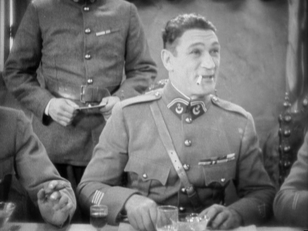
An army man (Citizen Hogan), who was actually an Irish patriot serving in Algeria, asks for a leave of absence so he can return home in Ireland because he had to kill a man despite the fact he was wanted by the law there due to his patriot activities. The reasons of Hogan’s return were not disclosed at the beginning of the film and would only be known a while later.

In Ireland, a hangman is about to pass away and is having huge crisis of conscience due to the people he sent to death. The flames on the fireplace of his living room can be taken as a symbolism of his life that was about to be over. 

His daughter loved a man dearly (Dermot McDermot) and he wanted to marry her. However, her father preferred that she married John D’arcy, a man of dishonest character, but with money and good social position. She detested D’arcy but eventually married him out of respect for her father’s wish. Dermot was devastated when he heard the sad news. Her father died a short time after the marriage. D’arcy started to drink and being completely nasty with his wife and she openly avoided him.

Meanwhile, a mysterious man showed up in town. It was the same army man showed in the beginning of the film and he was looking for John D’arcy.  They both had clearly met before, and whenever D’arcy put his eyes on that man he seemed to be really afraid and uneasy. In fact, D’arcy had already been married with the army man’s sister, but D’arcy had left his sister and she died right afterwards. This is why Citizen Hogan wanted revenge. 

D’arcy showed more and more signals of mental instability as time passed. Eventually, Citizen Hogan finally managed to confront D’arcy at his own house and it is suggested a duel. A fire started at the mansion and it attracts the attention of the entire neighborhood. Dermot McDermot and Citizen Hogan managed to leave the place on time, but D’arcy got trapped and is killed in the fire.

Hogan returned to the desert right afterwards, after having created a good friendship with Dermot. And both Demont and the hangman’s daughter could finally become together without anyone else’s interference, as she was now a widow.

The psychological profile, as well as reasons behind their attitudes could have been a bit deeper in this film. But this film has a good camera use, good sceneries and acting and a gloomy atmosphere that built up suspense well. The mansion and furniture had some interesting gothic touches, which is not something common to be seen in a dramatic film. Although not a particularly innovative film, it is convincing and well-acted. And it is also noteworthy for having shown John Wayne in his first recognizable role in films. As a uncreadited extra, he was a spectator in the horse racing who was so excited with the race that he ended up hitting the fence in front of him. 

Peeping Pete (USA,1913)

The subject of peep hole had been explored in films virtually since the invention of cinema and this split reel (a film shorter than a one-reeler, in other words, lasting less than 11 minutes) shows this theme in a typical slapstick fashion. 

The greatest distinction of this film is not really its simple plot, but the fact that it is the earliest surviving appearance of Roscoe “Fatty” Arbuckle in films, back to 1913. He worked at Keystone up to 1917, and it did not take long until he was very popular among the audiences. During this time, his pairing with Mabel Normand was also very successful, which can put those actors among the pioneers of romantic comedies, a genre that would end up establishing itself in the next decade.

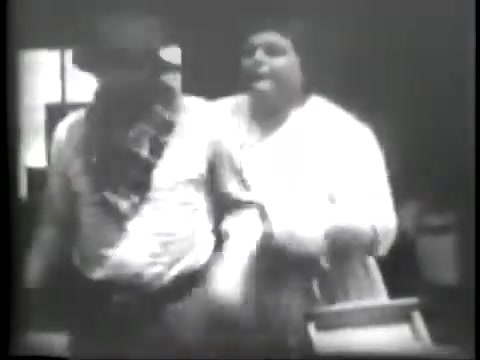
Pete (played by Mack Sennett, the head and founder of Keystone studios) spies on the wife of a neighbor through a hole on the fence. Her husband (Ford Sterling) finds it out and gets furious. 

Sterling had his typical acting of broad gestures, ridiculously fake mustaches and an almost surreal temper. However, Sterling is less over the top here than in other films because all the other actors are equally exaggerated. The wife is played by Fatty Arbuckle in drag, which gives an. extra funny effect to the film. The trend of appearing in drag on screen was with Arbuckle throughout his career and he performed quite well in this type of role. 

Sterling also had some quite funny scenes when he tried to take revenge of Sennett for spying his wife and carried a revolver (which shot lots of smoke) with him, causing a plenty of confusion and misunderstandings when he inadvertently intimidated and scared people away while he was trying to find Sennett.

We can also see Arbuckle falling and tripping often in this film. Do not be fooled by his overweight, as Fatty was a quite skilled physical comedian and dancer and he often displayed such skills on screen. Arbuckle also had a very pleasant voice and it is said he could sing very well. Were not for the scandal that virtually ended his career in 1921 and it seems he could have made a smooth transition to talkies, if only he had a chance of doing so. 

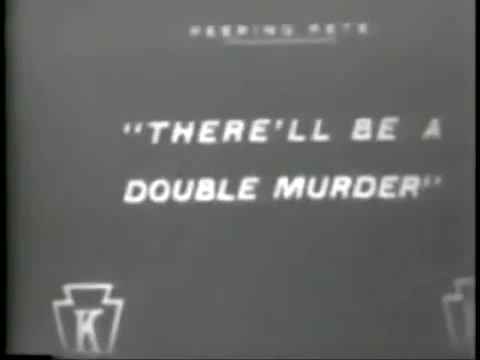
In the end, both husband and peeping Pete ended up forgetting their disagreements and became friends. Not before the wife and a plenty of other neighbors got desperate in fear that a double murder would happen (as one of intertitles of the film) said. 

Not really an easy film to be understood by modern-day audiences, as the film is very short and it’s logically not possible to develop the psychological profile of characters well. The plot is also not narrative, but revolves around a simple premise and random gags. Still, it’s interesting to see how Arbuckle was a good comedian from the start and how comedy shorts would develop more and more each year. On the following year. Keystone studios would hire Chaplin (who was also starting his career in films) and produce its first feature-length comedy with most of famous Keystone comedians + Marie Dressler (already a famous stage actress). But this is another story.

The Close Call (USA, 1914)

Until Our Gang series of comedy short films started being made by Hal Roach studios, in the 1920s, it was not a commonplace in Hollywood children being portrayed simply playing and with their own universe being shown in films, where children played themselves in main roles, rather than being portrayed by adult actors, without plots being grounded on fantasy.

Without doubt, the most famous 1910s adult actress who played such fantasy roles was Mary Pickford. Pickford’s superstardom and the undeniable commercial success of her films, did trigger the appearance of other petit actresses playing children roles on screen, like Marguerite Clark, who would star Snow White (USA, 1916), among others. But, although those films did portray the children’s universe on screen, the actors were still adults and situations were not often real life ones.

In the 1910s, children did take part in films, more often in supporting roles when the plot was not really related to them. They could even be shown in films revolving around their matters, but studio moguls have not yet found out the potential of showing children’s actors in naturalistic acting, simply being themselves. But this situation would slowly change with time.

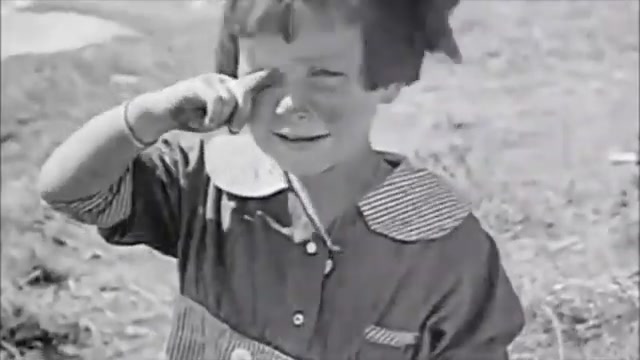
In this film we can see some cute children, boys and girls together, walking outdoors in a beautiful and tranquil nature landscape. A pair of children is younger than the other one. All of them are portrayed unaccompanied by adults and even mischievous. After a while, the youngest girl started walking all by herself and ended up falling down a cliff in a deserted place. 

The older children realized something wrong had happened and cried for help. Meanwhile, the young boy tried to save the younger girl. The mother of the little girl was located and she gathered more adults to help saving her daugther. 

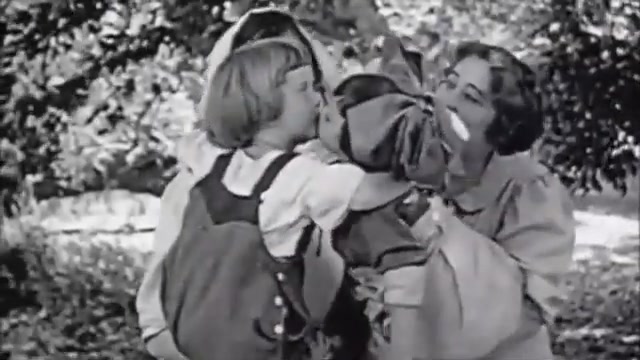
While the adults tried so hard to save the little girl, she was actually being saved by the little boy, who got to find his sweetheart before anyone else. As time passed and the adults could not find the girl on the cliff they got very nervous, but after a while the girl was found safe and sound in the company of the boy. Everyone was very happy and after the girl had told what happened and how she was rescued, both children embrace.

Something that may have helped giving a naturalistic touch to this film is that some of those children were too young to read, which made them not adhere to a script and it consequently gave more freedom to improvisation. The landscape, not much altered by the human hand and without cars and big cities around also give a good atmosphere. We can also observe that first love was shown subtly and innocently, which was also something uncommon in children’s films of the era. At this time, the border between films to adults and children was not still very clear, so this film was surely watched by both adults and children cinema audience members alike. All those elements reinforce the innocence of the playing. 

The Broken Spring Rose (Sweden, 1912)

A fine melodrama, with good and subtle acting, good use of nature landscapes and a narrative, straight plot. That means the plot has a narrative style which would become the norm in cinema ever since, opposite to so-called “trick films” (like those made by French director Georges Méliès on early XX century). When it comes to acting, the plot developed without broad gestures or epic plot twists, differently from some other melodramas of the 1910s.

Although the plot may seem manicheist and outdated, it is not very different from what many other directors produced at the same era, such as D.W. Griffith in the United States, Urban Gad in Denmark, Yevgeni Bauer in Russia, among many others.

The film starts in a rather idyllic way, with good country people enjoying their lives in total connection with nature. The landscape helps to settle the atmosphere of tranquility to the audiences and gives an extra nostalgic touch to the film of an era that was already fading due to early XX century urbanization. Unfortunately, this tranquility is suddenly shattered due to an unsolved love story. 

The engagement between a wealthy boy and a girl who worked to his family was suddenly broken up by his father, which caused a big heartache on the couple. To make things worse, the boy’s father suddenly took an interest to the girl, until the point he started chasing her and raped her, which truly disgraced her life and made her fall into prostitution. The theme of the innocent girl who has a tragic fate due to circumstances had already been common both at the stage and cinema.

This film is also considered the first to ever be censored in Sweden. Although there were not any actual rape scenes and the event was mostly suggested rather than shown, this per se was enough to shock the censors. It was also considered a lost film for many decades until it was found in 1980 and it seems some scenes were removed from this printing compared with the original full film. 

The director Victor Sjöström, after already been successful in his native Sweden, became known worldwide in the 1920s due to his work in Hollywood, where he directed high-budget films and worked with the stars of his day. When the talkie era took over, he returned to Sweden and barely directed again, devoting himself solely to acting. This film shows that Swedish silents have already been quite well developed in the previous decade to such 1920s golden era and that professionals who went to Hollywood were already active and producing films at the same level of best silent films from Europe and the United States.

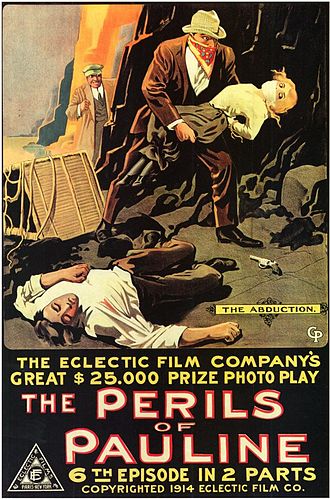
The Perils of Pauline (USA, 1914)

It was one of the first female series in Hollywood, although it was not the very first one. It is often mistaken as the very first serial because it was the first one to have had a huge popularity among audiences. Pauline was a rich heiress, who is pushed to marriage, but prefers to wait a little more and live more adventures in life, while she gets ready to become an author. Her refusal is understandable, as having a husband would make her leading a life totally focused on family affairs rather than exploring the outside world.


Furthermore, Pauline`s guardian wants to make sure that she will end up dying before getting married, so he can keep the money to himself. He interferes with Pauline`s adventures so that they are more dangerous than they were supposed to be.


Although the psychological profile of characters is somehow shallow, including in some rather simple matters like, for instance, who were Pauline`s parents? Which was her past? Was she a romantic lady or more modern-oriented? And so on. We can compare her with other 1910s characters, such as those made by Lillian Gish in Biograph studios and we can see how independent and less Victorian Pauline was compared with her contemporaries. This approaches Pauline to characters played by actress Mabel Normand in Keystone studios, all of them independent, bold, fierce, untamable women, ready for an adventure and strong in their own right.


Broad gestures and exaggerated facial expressions are still noticeable in acting by different actors and it is understandable, as the transition to a more natural acting style was still ongoing in American films in middle 1910s. However, a more natural style was starting to take root and it would not take a long time until the theater-based gestures and mannerisms was overcame.  For example, films by D.W. Griffith and Mary Pickford were already popular when this serial was launched and the subtle acting portrayed in them would soon become the norm in Hollywood.


Although associated with the stereotype of “damsel in distress” Pauline was less helpless than typical women of her era and despite all problems, she did get to have adventure moments. The plot has a plenty of adventure and exoticism, both of which were into fashion back to the 1910s. In this first chapter we can even see Pauline in a balloon. In an era when travelling was difficult and time-consuming, audiences could experience different things, even though those things were often portrayed in a stereotyped way.


It was originally filmed 20 chapters, but the only surviving version is from a French print edited into nine chapters, released in 1916. We can also observe that the villain had a German name (Koerner) due to animosity against Germany during World War I. There were also problems with the re-translation into English of intertitles which were previously translated into French in this nine-chapter version which gives modern audiences the impression of involuntary humor due to typos and weird structure of sentences.
Actress Pearl White made most of stunts of this serial and while filming it she suffered a spine injury which would bother her for the rest of her days. White was athletic in real life and her physical skills matched her role completely.


As it was previously said, many chapters were cut off this re-release, but the remaining ones give a good overall idea of how this serial was like. In an era when cartoons were not popular yet, it was real-life actors who had to make the dangerous stunts, so audiences would get their own thrill. Years later, it would become hard for actors to keep up with cartoon characters and the nearly infinite possibilities of what they could do to endanger their lives and remain alive anyway, but it was not yet a reality back to the 1910s. It must also be added that this series does not use the cliffhanger, but the episodes are self-contained instead. It was a popular hit and made Pearl White become a star. She remained in high demand in serials until the end of the decade and after this time she worked in Europe until her retirement some years later. 

Saved from Himself (USA, 1911)

This is a film by Biograph studios of New York, directed by famous  D.W. Griffith (who started working at the studio in 1908 as an actor and soon became a director and chief direct of Biograph) and one of protagonists is Mabel Normand, one year before she moved together with Mack Sennett and Fred Mace to the Keystone studios, which had just been founded.  It is interesting to see Mabel acting in a non Keystone, drama film. 

Mabel Normand, despite being more famous for her comedies, was a versatile actress and did well in dramas too. When this film was made she was circa 18 years old and already had a natural and convincing acting.  In Biograph she played naïve young maidens, damsels in distress, in addition to comedic ladies.

Joseph Graybill (1887 – 1913) is an actor about whom not much is known. He passed away in 1913 still in his 20s and had a successful career both on stage and cinema and is more noteworthy for having worked with D.W. Griffith in his first years at Biograph studios. 

The title of this film is self-explanatory and the plot has some typical Griffith`s touches, especially in the moralizing end. An example of that is evident already in the first intertitle, which says: “His sweetheart`s influence saves him from dishonor”. Back to an era when having a good social reputation was something taken much more seriously than nowadays.

Motion picture poster for Three Friends, a Biograph Studios release, shows three men clasping hands while sitting at a table in a bar. 1 print (poster) : lithograph, color ; 104 x 70 cm.
Source: Wikimedia Commons

A young clerk (Joseph Graybill) is engaged to a stenographer (Mabel Normand). His old friend had just won lots of money in the stock market, which encouraged him to also invest his money this way. He was so impressed that he actually used all his savings to purchase stocks. Unfortunately, things did not happen as planned and he had to put up another two thousand dollars, otherwise he would be wiped out, as one of intertitles says. He could not afford doing so and the fear of losing all his money made him consider stealing money from a hotel. 

However, his sweetheart (Mabel Normand) found it out and prevented him from doing so. Also, his thoughts about his mother made him thinking twice and it became clear that he only considered stealing the money out of fear of losing all his savings and not being able to provide a good future both for himself and his future wife. The happy ending happened because honesty and morals were preserved and it is not worth it being unscrupulous or immoral, this is the usual message of Griffith`s cinematic work.

A plenty of Griffith`s films discussed the effects of addictions, poverty and adultery over families. A recurrent theme was also the virginal, Victorian heroines, who Lillian Gish embodied so well. Those women also had high morals and kept their families united, even when the father/husband was too weak to do it himself. It often turned out that the man regretted his mistakes and reunited with his family, immediately being forgiven by his understanding spouse. Although such plots would be a bit too sexist for nowadays` standards, they show to modern audiences how life was like when things were simpler and the urban life had not fully taken root. 

Create a website or blog at WordPress.com

Up ↑