

A typical 1910s melodrama, with provides some of greatest imageries of early cinema and reveals the high quality of Danish films of the decade, including the special effects. Denmark had a quite vibrant production of films prior to WW1, and the most famous actors of this generation were Asta Nielsen and Valdemar Psilander (By the way, both of them were NOT part of the cast of this film).
It is impossible not to compare the plot of this film with the infamous sinking of the Titanic in the previous year. Although the film is slow-paced, the plot has a plenty of action all along. Showing the calm days of Danish aristocracy prior to WW1, the acting is very stagy, even stationary compared with the naturalistic acting that had started been adopted by Hollywood, this film also has a touch of modernity. It shows Angèle, the wife of Dr. Friedrich Kammacher, a scientist (a bacteriologist), suffering from mental disease. All those scientific matters being still new and highly researched back to 1910s, an echo of XIX century progressist ideas that had science in high esteem. We can also see by the professions of main characters and scenery that the film is portraying lives of members upper classes.
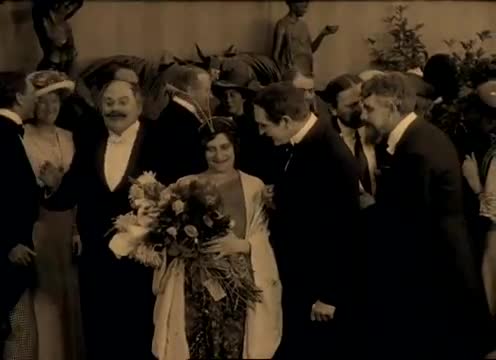
Dr. Kammacher had the disappointment of having his research papers rejected by the academy and when Angéle is finally brought to a mental hospital, her husband kissed his children goodbye and decided to go on a journey in other to recover. When he arrived in Berlin he met a erotic dancer called Ingigerd, and got immediately fascinated by her. After hearing she was going to the United States, he left his past life behind and followed her on board the ocean liner “Atlantis”. Things were going fine until it happened a shipwreck. A drifting lifeboat with the people who survived the tragedy was rescued and they were taken aboard another ship. Ingigerd was one of survivors. They all eventually managed to arrive in New York and this part of film included some very beautiful takes of New York, which provides a lovely glimpse of how the landscape of the city looked like back to the 1910s.
Dr. Friedrich Kammacher also survived the shipwreck and was welcomed by his friends in NYC and he got together with Ingigerd there. However, time passes and their relationship has problems, mostly because Dr. Friedrich Kammacher is annoyed by Ingigerd’s artistic career and her personality, and they become estranged. Disheartened and suffering from depression since the shipwreck happened, he goes to a distant cabin in the mountains. Perhaps, considering nowadays’ medicine, Dr. Kammacher might even had post traumatic syndrome due to the shock of the tragic event. Dr. Kammacher got very ill while in the cabin after knowing his wife had passed away, but he is taken care of and cured. He has an affair with Miss Burns, who even promised Dr. Friedrich Kammacher to be a good mother for his children, and they both return to Denmark in order to reunite with Kammacher’s family and start a new life.
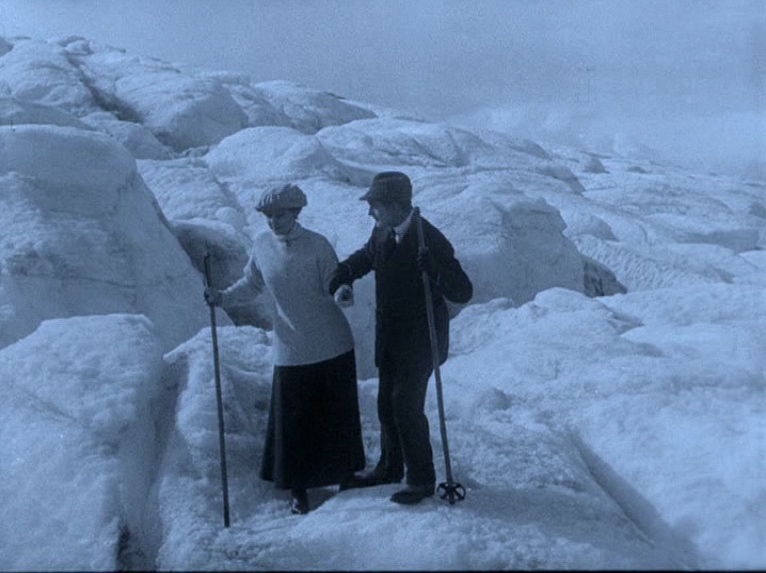
Although many people consider the shipwreck scenes the highlight of the film, this is not really fair. Atlantis has some of most beautiful imagery shown in a silent film, the elegant wardrobe of the cast is also a noteworthy aspect, together with the scenery. The landscape scenes are breathtaking and the using of coloring was brief, but very proper. It is also interesting to see the mix of modernity in the approached subjects (science, medicine, arts) and an acting that would soon become old fashioned.


 Silent Beauties