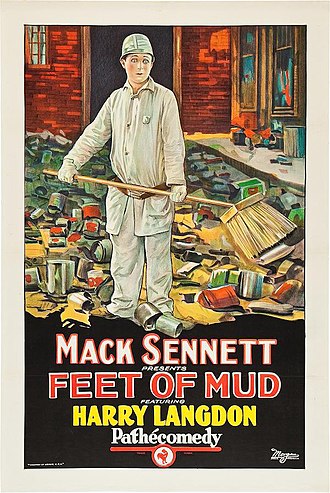
Feet of Mud (USA,1924)

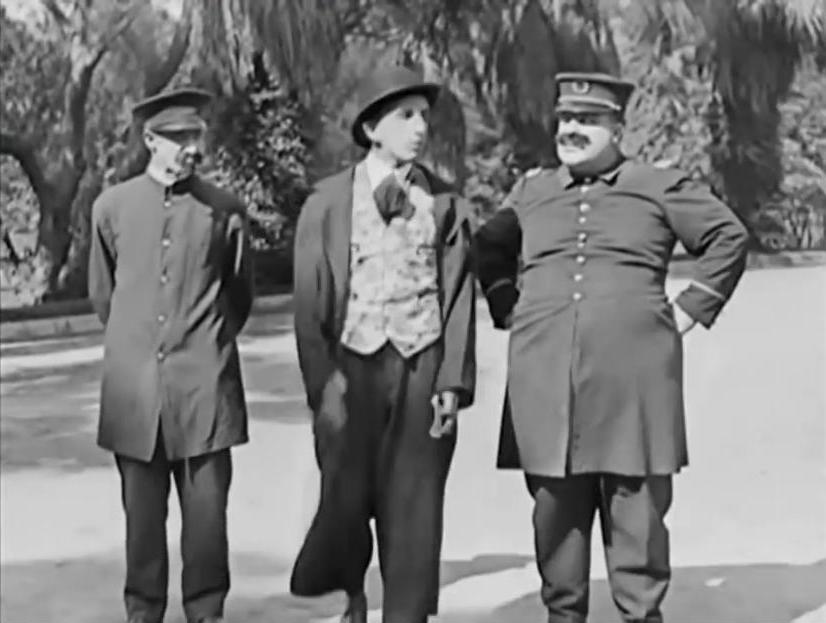
The character that would bring Harry Langdon world fame was already fully well-rounded in this film. There was a football game (American football, to be more precise) between the Mohicans and the home team. Then we are introduced to Harry Langdon’s character, naive, not understood by others and helpless on circumstances around him. Langdon is in love with a girl who has another suitor and was a substitute in the football team, merely because there were not better players available. 

Football is always a very physical sport, but that specific game seemed to be particularly violent and players left the field in a very bad condition, looking more dead than alive. Comedy films about physically weak guys who overcame difficulties were common and were made even by the most famous comedians of silent era, like Charlie Chaplin, Buster Keaton, Harold Lloyd. So, this is Langdon’s version to a rather known comedic plot. 

Langdon is called to play and the audience does not take him seriously, specially because he was not a strong, muscular man. However, against all odds, Langdon got to stand out in the game. 

Then, he tries to marry his sweetheart, but her father did not give his permission, unless Langdon got to keep a job with the City Engineer. The girl’s father wanted Langdon to be as skilled in his professional life as he was in the football field. The “engineering” job ended up being street cleaner in a rather crowded and busy city, full of garbage. Langdon tries to do his best in the new job, but he cannot help being involved in many troubled situations. 

Langdon catches the train and finds himself in the Chinese area, where a kind of inner war was going on. His sweetheart shows up there with her father and a group of tourists. Violence suddenly escalates, the girl is in danger and it’s Langdon who saves her despite all his initial fear. 

The Chinatown was portrayed in a rather stereotyped way, as a place of poverty, violence and a kind of exotic curiosity to be seen by white tourists. Those jokes can be considered ethnically insensitive. 

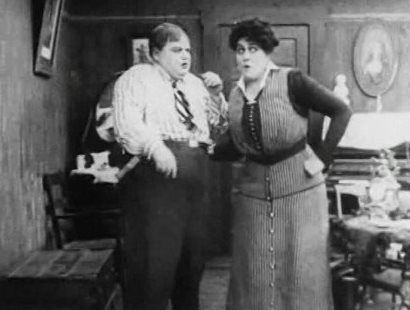
Fatty’s Reckless Fling (USA,1915)

During his first years with Keystone studios, Roscoe “Fatty” Arbuckle often played the roles of helpless men, who could not control themselves and acted like grown up children. His comedic style also lacked the sophistication it would acquire later in 1910s upon his pairing with Buster Keaton. So, Arbuckle’s films during his stay at the studio employed lots of physical gags, knockabout slapstick around ordinary plots. However, he proved to be very popular among audiences since the beginning of his career on early 1910s until a scandal pematurely ended it in 1921. 

Henpecked husbands were a common theme in silent comedies and had their heyday in situational comedies of 1920s, although they have been around in previous decades. Arbuckle himself often played this sort of role. Another common element were misunderstandings, usually around socially inadequate behaviors and etiquette. 

This film have all aforementioned elements, plus actors with broad, exaggerated gestures. Arbuckle is a henpecked husband by a wife who is domineering, to the point of being rude. Apparently, whenever his wife left him alone he found himself in trouble and, after being caught in a poker game, Arbuckle was locked at home by his wife while she was away.  

Arbuckle found a way to leave his apartment. Meanwhile, another neighbor left his house and said good bye to his wife. Unfortunately, the poker players were interrupted by the police and a fight ensued, which gave room to some really silly gags, including typical shots of smoke on actor’s buttocks and messy scenery. 

As Arbuckle did not manage to return to his apartment, he found shelter in the neighbor’s house and it made people think he was romantically involved with the wife of his neighbor. This conflict provided the funniest gags of the film, specially one with a bed coming and going between both apartments. 

Although this film is not very funny, its plot is easy to follow and it provides a precious historical witness of typical slapstick comedies of 1910s and it has a plenty of action for a film of one reel (around 11 minutes). 

The Curtain Pole (USA,1909)

In addition to be a valuable historical witness of a era gone a long time ago, when cars were still rather new, hats were commonly worn by both men and women, etc this film is also famous for having placed together two people, who were then working for a studio which would become a integral part of history of cinema, D.W.Griffith, Mack Sennett and Biograph studios. Although they both started their cinematic careers in the same studio and were even friends in real life, their careers would turn completely different ways only some years later. 

One of few common points among both Griffith and Sennett is that both of them gave up acting in favor of directing, Griffith having remained a director throughout his career and Sennett having given up firstly acting, then directing during his first years with Keystone studios, to focus only on being a studio mogul, which he was until his studio was closed in 1933. 

It is definitively unusual to realize that Griffith directed a slapstick comedy with such simplistic plot, but we must have in mind that Griffith was still at the very beginning of his career as a director, after previously been a actor. His first directorial experience was in Biograph studios, after having briefly been a actor there. At this same studio, Mack Sennett began his career before founding the Keystone Studios in 1912. 

Sennett (who is barely recognizable due to a fake mustache and a disguise) is in a party in a upper class residence (the very opposite to sceneries of his subsequent comedies with Keystone studios, which usually portrayed the reality of working class citizens) and inadvertently breaks the curtain pole of the owner of the house. He volunteers to buy a new one, but ended up tripping and hitting everyone on the street with the pole on his way back to the house were he was, which caused Sennett to be chased by nearly everyone he upset. 

Against all odds, Sennett managed to return to the house, but the pole had already been replaced. The final scene shows him chewing the curtain pole out of frustration.

It is impossible not to see the similarity with 1910s films by Keystone studios, whose one of main characteristics were the fast-paced chases. Who could guess that a film with uneventful gags, broad gestures and no psychological deepening of characters could be a sample of history if cinema? Although not a particularly funny film, it is still very worthy of being watched by nowadays’ audiences. 

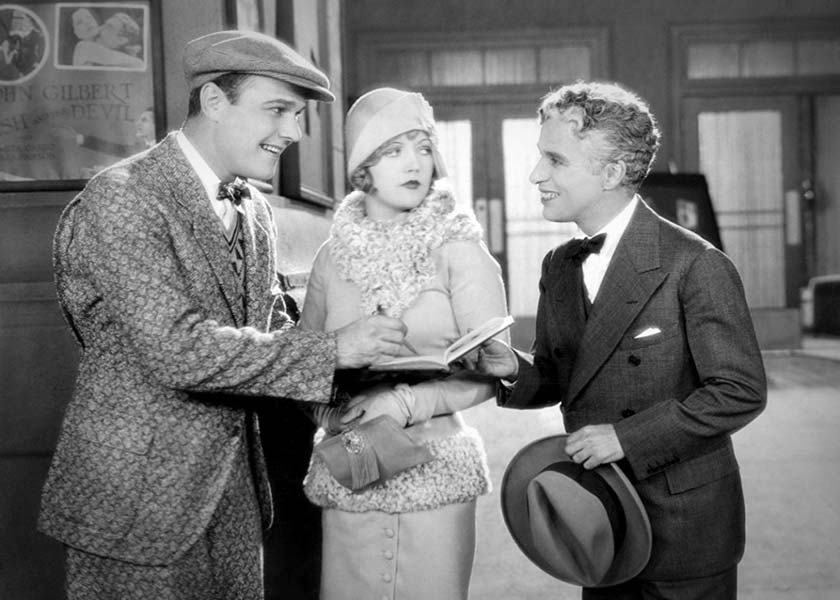
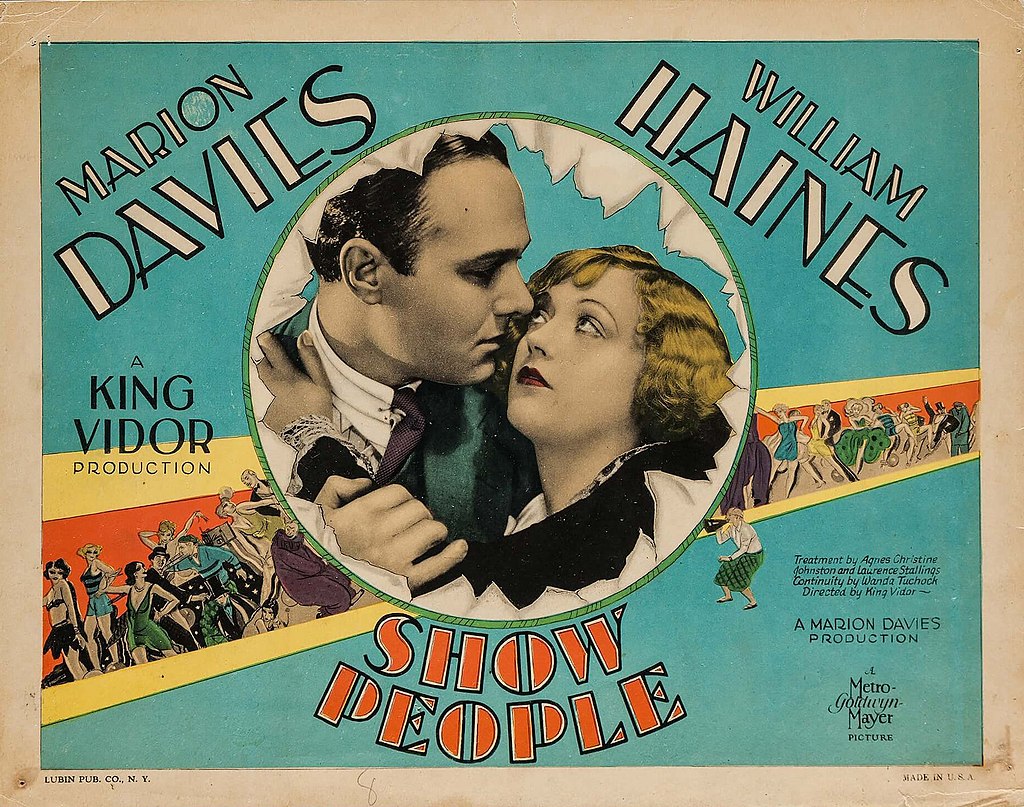
Show People (USA, 1928)

Hollywood making fun of itself, already a magical place at late 1920s, full of stars and lively parties, this film even included the cameos of real Hollywood stars as themselves, like Charlie Chaplin, Douglas Fairbanks and John Gilbert. This film also shows the traps of fame and pride and how fast things could change to the best or the worst. A delicious comedy, with impeccable comedy timing, showing that MGM was not only good with dramas and epic movies, but also with comedies.

Marion Davies became infamous by her long-term relationship with millionaire William Randolph Hearst and by the negative impact It had over her career. But, in reality, Davies had an innate talent as a comedian and in the few films where she could show such talents she never disappointed the audiences. Ironically, the film shows the dichotomy between drama x comedy and that some people thought that dramatic films and plays were superior to comedies, specially slapstick comedies.  The irony is that it was exactly the opinion Hearst had about Davies career, which would be unworthy of her dignity to act in comedies, and Hearst’s interference in her films did more harm than good to Davies in the long run.

A colonel from Georgia takes his young daughter (Peggy Pepper) to Hollywood in the hopes of showing the studios she is a good actress. Peggy gets immediately enchanted with Hollywood and upon her arrival she bumps into John Gilbert on the street. Yes, the man himself, already a mega star and famous all over the world. She seemed to be a rather naïve girl, not used with the bright lights of the big city and unaware of how competitive things were in Hollywood but she would soon realize it.

Peggy is befriended by a guy (Billy Boone) who helped her get into films in a small studio by acting in slapstick comedies. At first, Peggy was not happy with that because she expected to be into high-class dramatic films rather than in custard pie, physical comedies. But it turned out that her comedic talents were acknowledged and the audiences really liked Peggy’s films.

After a while, Peggy is “discovered” by a bigger studio, where she could act in the high-class dramas she had always dreamed about making.  At first, she hesitated to leave Billy behind, but, as time passed, she was induced by her new leading man to acquire a completely new personality and hanged out with new friends, ignoring Billy.  Meanwhile, Billy was still struggling in the same way he did before. Billy even tried to see Peggy, but she did not care very much. As her career progressed, she even pretended she did not know Billy.

Eventually, Peggy became so full of herself that her behavior even started interfering with her work in films, especially because she started to act like a royalty member rather than an actress who owed obedience to her bosses and had responsibilities to handle. And Billy would not let Peggy forgetting him easily, especially after knowing she was about to marry her new leading man. He tried to make Peggy come to her senses, but there was a fight involving a custard pie. The clash eventually had a good result and Peggy started to see things in a more reasonable way. She cancelled her convenience marriage and recommended Billy for a role in one of her films and, even more importantly, she was finally grateful for everything Billy had done for her in the old days. Then, they both realized their old good connection and love flourished between Peggy and Billy again. 

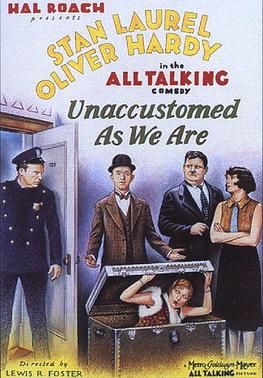
Unaccustomed As We Are (USA, 1929)

Although this film was Laurel and Hardy’s first talkie, some silent versions of this film with intertitles were also released. So, both silent and talkie versions of Unaccustomed As We Are can still be seen nowadays, even in DVD. And it was the silent version that was watched before writing this review.


The acting of Laurel and Hardy did not change very much compared with their previous silent films. Both actors had a more situational-oriented acting, not resorting too much on physical gags, even in the silent era, therefore sound films were actually quite favorable to those comedians. They also had pleasant voices, Stan Laurel even had an extensive experience on stage back to his native England (where he even worked with Charles Chaplin) and was pretty much used to dialogue in his career.


The themes of battle of sexes, henpecked husbands and rebelling wives have already been widely explored throughout the 1920s domestic situational comedies. Thus, the plot of this film was not really innovative, but it stands out due to the reliable acting of experienced comedians.


Oliver Hardy brings his good friend, Stan, to have dinner at his home to taste the delicious food of Mrs. Hardy. But unfortunately Oliver forgot to let his wife know about the visit in advance, so she could have proper time to make the arrangements. Mrs. Hardy got furious with that and says she will not cook for another crazy friend of Oliver and she leaves home rather angry, claiming she would spend some time in her mother’s house.


Oliver decides to cook for Stan, although he does not seem to be a skilled or experienced cook. Stan tries to help him, but he did not seem to be skilled with the housework either. Oliver’s next door neighbor, Mrs. Kennedy, realized both men were having problems and offered help for them to cook. However, there was an accident with Mrs. Kennedy while she was at Oliver’s house and her dress caught fire. When she was on her way back home to put on another dress, Mrs. Kennedy’s husband (Officer Kennedy) returned home.


Her husband was a though cop and Mrs. Kennedy was afraid that he would think she was actually cheating on him and would not believe she was half naked only because her dress was accidentally on fire. At first, Oliver volunteered to tell the truth to Officer Kennedy, but then he was also afraid of his neighbor’s reaction and the only solution was Mrs. Kennedy hiding herself in a trunk at Oliver’s house.

Since the silent era comedies could often revolve around misunderstandings it was not different in this film. Regretting her rant, Mrs. Hardy returned home very sad, determined to be in good terms with Oliver. She even said she would cook for Stan, but Mrs. Kennedy was locked in a trunk and had to leave the house. To disguise the delicate situation, Oliver claimed he was leaving Mrs. Hardy to go to South America and tried to go away from home taking the trunk with him.


Mrs. Hardy was furious, blaming Stan for Oliver’s decision and she got very angry again. In the middle of this chaos, Officer Kennedy arrived at Oliver’s house. Officer Kennedy volunteered to talk to Oliver, so Oliver would not abandon his wife.


He immediately realized Oliver was hiding a woman in the trunk and took it to his house, so Mrs. Hardy would not find it out what was truly happening with Oliver. What Officer Kennedy could not really imagine was it was his own wife who was in the trunk and he inadvertently started to talk to Oliver about his extramarital affairs, claiming he met some cute girls while out of home and that Mrs. Kennedy had never a clue about it.


Mrs. Kennedy heard everything while inside the trunk and was obviously furious. As soon as Officer Kennedy returned home she started arguing with her husband and even broke things on him. On the other hand, Officer Kennedy was furious with Oliver and Hardy, blaming them both for his marital problems.


Actress Telma Todd (Mrs. Kennedy) managed to show her good comedic time, funny facial expressions and a beauty that was very much within the 1930s standards. Although she was already acting back to the silent era, it was only in talkies where she could show off her comedic skills. Although she was mysteriously murdered in the 1930s, Todd made a name to herself.


Australian actress Mae Bush (Mrs. Hardy) was already an experienced comedienne when this film was made and had been in films since the 1910s. The same applies to Edgar Kennedy (Officer Kennedy), who worked with some of the best film comedians of Hollywood and had the distinction of being one of original Keystone Cops back to the 1910s. During silent era he also worked for both Mack Sennett and Hal Roach, who were among the most famous producers of comedies at the time.
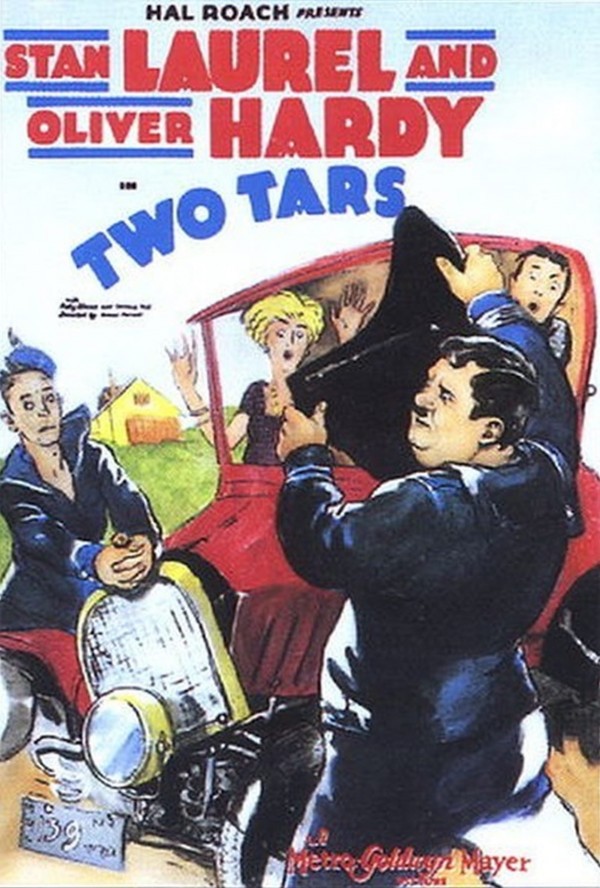
Two Tars (USA,1928)

This film is arguably among the most known silent shorts by Laurel and Hardy. This is a delicious mix of situational comedy and slapstick, of standard material of late 1920s with some subtle influence of slapstick of previous decade. Everything adapted to the so-called Jazz Era. 

Laurel and Hardy play the roles of two Navy men on their day off. They decide to rent a car, get involved in an accident and it does not take long until they meet two beautiful girls and get interested in them. An awkward conversation takes place, where the guys try to act though to impress the girls -without much success. 

The girls were having some problems with the candy machine, Laurel and Hardy tried to help them, but ended up worsening the situation by inadvertently breaking the machine and making all candies fall on the sidewalk. A furious employee of the store shows up. At first, Laurel and Hardy tried to comfront them, but after it was clear that they were not as though as they seemed, the girls took the problem into their own hands and one of them even beat up the store employee. This was a very interesting scene, as it was reversed the standard of “damsels in distress”, so popular in the 1910s, in favor of a new sort of woman that blossomed in the 1920s: The flappers, strong-willed young girls, who attended parties, smoked, and were much more liberated. 

Although the Laurel and Hardy were not exactly brave or skilled, the girls ended up going out with them in their car. The day was beautiful and everyone was happy, but then there was a traffic jam, and it is where it started the most famous part of the film. Actually, the idea of making a film in a traffic jam was pretty ingenious for 1928, as cars have not been around for too long yet. The drivers involved in the jam were understandably stressed and angry there and what started as a minor argument ended up having greater proportions, involving all drivers -including the girls themselves. 

Chaos happened and a fight started, with typical knockabout gags we could easily have seen in a slapstick comedy. This even included things being thrown, people falling down and getting dirty. This is not a very common type of a gag in Laurel and Hardy’s films, considering they have always been situational-oriented since the beginning of their duo. However, despite the clearly physical scenes of the fights during the traffic jam, we can also observe that the mechanical gags of the broken cars were well-elaborate and quite expensive for its era, especially because it was employed lots of damaged cars. Even the type of destruction each car endured were funny by themselves. 

Another noteworthy detail is how the policeman’s attempts to restore order ended up failing terribly and his authority was mercilessly ridiculed. We can see it clearly when his motorcycle was smashed in the middle of all confusion and how the policeman’s vehicle was so powerless in comparison with all those cards around him. This idea of making fun of authorities was very common in films by Keystone studios back to the 1910s, especially in films by the Keystone Cops. Although a full decade had passed and this film was produced by another studio we can see that cinema audiences still liked to laugh at the same things. 

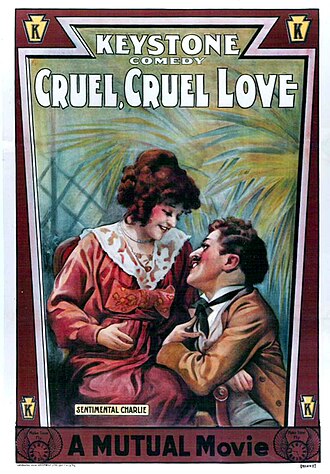
Cruel, Cruel Love (USA,1914)

This film was made during the first year of Chaplin in films, which he spent working for Keystone studios. Thus, the style of this comedy short was typical of the output of Keystone films of the era: Knockabout slapstick, actors in broad gestures to the point of situations often have a surreal aura, fast pace of films, misunderstandings, chases, fake facial hair. We can see it all in this film. Therefore, the pathos, slow pace of subsequent Chaplin films -which made him a legend of cinema worldwide – were still absent here. 

Another important fact is that this short film was considered lost for some decades and the existing footage was found in South America, with some missing minutes compared with the original film. Thus, current audiences must take it into consideration before analyzing this cute little slapstick comedy.

It must be highlighted that the actors do engage in broad, stagy gestures, which was an acting style already out of date back to 1910s films. This is particularly true when we realize that the subtle style of actresses like Mary Pickford, Lillian Gish, etc were already quite successful in Hollywood at that time. Minta Durfee had the most exaggerated acting among all main actors of this film, but it is really no surprise as she always acted quite stagy in her Keystone films.

The character of little tramp existed only as a rough draft of what the audiences would see years later. Actually, Chaplin plays a wealthy man who was left by his love interest (played by actress Minta Durfee, who in real life was back then the first wife of another silent comedy star of the same studio, Roscoe “Fatty” Arbuckle) after she caught Chaplin in an apparently compromising situation with the maid. In reality, Chaplin was only trying to help the maid, who had just hurt her foot and the supreme irony is that the maid had hurt herself right after meeting her own boyfriend (who, obviously was not Chaplin, as she already had another sweetheart).

Chaplin, in despair, tried to kill himself by taking poison even though he did not know that his butler had replaced the poison by water and was laughing out loud at Chaplin’s near-death reactions. As Chaplin was not aware he had only drank water, he thought his death was imminent. 

The real boyfriend of the maid showed up and explained the entire situation to Durfee, that Chaplin had not done anything wrong. Durfee sends Chaplin a letter saying she wants him back and the film has a happy end. 

Although those who are not familiar with Chaplin’s short films in his first years in Hollywood (before he took over full creative control on his films and when he was not a cinema star yet) will barely recognize him in this film, it is still worth watching. This comedy perhaps looks a bit “primitive” to nowadays’ standards, but they were quite usual and popular back to the 1910s and they were vehicles to catapult a plenty of actors into stardom, being Chaplin only one of them. 

The production values of Hollywood were already being consolidated back them. An example of it is that the first comedy feature-length comedy of Hollywood was produced exactly in 1914 by the same Keystone studios, having Charlie Chaplin in the cast and also Marie Dressler (who was already a famous theater actress). This short film was definitely part of all evolvement cinema was witnessing on early XX century. 

Mabel at the Wheel (USA,1914)

This is a very well-known and famous Keystone short but perhaps more because of Mabel Normand and Charlie Chaplin feud in the backstage than the film itself. Supposedly Chaplin had disagreements with Normand on the type of humor of the film and he also did not like the fact that he was directed by a very young woman. Apparently, Mack Sennett (the head and founder of Keystone studios) intended to fire Chaplin, but he had requests of more Chaplin’s films by film exhibitors, which showed Sennett that it would not be a good idea to get rid of an actor who was actually being successful.


However, film is good enough to be successful on its own right and much of this film’s merits come from Mabel Normand herself. She, like her character in the film, was a woman ahead of her time, very physically skilled and brave, which was something completely new compared with 1910s angelical, virginal standards of femininity.


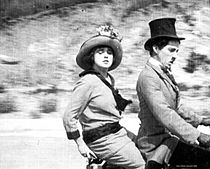
In his first year in films, Chaplin’s little tramp was not already the likeable fellow the world would admire so much. He was a rough man and far from being a gentleman, the kind of guy who would shamelessly make a woman fall on a water pond while taking her out, just like he did with Mabel in the beginning of film. He also did not hesitate in slapping Mabel back after she slapped him. Chaplin would also pursue this rough style of flirting in the film “Tillie’s Punctured Romance” with Canadian actress Marie Dressler, which was also produced by Keystone in that same year.


Something that also looks weird in this early representation of the little tramp is Chaplin’s top hat and exaggerated gestures, an acting that closely resembles Ford Sterling’s and villains of comedic vaudeville or stage plays. Fortunately to Chaplin, he soon improved his character, as those nearly surreal villains soon got out of fashion in films.


Chaplin, after being jealous of another suitor of Mabel, tried to destroy the other guy’s car. Both Mabel and the other suitor find out that Chaplin caused the harm and it caused a fight of bricks and even Mabel took an active part in it. After a while, we can see that the other guy would take part in a car race.


Unfortunately, her suitor ended up being kidnapped by Chaplin and his accomplices and did not show up for the race on time and Mabel, who was in the audience, realized there was something wrong. We can also see Mack Sennett himself in the audience, playing an unsophisticated and simple man. Having started his cinematic career as an actor in Biograph studios, in the first years after Keystone studios was founded, it was not unusual that the boss himself both acted and directed in films, a trend that would soon be over, as it did not take long until Sennett focused himself on administrative tasks of the studio.

Mabel stood up and approached the mechanic, she exchanged her clothes and got into the car that was supposed to be driven by her sweetheart. Many driving scenes were made, which was still a novelty back to 1914, considering that cars were not even very common yet and it was even more unusual to see a woman driving. But this did not stop Mabel and, considering she had even driven an airplane in a 1912 film (A Dash Through the Clouds) and wore a swim suit in another film also in 1912 (The Water Nymph), driving a car was not probably a big deal to her.


Despite the dangers along the way, Mabel drove so skillfully that she won the race and just in time to be observed by her sweetheart, who managed to free himself from the place where he was taken hostage. Rather than being victim of prejudice, Mabel was actually praised by the other guys, generated some publicity (we can see in the end of the film that a cameraman approached Mabel to film her) and was treated as an equal by the other pilots. Meanwhile, Chaplin was quarreling with his accomplices and looked even more mentally disturbed and evil than in the beginning of the film.

Peeping Pete (USA,1913)

The subject of peep hole had been explored in films virtually since the invention of cinema and this split reel (a film shorter than a one-reeler, in other words, lasting less than 11 minutes) shows this theme in a typical slapstick fashion. 

The greatest distinction of this film is not really its simple plot, but the fact that it is the earliest surviving appearance of Roscoe “Fatty” Arbuckle in films, back to 1913. He worked at Keystone up to 1917, and it did not take long until he was very popular among the audiences. During this time, his pairing with Mabel Normand was also very successful, which can put those actors among the pioneers of romantic comedies, a genre that would end up establishing itself in the next decade.

Pete (played by Mack Sennett, the head and founder of Keystone studios) spies on the wife of a neighbor through a hole on the fence. Her husband (Ford Sterling) finds it out and gets furious. 

Sterling had his typical acting of broad gestures, ridiculously fake mustaches and an almost surreal temper. However, Sterling is less over the top here than in other films because all the other actors are equally exaggerated. The wife is played by Fatty Arbuckle in drag, which gives an. extra funny effect to the film. The trend of appearing in drag on screen was with Arbuckle throughout his career and he performed quite well in this type of role. 

Sterling also had some quite funny scenes when he tried to take revenge of Sennett for spying his wife and carried a revolver (which shot lots of smoke) with him, causing a plenty of confusion and misunderstandings when he inadvertently intimidated and scared people away while he was trying to find Sennett.

We can also see Arbuckle falling and tripping often in this film. Do not be fooled by his overweight, as Fatty was a quite skilled physical comedian and dancer and he often displayed such skills on screen. Arbuckle also had a very pleasant voice and it is said he could sing very well. Were not for the scandal that virtually ended his career in 1921 and it seems he could have made a smooth transition to talkies, if only he had a chance of doing so. 

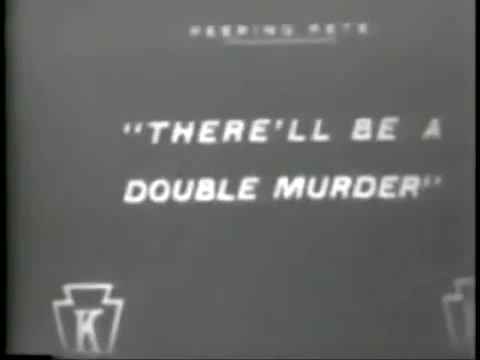
In the end, both husband and peeping Pete ended up forgetting their disagreements and became friends. Not before the wife and a plenty of other neighbors got desperate in fear that a double murder would happen (as one of intertitles of the film) said. 

Not really an easy film to be understood by modern-day audiences, as the film is very short and it’s logically not possible to develop the psychological profile of characters well. The plot is also not narrative, but revolves around a simple premise and random gags. Still, it’s interesting to see how Arbuckle was a good comedian from the start and how comedy shorts would develop more and more each year. On the following year. Keystone studios would hire Chaplin (who was also starting his career in films) and produce its first feature-length comedy with most of famous Keystone comedians + Marie Dressler (already a famous stage actress). But this is another story.

Help! Help! (USA,1912)

This film was not made at Keystone studios of California, but at Biograph studios of New York, the same that gave D.W. Griffith to the world. The film was directed by Mack Sennett, who in later years would say he learned a lot while working with Griffith at Biograph.  However, while already in Biograph studios, Sennett focused his work in comedies, both as an actor and director and it was where he started honing the comedic pattern that would soon be famous at Keystone studios.

The style of the plot was not the frantic slapstick yet and even Mabel Normand’s acting was different from what she would show at Keystone studios. She played the role of a typical damsel in distress with some touches of overacting, which was something still common in Hollywood at that era. It was portrayed in this film the lifestyle of middle class citizens, rather than working class ones, as it would be so common in Keystone films. 

Mrs. Suburbanite (Mabel Normand) read in a newspaper that burglars were operating in the neighborhood, as one of intertitles says, and she immediately talked about it to her husband because she was really impressed with what she read. Then, Mr. Suburbanite (Mabel’s husband, played by actor Fred Mace) went to his workplace, an office in the city. Meanwhile, Mabel saw some suspicious-looking men and she locked the door and hide the key. 

Mabel called her husband at his office because she thought there were burglars at their house. He left the office by car at once, but unfortunately the car stopped in the middle of the road. At the same time, Mabel was even more afraid at home, as she realized the curtains were moving. The husband got to make the car work again but it ended up stopping on the road again. After a short time, the he got to find another vehicle to take him back home but no success again. Against all odds, the husband got to return home on foot.

As a typical damsel in distress, Mrs. Suburbanite nearly fainted when she realized her husband was back. The happy end was assured when it was found out that the burglar was actually only a small animal.

Some reviewers claim that this film was probably a parody of some previous films by D.W. Griffith, such as The Lonely Villa (USA,1909) and The Lonedale Operator (USA, 1911). The statement makes sense and it could also be a parody of the stereotype of damsels in distress, a spoof that would be included in subsequent films of Keystone studios directed by Mack Sennett, such as Barney Oldfield’s Race for a Life (USA,1913). 

Fred Mace followed both Sennett and Mabel to Keystone studios when it was founded in 1912 and made a plenty of films there in the first few years and became a rather popular actor, but his career would not last much longer. Firstly, he left the studio and then returned and finally Mace passed away in 1917 with only 38 years old. 

Frauds and Frenzies (USA,1918)

The theme of convicts trying to escape prison was relatively common in silent comedies. And comedies –specially slapstick ones – portraying policemen and authorities (who were usually incompetent, slow and lazy) were also abundant both in the USA and Europe. The laughter such films provided was also a relief to audiences, considering that a plenty of cinema goers belonged to working classes, who could laugh at those who had a more prominent position in society. 

Although not particularly innovative, this film had some funny physical gags, which can still be universally understood by modern audiences, regardless of culture. This is particularly true in the beginning of the film, when the convicts were shown performing forced labor. Stan Laurel, despite having engaged in such gags, also subtly showed to have a more self-contained type of humor, which he would also have during his pairing with Oliver Hardy. Speaking of Hardy, Semon would also work with him prior to his pairing with Stan Laurel. 

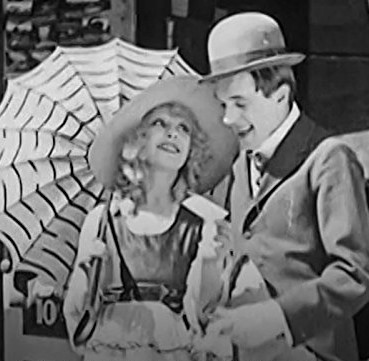
One day both Semon and Laurel got to escape and they suddenly became rivals for the love of a beautiful girl (with curly hair and a big umbrella, very much according to 1910s fashion standards). Such love interest is prone to make the former convicts having problems with the police again because the girl turned out being the daughter of one of policemen. At this point we can observe an ethnically insensitive gag, when they tried to kiss the girl, but it was actually a black woman below the umbrella, which makes both Semon and Laurel run away in disgust. Such gags were also common in silent comedies and not considered by some people as gross as it is considered nowadays. 

As usual, Semon happily engages in his cartoon-like special effects and gags of big proportions. There is even a chase (which is a type of gag considered by some laymen audience members as the symbol of silent films in general). It is also noteworthy that Stan Laurel gets less screen time in the second half of the film. Laurel had claimed that Semon reduced his time in the film in fear of being upstaged after a comment that Laurel was funnier than himself. 

Although not well-remembered nowadays, Larry Semon was a famous comedian in his day. He would pass away around one decade after this film, while in poor financial and health situation, but a plenty of his films are preserved nowadays and his distinctive cinematic style still stands out. 

A Film Johnnie (USA, 1914)

Even for those who are not fond of silents, this film is full of historic value. By showing a sort of “film inside the film”, we can have a rare insight about what it was like to go to the cinema in the 1910s. We can also have an insight on the backstage of Keystone studios, as well as its working practices. 

Furthermore, Chaplin was at the very beginning of his career in films. We can see the evolution of the Little Tramp, who was originally a rough, impolite troublemaker, at first without the pathos that would soon make Chaplin famous worldwide. 

It is also possible to make comparisons between the plot of his film and the very beginning of Chaplin cinematic career, with him trying to be accepted in his new work and having a difficult attitude with his peers at the same time. There are stories of Chaplin having refused to be directed by Mabel Normand and clashed with other directors of Keystone studios. 

The Little Tramp goes to the cinema and falls in love with the girl in the picture of the publicity material outside the cinema. Of course that the girl turned out to be Mabel Normand and the film was produced by the Keystone studios. A noteworthy observation is that, even though it was Mabel Normand`s picture outside the cinema, the character turned out being played by another actress Peggy Pearce. 

There`s a rumor that Mabel Normand did not act in this comedy because Chaplin had previously clashed with Normand while making another film and she simply refused to work with him again. And that made the studio replace Normand by Pearce. 

Chaplin enters the cinema and ends up causing chaos with other moviegoers. He was not only impolite with other people, but also very naïve in taking what he saw on screen as if it was real. His love for the Keystone Girl only grows bigger. 

After a fight at the cinema and being kicked out by the audience, the Little Tramp ends up on the doorstep of Keystone studios. The reasons for it aren`t clear. Was he looking for his sweetheart? Looking for a job? Begging for money/food? We cannot say for sure. When the “Keystone players arrive at the studio”, as one of intertitles says, modern-day audiences can see some of the biggest stars of the studio of the day, including Roscoe “Fatty” Arbuckle, who in real life played an influence on how the Little Tramp character would be built up and was already an established comedy actor when Chaplin started working at Keystone studios in 1914. 

The Little Tramp finally got to enter the studio, but he created a huge chaos. Then, there was a fire and the actors and studio crew ran to the scenery in order to get some “atmosphere” for the film. In the first years of Keystone studios (which had been founded in 1912), it was a usual that films were made on the spot of real-life events.

This short film does provide a rare and accurate insight about entertainment early XX century, both under the perspective of young Hollywood industry and of audience and how they related to films. Highly recommended for those interested to know about the evolution of cinema in a fast and practical way.

Create a website or blog at WordPress.com

Up ↑