Mabel Normand in The Motion Picture Story Magazine – August 1911
Mabel Normand (November 9, 1892 – February 23, 1930) was an American silent film comedienne and actress http://en.wikipedia.org/wiki/Mabel_Normand
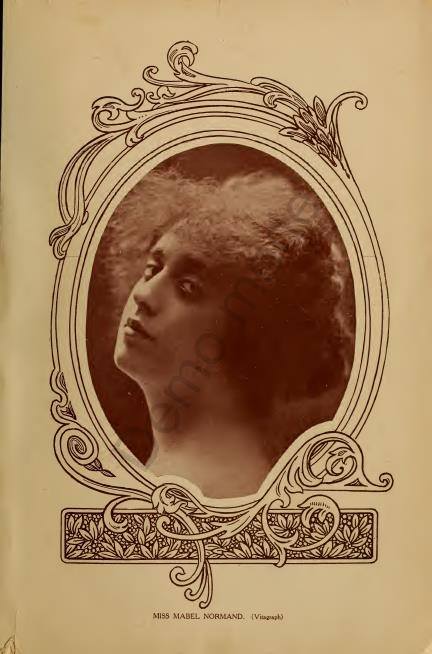

Mabel Normand in The Motion Picture Story Magazine – August 1911
Mabel Normand (November 9, 1892 – February 23, 1930) was an American silent film comedienne and actress http://en.wikipedia.org/wiki/Mabel_Normand

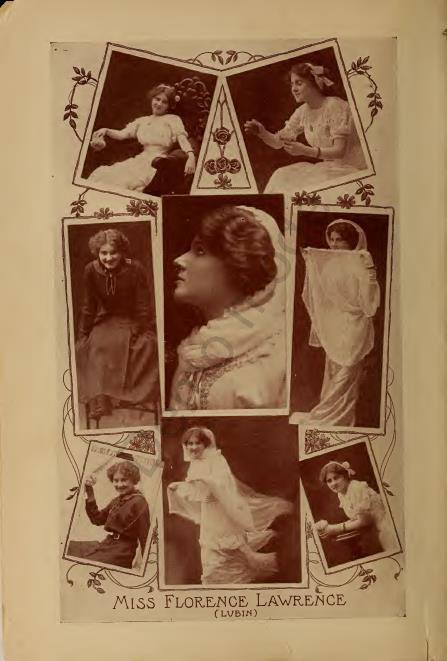
Florence Lawrence in The Motion Picture Story Magazine – August 1911
Florence Lawrence (January 2, 1886 – December 28, 1938) was a Canadian silent film actress. She is often referred to as “The First Movie Star.” http://en.wikipedia.org/wiki/Florence_Lawrence

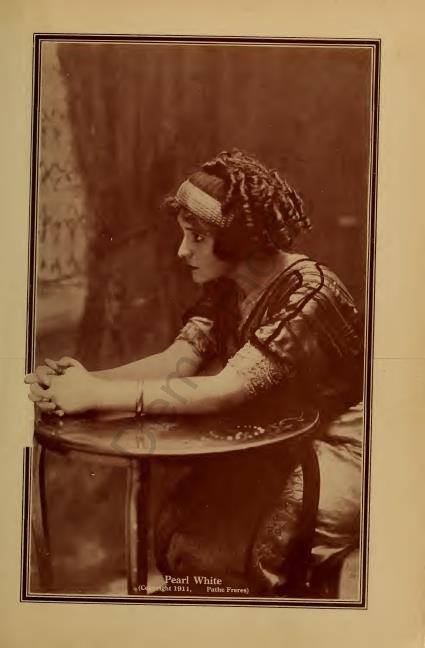
Pearl White in The Motion Picture Story Magazine – September 1911
Pearl Fay White (March 4, 1889 – August 4, 1938) was an American film actress http://en.wikipedia.org/wiki/Pearl_White

In such weird year, when the world has stopped due to a pandemic and the humankind has had to assess how to deal with isolation and to do as many activities as home as possible, we have for the first time the on line version of Pordenone Silent Film Festival, which is considered the most important festival devoted to silent films and that has existed for almost 40 years. It started being held in September 1982 when a small group of friends organized a three-day festival in response to the 1976 Friuli earthquake that had devastated much of Northern Italy.
The festival was a pioneering event in the beginning and it has been pioneering now, with the initiative of holding the counterpart of a large cinema festival on line due to a pandemic that impacted the entire world and, for a while, it was particularly harsh with the Northern of Italy itself. As it is the case with all pioneering initiatives, nobody was certain about the results of an on line festival of silent films with attendees of all parts of the world.
But it truly worked. With the usual careful selection of films mixing rarities and known films from a plenty of countries, Pordenone did not really fail in providing immersion for the audiences. In addition to the films, there were also lectures about the films themselves and silent film music. Pordenone Masterclasses is when the musicians of the festival talk to the audience about their work, which is a rare opportunity to increase the understanding of the films themselves.

Another pleasant surprise was that together with the introductions of the films the audiences could see the work of film archives in some countries and it was fascinating to have an introduction on how films were restored, to see their facilities, the employees working, the reels on the shelves. It’s a dream for every fan of history of cinema. It is an interesting bridge between past and present and context is also important to the understanding of silent films, especially for the new generations.
They also have an event called Collegium, which according to the festival’s website is: “to attract new, young generations to the discovery of silent cinema and to infiltrate these newcomers into the very special community that has evolved around the Giornate during its three decades. It is designed to take advantage of the unique conditions of the Giornate – a highly concentrated one-week event; the possibility to see an extensive collection of rare archival films; the presence in one place and at one time of many (perhaps most) of the world’s best qualified experts in film history – scholars, historians, archivists, collectors, critics, academics, and just plain enthusiasts”.
On the technical side, the films were shown through an Italian platform that worked really well. The films could have their intertitles translated into both Italian and English and were available for 24 hours to be watched. After this time, the films were no longer available. An interesting detail is that there was an interface in each film that reproduced the chairs of a real-life cinema that showed how many people were watching the films at the same time as you.

Other interesting details is that the audiences could take a peek on the beauty of Pordenone city in the introduction of the films. Artistic Director Jay Weissberg made all introductions and was straightforward and informative. It was an interesting way to have some contact with the Italian cities and their culture.
Of course that nothing replaces the real-life experience of attending the screening of a film with live accompaniment, the get together with fellow silent film fans, the networking but the production made sure that audiences had an as close to real life experience as possible.
For example, right in the first day there were nine travelogues produced between 1911 and 1939 shown under the name “The Urge to Travel”, which demonstrated that despite being a festival related to the history of the cinema, Pordenone Silent Film festival is also in touch with the current events. This bridge between past and present is very important to contextualize silent films to new audiences and show them that the understanding of silent films helps to figure out the world as it is nowadays.
The experience that those travelogues provided was truly awesome. Some of them were filmed in such a way as if we were walking down the street with the people who were being filmed and it gave a very interesting feeling of travelling in a time machine. That was really touching because the audiences witnessed an era that has been gone for a long time. And it was only the first round of films of the first day. Afterwards, there were rare films from countries like China, Greece and even lesser known films of the United States, together with classics.
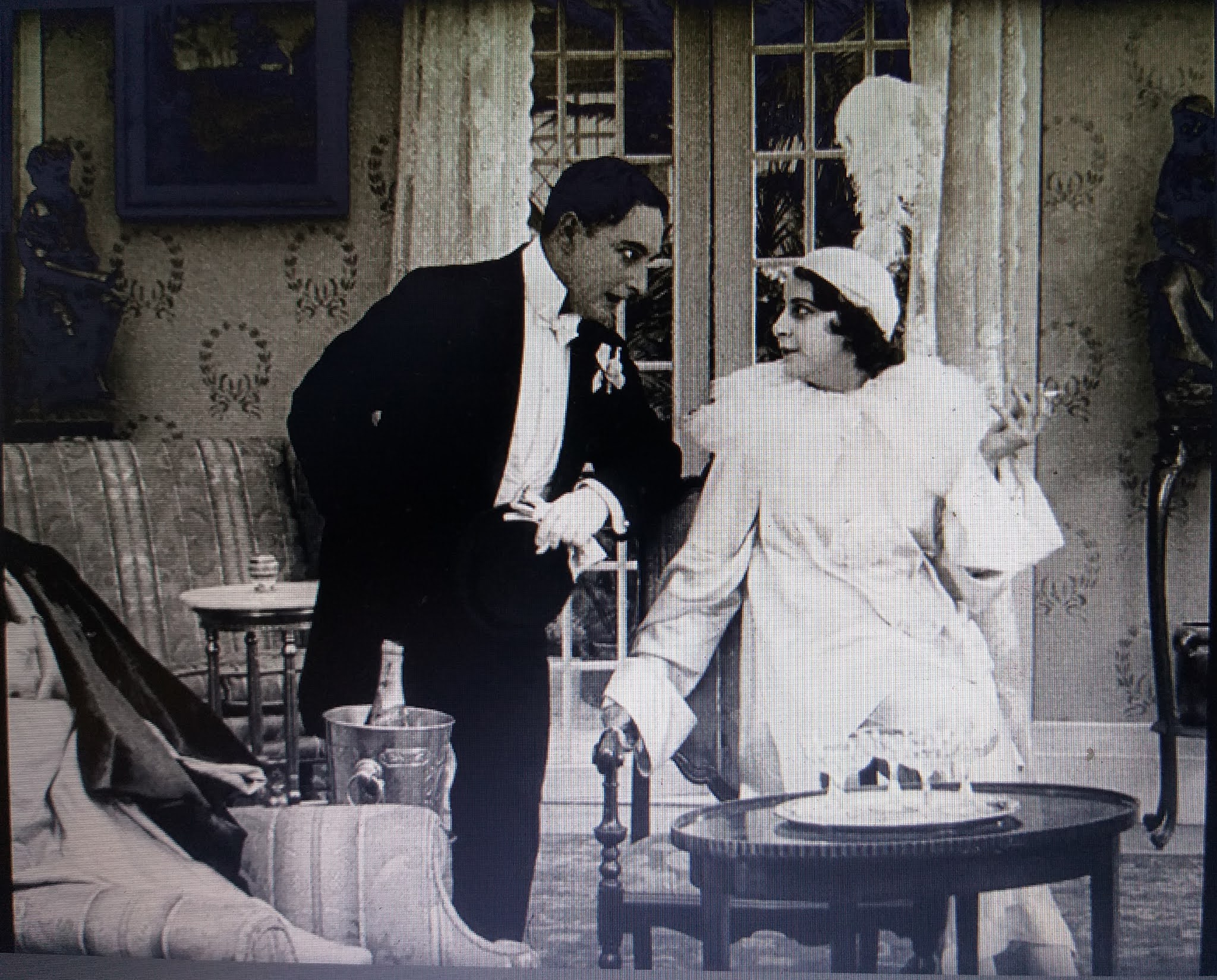
All in all, Pordenone Silent Film Festival, got to keep up with its high standards and not only provided films, but also experiences to the audiences. They could experience travels in time machines, they could listen to scholars talking, watch the films. Variety was also thought of and the films were really interesting and the music was awesome. The festival is a very worthwhile experience even for those who are not hardcore fans of silent films especially because, after an entire week being in touch with those films, it is likely that you will end up becoming a fan too.

Boobs in the Wood (USA,1925)
Starring: Harry Langdon, Marie Astaire, Vernon Dent
IMDB link: https://www.imdb.com/title/tt0015635/
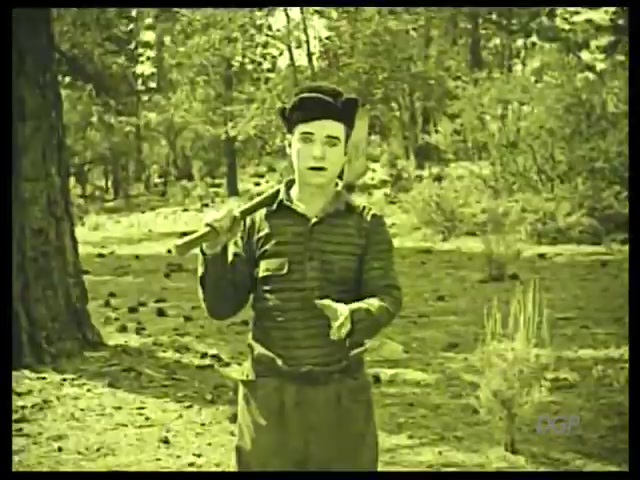
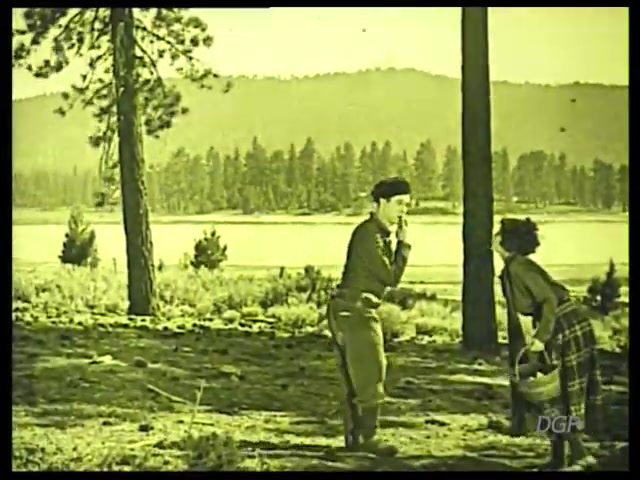


This film has a historical importance because, to this date, it is the earliest-surviving film directed by Mabel Normand. She was 21 years old at the time and was at the height of her beauty and vitality. Previously thought to be a lost film, it was discovered in 2010 in New Zealand.
The 1910s comedies by Keystone studios show us that it is possible to be funny with simple resources. They were mainly one or two reelers with very simple plots and the gags were the center of all action. In addition to frantic chases, quick pace, fake facial hair and occasional broad gestures, an important component in those comedies was misunderstanding. And this is exactly what we will see in this film.
A woman is sweeping the floor outside a house and a man with a big sheriff badge approaches her. Then, there’s an intertitle saying: “Dreaming of her ideal” and we see Mabel sitting down outdoors. Two men are shown, one of them approaches Mabel. She does not care very much and leave and walk towards a river and the other man laugh at the man who was rejected.
It is shown once more the woman who was sweeping the floor and the sheriff. The woman enter the house leaving the man outside speaking a lot.
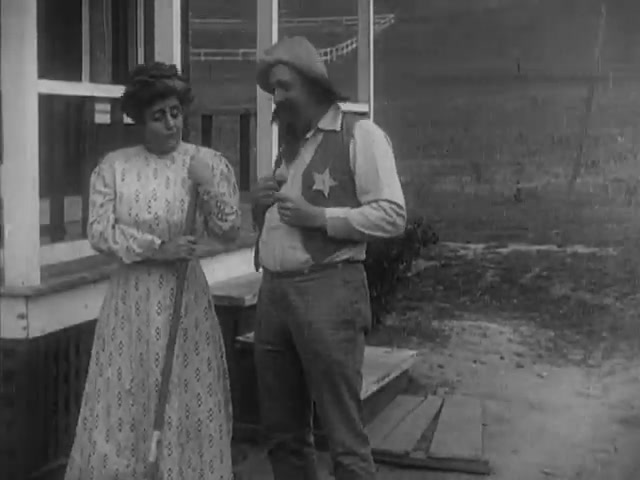
The two men are shown again. The other man try her lucky in approaching Mabel while the rejected man look at it from a distance. This other man end up being rejected by Mabel just like the previous one.
The sheriff return to the police department, the other policemen are idle and the sheriff complain about it.
Now Mabel is in a sort of forest and both men are still all around her. There is an intertitle: “Her ideal” and we see another man and it is shown to the audiences that they really liked each other, to the disgust of the two men who were interested in Mabel previously in the film. At this point of the film, there is a split screen with both love interests walking towards each other, which create a very beautiful and innocent event. Mabel’s love interest give a fruit to her and she accept it with joy.
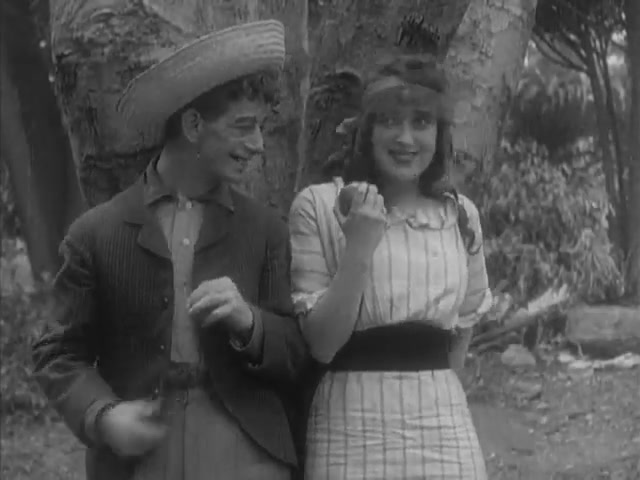
On the following scene it is shown the sheriff once more visiting the woman who was out of her house and the audiences can see that there is mutual romantic interest between them.
Both of Mabel’s previous suitors approach the couple, but Mabel refuse to speak to them. The men started to bully Mabel’s love interest and she get angry. A fight take place and everyone start throwing things at each other. The sheriff appear by chance in the middle of the chaos and was hit by accident too. The sheriff beat up Mabel’s suitor and took her away.
It is shown the intertitle: “Mother’s pet”. Mabel’s love interest return home, which is the same house where the woman sweeping the floor live and it become clear that he is her son and a kind of coward person. It is also clear that Mabel is the sheriff’s daughter. Both Mabel and her suitor were admonished by their parents at homed due to the fighting they were involved.
But Mabel’s love interest did not give up and he showed up at her house. Mabel talked to him by the window and meet him outside. Meanwhile, the sheriff was visiting his love interest and at this point it become clear to the audiences that the parents of Mabel and her suitor were having an affair. The boy’s mother enter a cupboard within her house, the sheriff enter the house and does not see her.
Mabel and her suitor meet a tramp while they are walking outdoors. Right afterwards, the couple was passing nearby the boy’s house and he invite Mabel to go inside. The problem is that the sheriff was already within the house and in order to avoid being seen by the couple, the sheriff decided to hide inside a cupboard, the same place where the woman (his sweetheart, the owner of the house and the boy’s mother) was also hiding. Both people realize that their children were outside and got nervous in fear of a scandal if their children found out about their affair.
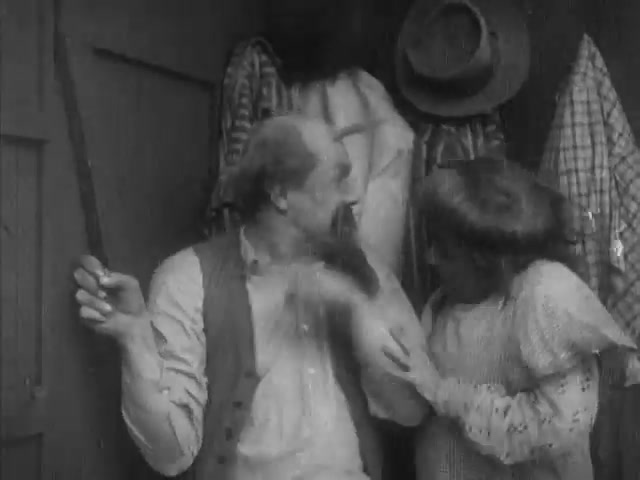
Mabel and her sweetheart enter the boy’s home and Mabel sees that there is somebody inside the cupboard and she think that the tramp they have met on the street a short time ago was the one who was hiding in the cupboard. The boy go outside and cry for help and meanwhile Mabel barricade the cupboard’s door. Many people in the neighborhood go to the house to help them get rid of the so-called tramp and Mabel also called the police department.
Chaos ensue as many people go to the boy’s house at the same time, including the policemen and the neighbors carrying rifles. The cupboard is removed from the house and people try to open it in whatever way they can. Of course that after all effort the cupboard’s door was eventually open and everyone knew who was inside. It turned out that the scandal and gossip could not be avoided.
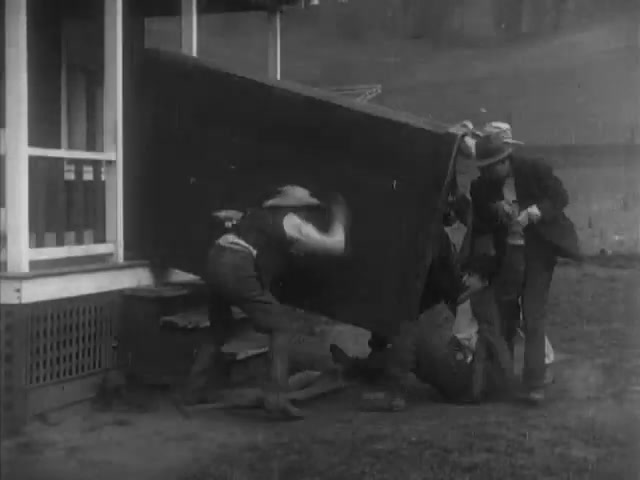
Won in a Cupboard was categorized as a nonsense number by Moving Picture World in 1914 and I have to say this is an average comedy of the era, but it remain worth seeing. It is a nice example of Mabel’s directorial style. She had her own production unit in Keystone studios at the time and it would last for around one year and, during this time, she directed all films of that unit. This film is also a precious witness of a country life that has been gone a long time ago. It’s a joy that the film was recovered after so many years.

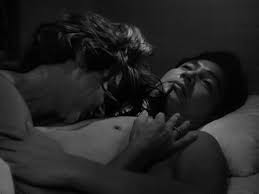
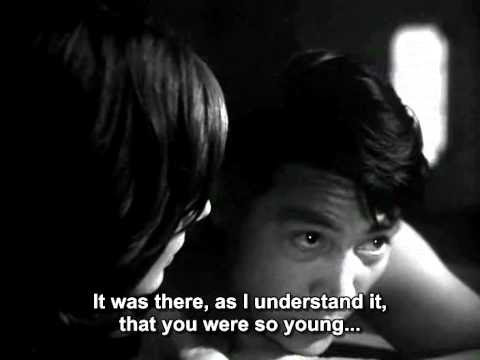
Directed by Alain Resnais and written by Marguerite Duras (the famous French novelist), this film is considered groundbreaking for many reasons and it is still studied in cinema universities around the world for its language, narration, lyricism. It is one of the most acclaimed films of the French new wave and for a good reason. Innovative, strong and emotional at the same time, complex and simple, silent and subtle, this film runs smoothly and gives a plenty of sensations to the audience.
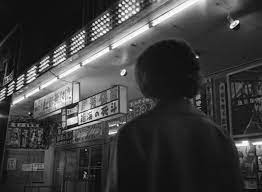
How to talk about a tragedy without being too graphic? We are aware of the atomic bombs detonated in both Hiroshima and Nagasaki, respectively on August 6th and 9th , 1945 and the horrifying loss of lives and suffering that they caused. How to keep the memory of facts alive in a touching, respectful way? It was an even more relevant question back to the production time of this film considering that those matters were shown on screen only 14 years after the tragedy.
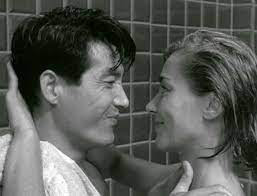
Alain Resnais intended to make this film as a documentary at first but after a while he decided to add some fictional elements to it. It started with an embraced couple covered with nuclear dust. The woman is a French actress who went to Hiroshima to make a film about peace. The man was a Japanese architect. They both had an adventure that lasted a little more than 24 hours. She is in the last day of her work and then will immediately return to France. He would like her to stay a little longer. They are foreigners and also married to other people and are well-aware that their romance cannot possibly last. They are not named.
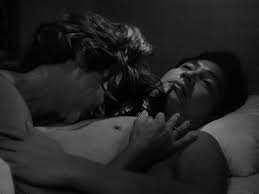
They started to talk. She said she had seen a lot from Hiroshima and he disagreed saying that she had seen nothing. This is the opposition between being on the place where the facts actually happened versus being away from the facts but having heard of them later on. She claimed that she had seen it all because she visited the city, she was in a hospital, in the museum. He still disagreed although he was not actually in Hiroshima when the bombs exploded because he was in the army. But he had family there and he was born in Hiroshima. Here we see a dichotomy that will last throughout the film, which is forget x remember.
A fragmented narration, being led by the memory of the characters. She told him about her first love, a German soldier who she met in her home city of Nevers while it was occupied by the Nazi army. When the war was about to end and both were planning to elope, he ended up being killed. Her family and neighbors found out about her relationship and she was deeply ostracized by her family and community, to the point that her family disowning her and her father had to close his pharmacy because of the shame. After some time of intense suffering she left her home city and went to Paris and she arrived in Paris on the day of the Hiroshima bombing. It is interesting that the day of bombing meant a new beginning both in her life and in the life of her Japanese lover.
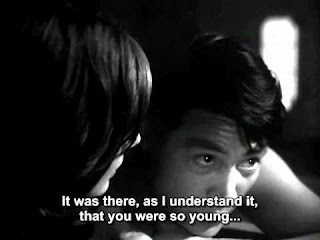
The actress had this big trauma about the death of her love when she was younger, she continued to live, but those experiences remained inside her and they resurfaced when she was in Hiroshima, as physical and historical distance do not prevent people from having their memories with them. Even when we are no longer consciously aware of the past, it is still there in our subconscious mind, only waiting for an opportunity to return in full force.
The film was very competent in portraying the eroticism of the couple in a touching and non graphic way, at the same time showing the intensity of the feelings and attraction they had for each other. It is very interesting to see that although their love affair was extremely brief, we can see both people looking tenderly to each other, treating each other in the most caring way, trying to enjoy every minute of a beautiful story. This almost poetic atmosphere was enabled by the excellent acting by both Emmanuelle Riva and Eiji Okada. At the time of the production of his film Okada could not speak French and he learned his lines phonetically. The result was excellent and he spoke French very well with only a slight accent that gave his character an extra layer of charm. The audiences can easily empathize with her, but he was also so human so intense that we like him in the same extent.
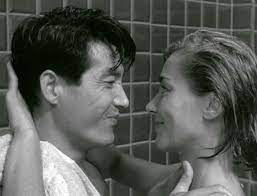
We must also bear in mind that at the time it was still not very common to see an inter racial couple on screen, but there is no room to think about it because what we actually see is two human beings dealing with their feelings, memories, love.
On the other hand, the sequence where the French actress talked about her past in Nevers and the traumatic loss of her first love can be tiresome for nowadays’ audiences. Emmanuelle Riva engaged in a very long monologue while her lover carefully listened and even role played her old boyfriend in what looked like a therapy session at times. This scene could have been more balanced if they both have talked about their memories instead of only one person talking and the other one mostly listening. The film also often try to go really deep into the actress’ psychological character and at times she seems to act unreasonably or over stressed. The scenery is also noteworthy. We can often see the French woman walking in empty places, streets that were almost deserted, which highlight the emptiness she felt deep into her soul.
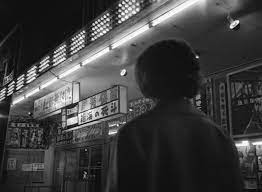
The end is really powerful when she tells him that she will forget about him, that she had actually already forgotten about him. Then she said to him that Hiroshima was his name in what looks like an attempt of her to have him on her mind as just a nameless man, just somebody she had casually met in Hiroshima without too much importance. Surprisingly, he agreed with her and said that it was actually his name and he told her that her name was Nevers, Nevers in France. This is how the film told the audiences that no matter where we go, what we do, how long it takes and we are all shaped by our past experiences, roots, culture. We may try to forget, we can deceive ourselves but in the end those experiences shaped our personality to such an extent that we would have been completely different people without them.

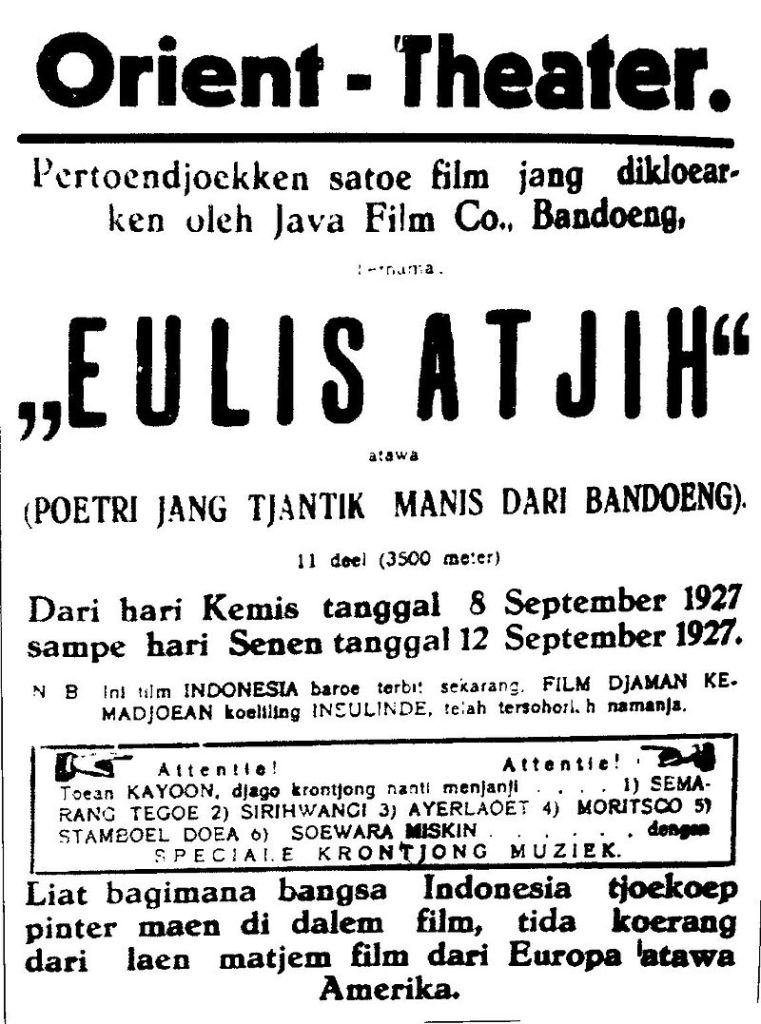
Eulis Atjih is a 1927 film from the Dutch East Indies (modern-day Indonesia); it was the second feature film produced in the country, after Loetoeng Kasaroeng in 1926. The silent film follows the lives of a native Indonesian family sent into poverty by the husband’s splurging. Eulis Atjih was a commercial success in the Indies, but failed in international markets.
Wikipedia link: https://en.wikipedia.org/wiki/Eulis_Atjih

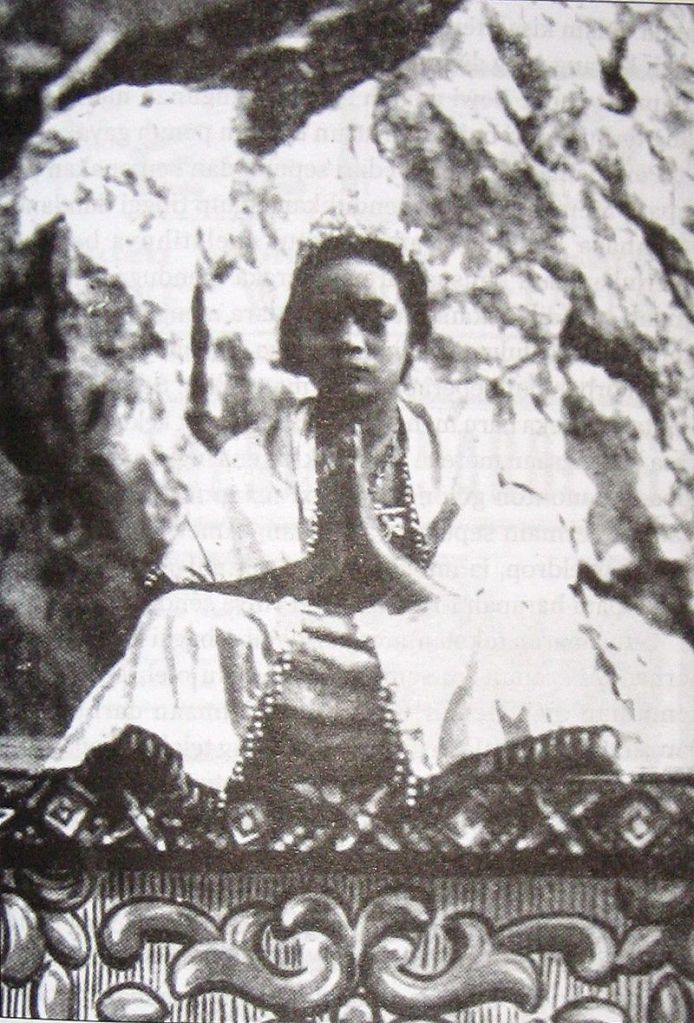
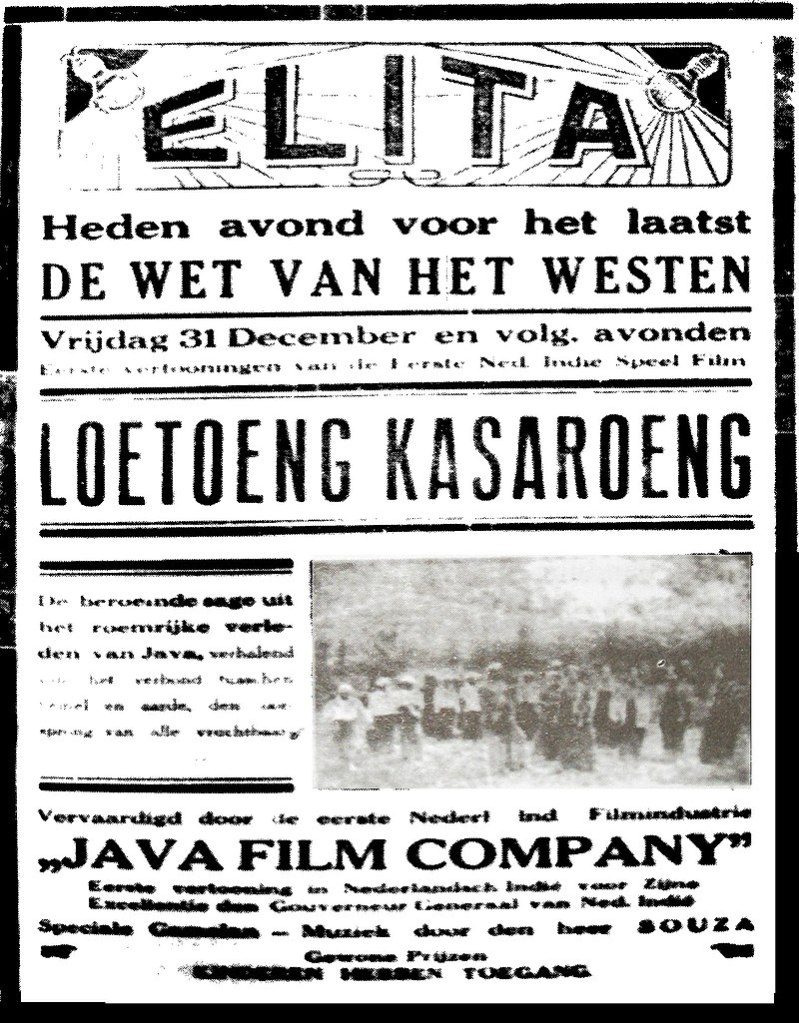
Loetoeng Kasaroeng is a 1926 fantasy film from the Dutch East Indies (modern-day Indonesia) which was directed and produced by L. Heuveldorp. An adaptation of the Sundanese folktale Lutung Kasarung (The Lost Lutung), the film tells of a young girl who falls in love with a magical lutung and stars the children of noblemen. Details on its performance are unavailable, although it is known to have been of poor technical quality and thought to have performed poorly. It was the first film produced in the country and the first to feature a native-Indonesian cast. It is likely a lost film.
Wikipedia link: https://en.wikipedia.org/wiki/Loetoeng_Kasaroeng

This is one of one reelers (short films that lasted around 11 minutes) made in the beginning of Keystone studios (which had been opened on the previous year in California) with simple plots and straightforward gags, including overtly fake facial hair, exaggerated gestures, actors falling on their butts and even weird dancing (the latter being pretty much the case in this film). Mabel, so sweet and cute, had two suitors, who fought each other in order to have her affection. Mabel invited one of them (Schnitz, the grocer, a character played by Mack Sennett himself, who was the founder and director of Keystone Studios in real life) to her party. The problem is that Mabel also invited her other suitor (Meyer, the cobbler, a character played by Ford Sterling, one of the most popular comedians of the studio in its first years). Of course it would trigger the rivalry between both men even more.
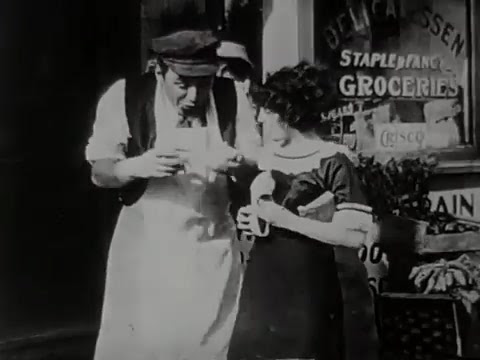
A short time later we could see that Meyer bought some fresh cheese. The reason of it was not disclosed at first, but the audience would know it really soon. Unfortunately it turned out that the cheese did not really smell well (actually, it stink). Some time passed, both men got ready for the party and “dressed for the occasion” as one of the intertitles says. Meyer arrived at the party and gave some flowers to Mabel. People were dancing happily and Mabel and Meyer joined them in the ballroom. Then Schnitz arrived and he brought flowers to Mabel too. He gave them to her and started dancing with Mabel, pushing Meyer away from them. Meyer did not take this insult easily and would take a revenge in the first opportunity. Actually, “Schnitz scents trouble” as both men confronted each other, Mabel got upset and the environment of the party, which was happy until then, became tense.
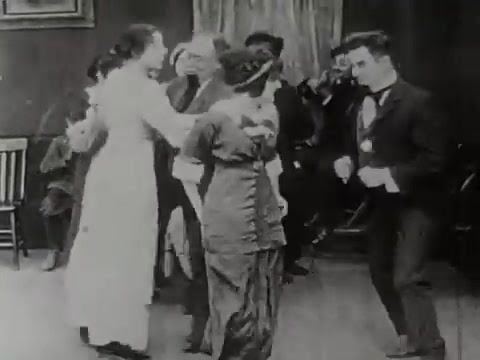
The reason of the sudden change of vibe is that Schnitz started to stink all of a sudden, scaring off even the other guests. He tried to puff perfume on himself to disguise the problem but it seems the situation worsened because virtually everyone left the party altogether. Schnitz was insulted, tried to dance with Mabel again (to her despair) even though they were both literally alone in the ballroom now. An argument was started and Schnitz left the party in anger, carrying with him the flowers he gave to Mabel. Then Meyer was delighted because he could have Mabel all to himself and his rival was defeated. However, when Schnitz returned home he found out that the cheese on his shoe and he would not accept to be deceived his way and decided to fight back. He returned to the party, talked to a boy, who asked Meyer to go outside. While both of them talked, Schnitz discreetly put the cheese on Meyer’s pocket.
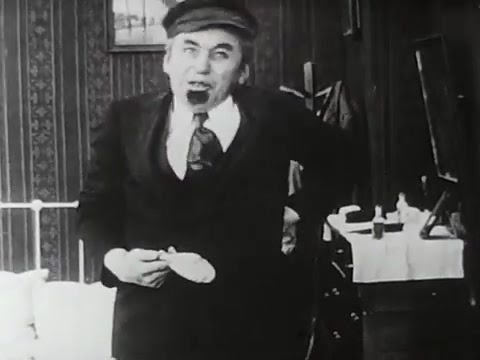
The party continued, the guests were dancing in the same ballroom, having fun while Schnitz was watching from a window the result of his plan to embarrass Meyer in front of everyone and the guests run away from the ballroom as soon as Meyer returned to the house. Mabel got angry, gave back to Meyer the ring he had previously given her while Schnitz laughed in joy. After a while, Meyer found out the cheese in his pocket. Meanwhile, Schnitz entered the party while the disgusted guests were packing the living room as no one wanted to return to that stinking ballroom. When Meyer saw Schnitz he threw the cheese on him and another argument took place, but it did not last long because both Mayer and Mabel fainted due to the strong smell while Schnitz watched it in shock.
Although the plot might seem too simplistic for nowadays’ audiences, those short films stood well the test of time as they have gags that can be easily understood to this day, which might explain the success of those slapstick comedies in their own era. The charm of a film that simply entertains and relaxes is something hard to resist, regardless of era.

An important part of silent comedies was misunderstandings and all the confusion it caused among the characters, which included mistaken conclusions against the good morals of a couple. This is exactly what happened in this film.
The film started in what looked like a department store, both the place and people look sophisticated. Al St. John was smoking besides a well-dressed elderly man who is smoking a pipe, they both worked together in the same office. At that moment, a woman arrived.

Roscoe “Fatty” Arbuckle crossed the street, entered a place, had difficulties with a revolving door. Roscoe got to solve his problems with the door, a crook arrived at the store and stole the handbag of a lady. The thief bumped into the revolving door and fell and as Fatty was still nearby, the crowd thought he had caught the thief. The lady gave some money to Fatty out of gratitude.
Right afterwards Fatty applied for a job as a janitor. As one of intertitles said, a broker, Mr. I. Steele, has a client who “will arrive about noon with certified check for $ 10.000 to close a deal” and the option expires at three o’clock. The broker left the office and requested a note to be delivered for his wife, letting her know about the upcoming business deal.

Meanwhile, Fatty was carrying out his duties in the most clumsy way possible, even causing accidents involving other passerby people and flirting with beautiful women around him. This scene was an opportunity for a plenty of people falling on their butts in full splendor.
While Fatty was causing all that mess downstairs, a woman caught the elevator and entered the broker’s office. It was his wife. She was greeted by her husbands’ co-workers, received the note and read that he wanted her to entertain his client until he arrived. The husband also wrote in the note that his client was a rather eccentric man.
Fatty was asked by a couple to watch their beauty parlor until they arrived back. However, some seconds later a woman came and asked Fatty to keep his eyes on the candy shop. A short time after the woman left, it arrived a client to the barber and, for any weird reason, Fatty did the job on the poor man’s beard. To add insult to injury, Fatty left the gentleman alone in the barber while he was servicing a female client in the candy shop. Eventually, the barber’s client was “sore, but satisfied” despite the complete inability of Fatty to work as a barber.
Subsequently, Fatty caught the elevator and entered the broker’s office. Fatty noticed there was another guy in the elevator, but kept going. The broker’s wife had mistaken Fatty as her husband’s client and invited him to have lunch with her at the oriental café. Fatty gladly accepted the proposal, unaware of the chaos that would happen soon. The café was lavishly decorated and unfortunately Fatty lacked enough social skills to attend this type of sophisticated place.
The broker finally returned to his office and was told by Al St. John that his wife “went out with the janitor”. The broker was furious and immediately took a revolver that he kept in his drawer. He was determined to take revenge and while his wife and the janitor were having fun in the café watching a rather over the top show, the husband arrived to wash his honor with blood. He tried to shoot Fatty, but the janitor got to run away in fear.
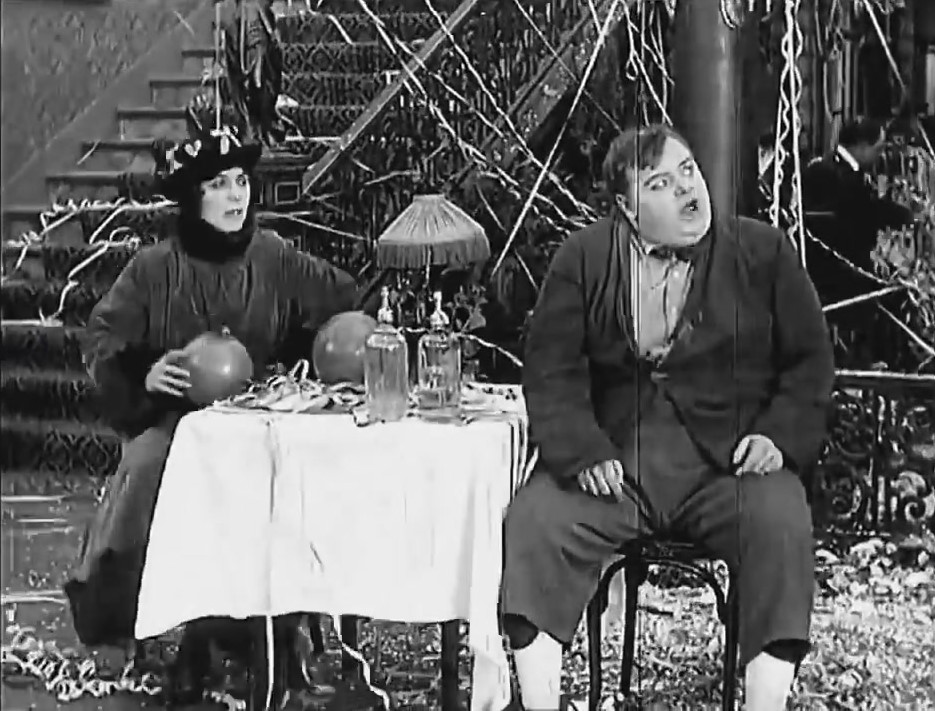
In the middle of all this chaos, the real client arrived at the office and was received by the broker’s co-workers. The real client claimed that the papers must be signed by three o’clock otherwise the deal would expire. And he could not wait much longer because it was actually almost three’ o’clock.
It looked like the employees got to tell the broker about the misunderstanding and the documents were signed on time. Yes “it looked like” because it seems there are some scenes missing in the end and the last scene the audiences see is Al St. John and his colleagues running on the street and then the film abruptly ended. It is not clear if the end of this film is lost or if it is just some printings that don’t show the entire film, though.
In addition to being a funny comedy to this day, this film also has interesting historical value because it enables modern-day audiences to catch a glimpse of 1910s buildings, offices, elevators, typewriters, etc. and compare with how those items look like nowadays. It is like traveling in a time machine and a genuine one-of-a-kind experience.

Something that brings lots of chaos in silent films is two gentlemen competing for the affection of the same sweetheart. This is what happened between the characters of Roscoe “Fatty” Arbuckle (The Cook) and Al St. John (The Waiter). Al St. John was Roscoe’s nephew in real life and both of them made many silent films together and were skilled in physical gags. Needless to say that such gags were plentiful in this film, Arbuckle remade with St. John and Buster Keaton by the name The Cook (USA,1918).
The Cook is seen carrying out his tasks in the kitchen by cleaning the floor and cooking -both at the same time. At the same time, the waiter is trying to carry some plates without breaking them and he was not exactly successful. When it came to both workmen, clumsiness ruled. Something they also had in common was that they liked the same woman – the cashier of the restaurant where they worked.
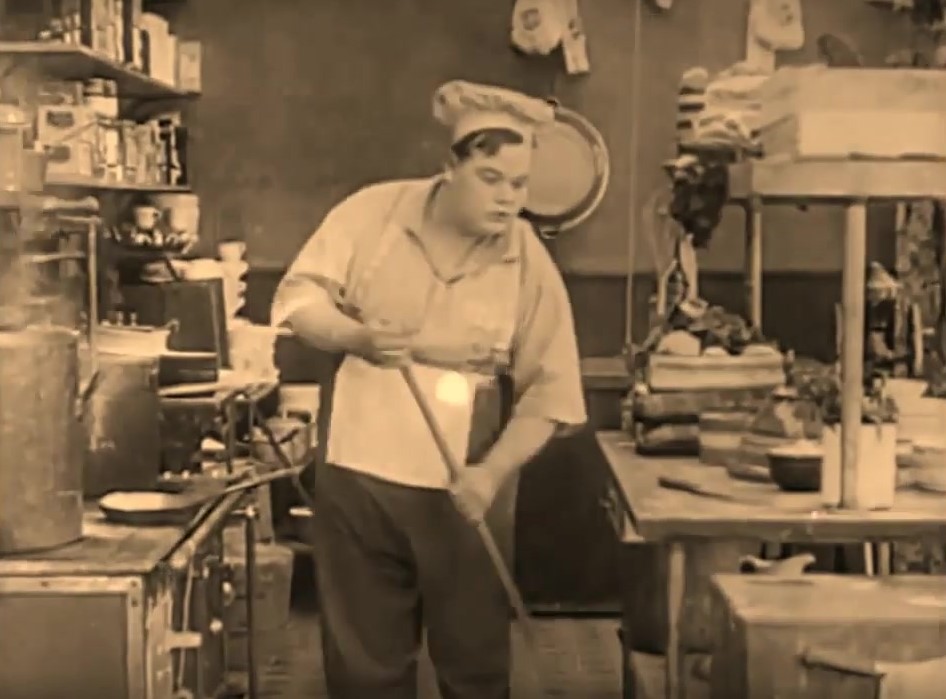
In the next scene the cashier shows an ad to the waiter about the upcoming waiter’s ball. However, there was a problem because the attendees were supposed to wear formal party clothes. The waiter and the cashier started arguing while the cook was trying to sweep the floor without causing any confusion, which did not work. The cook feel on the dining room over the leg on cast of a client and it ended up leaving the poor gentleman in pain.
The waiter showed up in the dining room to sweep the floor into the kitchen much to the annoyance of the cook. They fought and after a while they started working again. The waiter told the clients’ requests to the cook, who brought to the waiter the dishes he was supposed to serve to the clients. This situation brought other physical gags which involved even animals and uncooperative foods and lots of chaos in the restaurant.
After a while it finally came the time of the ball. The cook had a tuxedo, but the waiter did not have proper clothes to attend it. But the waiter did not accept his defeat so easily and he stole the cook’s tuxedo. On the other hand, the cook did not let it preventing him from going to the party and he attended in women’s clothes.
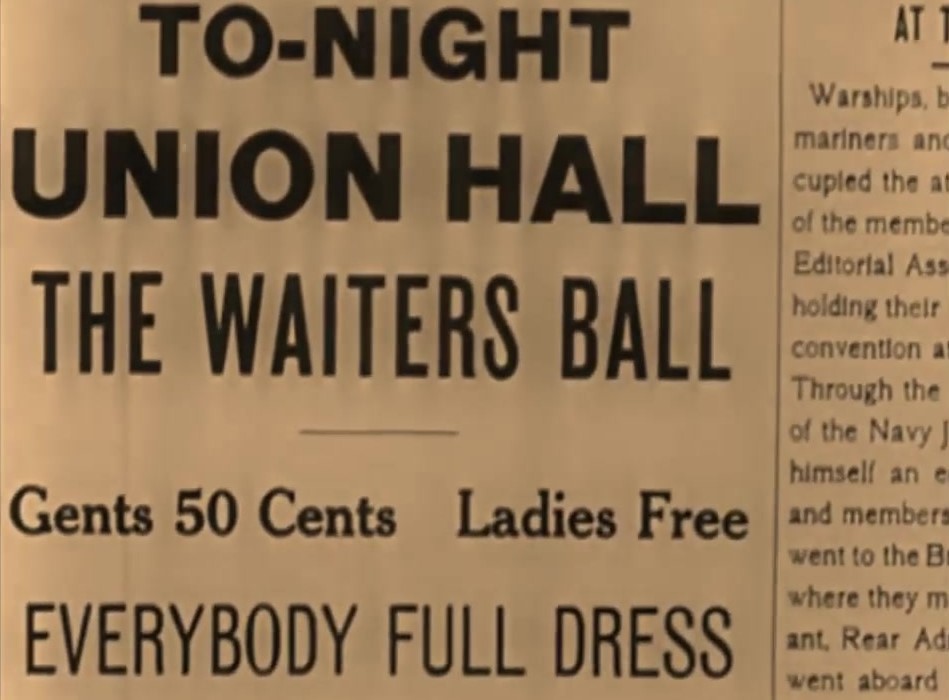
The party was lively and everybody was having fun, at least until the cook caught the waiter wearing his tuxedo. Then, they both fought in the ballroom, which disrupted the fun of the guests. The female dishwasher of the restaurant, after realized that her clothes were stolen, ended up going to the party and when she caught the cook wearing her clothes there was another fight and the party was in deep chaos.
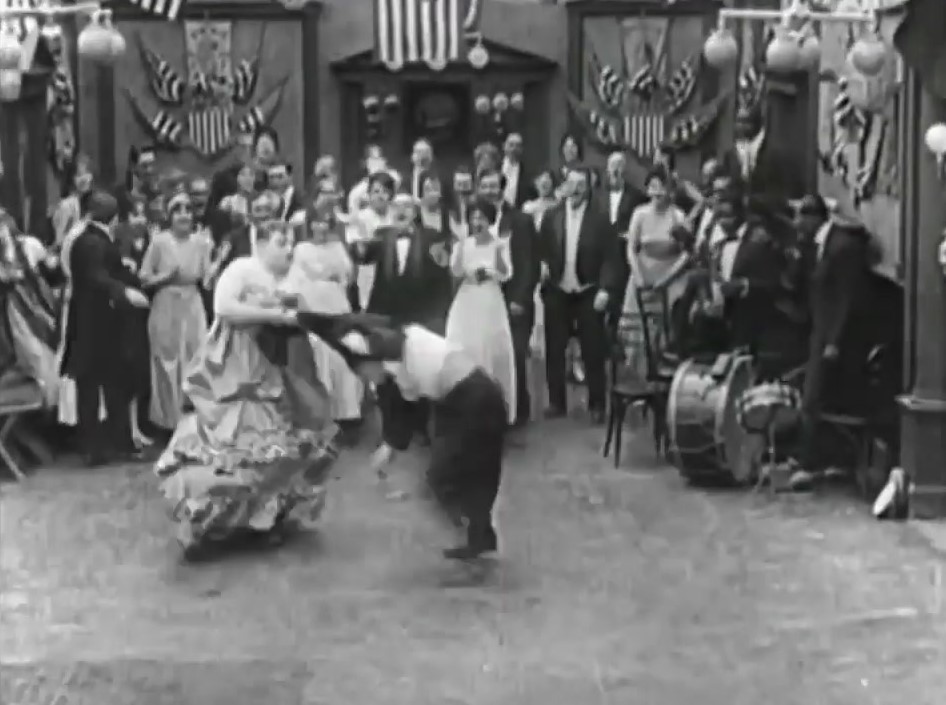
A policeman happened to be nearby and he arrested both the cook and the waiter who by this time had already lost half of the clothes they were wearing and had to cover themselves with a barrel whole the party’s guests laughed at their fate.
If slapstick comedies with frantic pace, “fast and furious” rhythm, overtly physical humor are your piece of cake, you will surely love this silent film. The gags are simple and it makes them extremely easy to be understood by audiences of all eras. Therefore, this film stood quite well the test of time. It is also a golden opportunity to see some high-profile silent actors in action displaying their skills and it is not difficult to understand why they were so popular with the audiences back to the silent era.
 Silent Beauties