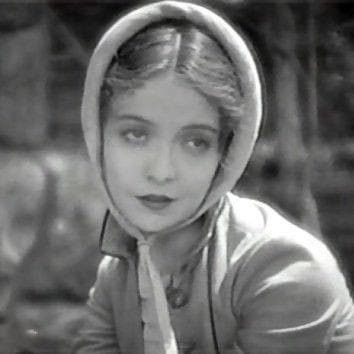
Sunrise: A Song of Two Humans (USA, 1927)
IMDB link: http://www.imdb.com/title/tt0018455/?ref_=fn_al_tt_1

Sunrise: A Song of Two Humans (USA, 1927)
IMDB link: http://www.imdb.com/title/tt0018455/?ref_=fn_al_tt_1

In this beginning of the year, when so many people looked back at the previous year and made resolutions about the subsequent one (sometimes to depressing consequences), it is nice to consider if all those thoughts about past and future are really healthy.
More than ever we know that the future is something we cannot control. The past is also something beyond us and when things get unstable it is natural to feel anxious about what may happen tomorrow, but sadly it is not always possible that life is the way we want it to be. Sure, it is natural that people make plans and have objectives in life and there is absolutely nothing wrong with it The problem is how we feel if anything unexpected happens, if the frustration will be too big.
I understand we cannot live irresponsibly and it is necessary to organize our thoughts, but in a world based on instability, where old truths proved not to be so real and not even news can be instantly trusted, sometimes it is better to try to relax and let it go. Use the good resources we have at our disposal within our reality and stick to it because we have tools to be aware that mental health has to be our priority and we cannot be mentally relaxed in the middle of anxiety.
When people celebrate the new year, they often just want to enjoy the moment, celebrate a new stage of life and partying a bit. This is all very positive, but sometimes we have to be neutral about the future and welcome it, but neither in a negative way (to avoid sadness) or in a too excited way (to avoid frustration). With hope and love in our hearts, hoping for the best and expecting nothing, simply accepting the good things and being resilient to the bad ones.
I have no idea if I make myself clear in this text. I mean that we should live one day after another for the sake of our mental sanity. Celebrating is good, but with both feet on the floor. It is just a day after another and in all days our option is doing our best, with hope and positive thoughts and high expectations, no matter how noble they are, do not always make much difference. When it comes to meditation and wellness, much is said about the importance of fulling living the present time because being too much in the past or future is a sort of prison. I could not agree more.
If the more reflection-oriented time of the New Year Eve made you feel uncomfortable, do not worry. We write a new page of our lives every day, it does not matter if it is a new year or not. We always have a chance and sometimes things go better than even our craziest dreams. This is the advantage of the fact that life is a surprise and surprises can be positive too. Relax, take your time, breath and live your life. Sometimes the best way of fighting for something is doing nothing and this is an active decision by itself.


Director Eric von Stroheim has a larger than life reputation to this day, due to his multiple clashes with studios about budget and artistic freedom and even his tense relationships with some actors in the set. But this film, being one of his biggest successes, both financially and among audiences, proved that Stroheim could also excel in more mainstream films with well-established actors.
This film is an entertaining musical, starring the heartthrob John Gilbert (at the height of his fame and delivering a fine, passionate performance) and Mae Murray (an actress with good comedy and dancing skills, who was formerly in the Ziegfeld Follies).
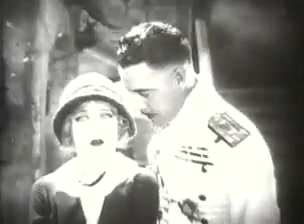
This film had a careful production by MGM, which was already one of most prestigious studios of the era. The scenery is grandiose and the pace is quite relaxed, almost a fairy tale. Erick von Stroheim took time to introduce the characters. There is clever use of visuals and images, as Stroheim was almost literary when it came to attention to details of the plot.
John Gilbert played Prince Danilo Petrovich, a womanizer. His cousin, Crown Prince Mirko is also a womanizer and they both often competed for affections of the same women, although Mirko lacked the charm and elegance of Danilo and deep inside he was envious of it. Mae Murray was Sally O’Hara, a dancer (a role that fit perfectly the dancing qualifications she had in real life). Both Danilo and Mirko got attracted to Sally, as well as wealthy Baron Sadoja (the Baron turned out to be a feet fetishist and that gave room to some quite funny scenes). Sally chose Danilo as her sweetheart and they both fell in love with each other and Danilo wanted to marry Sally.
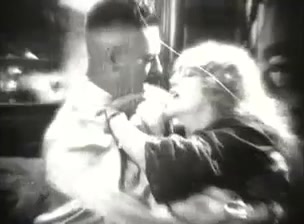
However, king Nikita forbade Danilo to marry her because she was a plebeian and a dancer and a prince was supposed to have the duty of marrying a proper woman to his dignity due to loyalty to his kingdom. Therefore, Danilo ended up leaving Sally at the altar because he could not bear the pressure of his family.
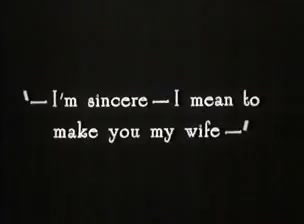
After such disappointment, Sally accepted marrying older Baron Sadoja, who had conveniently passed away at the wedding night. Sally inherited Sadoja’s estate as well as the title of Baroness.
One year later, both Danilo and Sally meet in Paris. They both started dancing in the ballroom and talked about the past. The point is that Crown Prince Mirko was also in Paris and it became clear to Sally that Mirko showed interest in her only because of her money and she suspected that Danilo’s affection for her was not sincere either.

Danilo challenged Mirko for a duel, even though Sally begged him to give up this idea. It seemed Danilo had died in the duel, but he only got wounded. Meanwhile, King Nikita passed away and Mirko inherited the throne, but it would not last because he was assassinated right afterwards. The second in the succession line was Danilo, who became king and was finally free to marry Sally, which he did without hesitation.

The best gift someone could give me is their time and attention. Life is much shorter than we can imagine and we live in a more self-centered era than decades ago. It means that if someone is considerate enough to give us their time and attention it probably means they like us a lot. After all, in many occasions, it is easier to do things for ourselves than going out of our way for others.
Much more than material things, sharing unforgettable memories with other people is what makes our lives worthwhile and when two people want to share their time together those memories just come naturally. It improves mental health and the sense of accomplishment. I know that the struggle for surviving can be overwhelming and make us forget about those moments, but exactly because life can be hard is that we definitely should do it.
So, more than ever devoted time is often a proof of love and it causes a much deeper impression in the long run. The ritual of exchanging presents sometimes has a social weight of an obligation, an object randomly purchased, but devoted time cannot be faked. The happiness of sharing part of their lives with others can easily be seen. With time we can develop a more solid foundation of human understanding and tolerance, avoiding hurried conclusions.
In such fast-paced world we cannot take time for granted. We are so often buried in our daily obligations that it makes time more precious than ever. In our free time we long to spend it in a happy and relaxed way and it is an honor to be part of someone else’s happy time.
Time is also great when it comes to long-lasting healthy relationships, not only romantic relationships, but all sorts of human connections. Having good people around us that follow us through life, always in a network of mutual support, attention, advice and love. It is beautiful when people stay, not due to co-dependence but because both people want to and they want it because it’s a beautiful exchange. The older we get, the more we miss having people who have known us for a long time, who can guess just by looking at our face how we feel.
History is built up right now, at this moment. It is up to us to gather the happiest memories. If someone else is generous enough to share their time and memories with us, let’s do it. If not, we can equally live wonderful moments by ourselves. Time is so valuable because we cannot look back or delete anything, there is no rough draft, so we should not waste anyone’s time.


Buster Keaton is famous for his masterpieces The General (USA, 1926) and Steamboat Bill, Jr. (USA, 1928), but this cute little gem is within the same level of aforementioned films and one of most elaborate Keaton works in terms of special effects.
With a highly relatable plot of a boy in a humble existence who wished to have a more successful life, naturalistic acting with touches of romanticism (mixed with a plenty of physical gags, typical of Keaton’s work) this charming little comedy has stood well the test of time and could delight modern-day audiences without difficulty. After all, cinema always has the power of transforming lives and make people’s dreams come true.
Buster Keaton works as a projectionist who studies to be a detective too. He operates the projector in a small town movie theater and also does the cleaning. His working routine is shown in the beginning of the film, which provides a good glimpse of what 1920s movie theaters looked like. As the said in one of initial intertitles of the film “ (…) While employed as a moving picture operator in a small town theater he was also studying to be a detective”. Keaton did not always manage to multitask his profession and his studies, but he had good intentions and did the best he could.
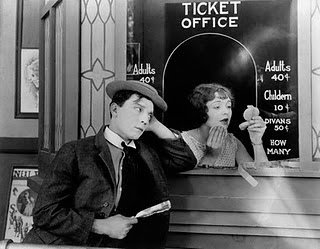
Keaton is also in love with a pretty girl, but he has an evil rival for her affections. None of them is particularly wealthy and could not afford giving her expensive gifts, for instance. One day both suitors visit the girl in her house and suddenly her father had his pocket watch stolen. Keaton volunteers to find out who had stolen it, but he isn’t particularly skilled as a detective yet and, to make things worse, his rival gets to put the pawn ticket of the watch in his pocket. Keaton ended up being accused of the crime and is kicked out of the house of his sweetheart.
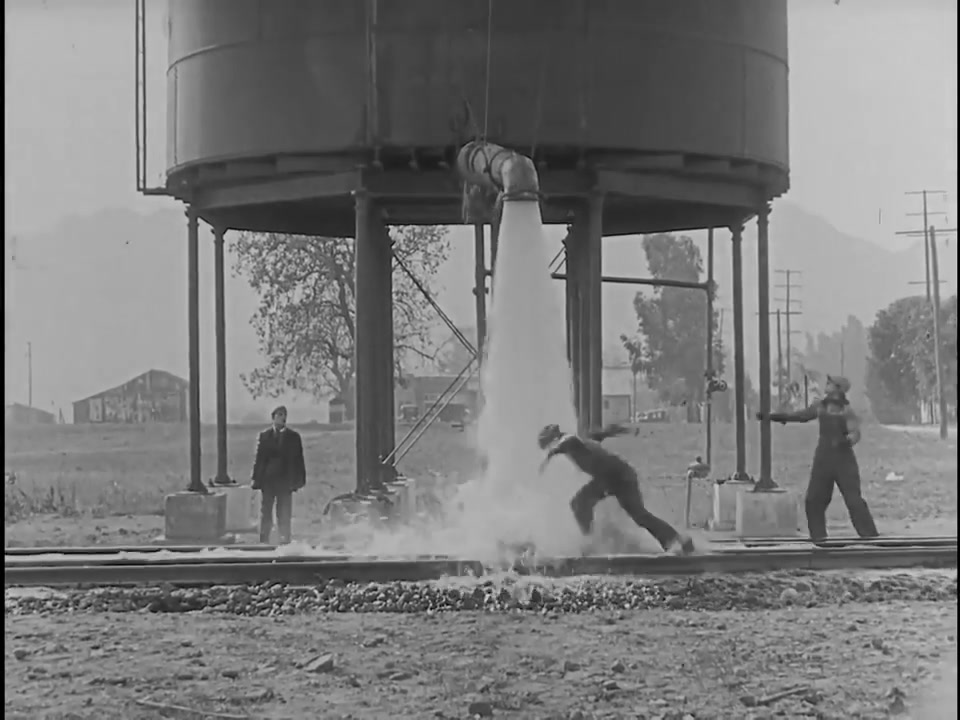
Buster Keaton was well-known for making his own stunts, many of them quite hair-raising and risky, and he did not care if it was dangerous or not. He seldom got hurt, but this time he had hurt himself very badly – and without even knowing it. While making this film, Keaton suffered at least two accidents, one of those became very spoken about by Buster Keaton scholars. In a scene Keaton followed closely the other suitor right after being kicked out of his sweetheart’s house until both of them embark a train and -for offscreen reasons -this scene became famous. It is in this scene where the most serious accident occurred. While on top of the train he was struck by the flow of water from a water tower. The force of the water was far greater than he had anticipated, which caused him to fall off the rope straight on the train track. He got to finish this scene, which was a chase, then interrupted the filming briefly and was back to work some days later. Around eleven years later, during a routine checkup, Keaton was told by a doctor that he had broken his neck in the past based on a x ray which showed a callus had had grown over the fracture on his neck. The second accident was during a bicycle chase scene displayed close to the end of the film, which was less serious than the first accident mentioned above.
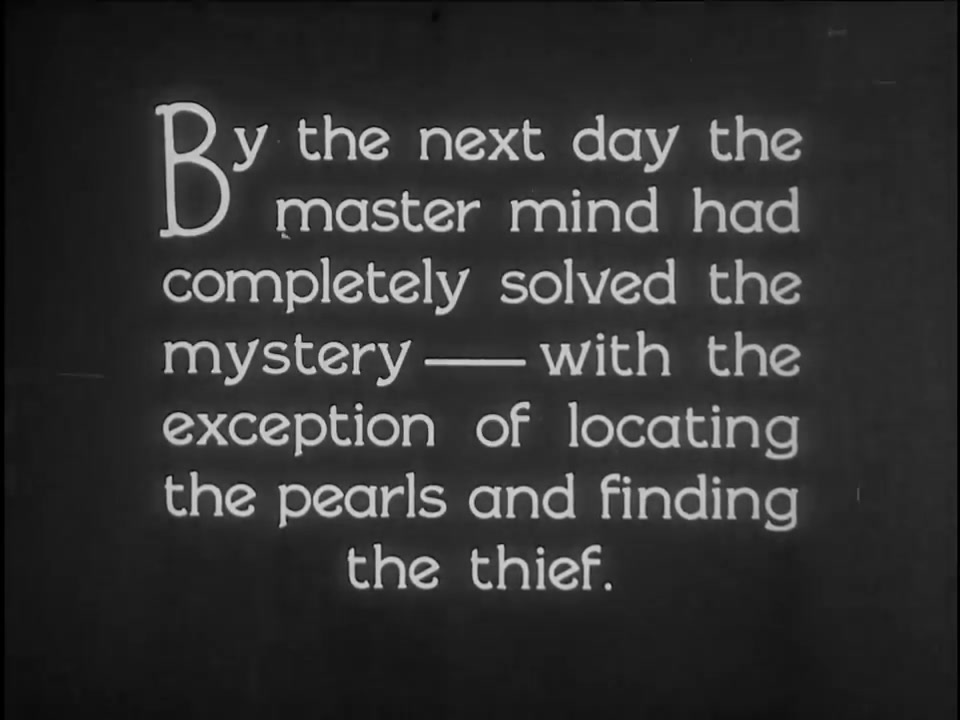
What makes Sherlock Junior a special film is that it is a film within a film with many incredible gags and techniques. The whole show begins when Keaton fall asleep as a projectionist while showing a film in the movie theater. This film within the film is called “Hearts and Pearls”. Inside his dream, as a projectionist, Keaton tries to enter the “Hearts and Pearls” film that was being shown on screen, but he was kicked off by one of the actors. Subsequently, Keaton manages to enter the screen and becomes part of the film “Hearts and Pearls” and in this film inside the film the famous detective Sherlock Jr. (Keaton himself) is called to solve a crime. The pearls had been stolen in the house of a wealthy family and the real criminals prepared a trap for Sherlock Jr. -who was called “the crime-crushing criminologist” according to one of intertitles -but the trap did not work out and the detective left the house free from any harm and solved the crime right afterwards.
Meanwhile, the girl went to the pawn brokers carrying her father’s watch and asked the salesman to describe the man who had pawned that watch. He had described her other suitor and at that moment the suitor was coincidently passing by the store and the salesman had confirmed it was that guy who had pawned the watch.
When Keaton awakened and found out that his Sherlock Junior adventure had been just a dream, the girl was in his workplace to tell him that her father had committed a serious mistake and that he found out Keaton was innocent and did not steal the watch. Then, the film “Hearts and Pearls” was still being shown on screen and while talking to the girl he realized that his life had finally got similar to the plot of the film and this time he was not dreaming. It was true, his dreams had started to come true.
The plot is easy to understand and very human. After all, many people have already dreamed with social recognition and success while performing their ordinary duties. The romanticism between Keaton and the girl is similar to 1920s Harold Lloyd’s comedies and by this time the narrative style was well-established in Hollywood, not too different from the narratives from modern-day films.

Much has been said nowadays, especially due to the influence of social media, that whatever work (either financially paid or voluntary) that we carry out on line has to be consistent. The consistency is because we are supposed to be part of the routine of people, otherwise your followers and contacts will theoretically forget about you.
I have never quite agreed with this statement. There is much more in being part of people’s lives than only consistency. They must allow us to be part of their lives and there is no huge amount of content that can do it. Then we face the centuries old dichotomy of quantity X quality and that is is better to write less but publish something more polished and well-researched.
Fortunately in web sites we do not theoretically have this obligation of fast pace (except if we are selling something of course) and the concept of sites and blogs more or less implies sharing our deepest thoughts and it takes some time until we have thoughts to share and develop a reasoning. I also have the advantage of writing about entertainment that was produced many years ago and it is not something that will be suddenly updated. Either now or in 20 years, whatever I write here will have a stable value. That’s great, as I treasure stability in life, especially in a world grounded on instability.
I like to offer good things for you folks who read my words, but I know very well the trap that perfectionism can offer. Sometimes we are so self conscious about our writings that we end up being paralyzed and, for this reason, I have chosen to keep things as simple as possible in this site. Simple, but with decent levels of quality, of course.
Life is not a straight line for anyone. Sometimes we do want to write and be present, interact with others, but we may have busy days, problems in life, health issues, etc. I am also really opposed to the concept of “productivity” in producing something we do as a passion. The so-called “consistency” has to come due to motivation, our wish to remain here, the fact that we love to share our thoughts and feelings with others. We are already obligated to do many things in life – plenty of them are unpleasant – and we should not keep pressure over what we do for love.
All in all, I am here, as frequently as I can, not because of a capitalistic production idea. I could not care less about it. I am here because since day one my experience of talking about silent films, pop culture and art with you all has been wonderful. I have made great friends on the way, have had lots of joy, knowledge and healthy entertainment. This is the feeling that must keep us all. No pointless pressure, but the love for what we do. About everything and anything in life, if we do not like what we do, we will eventually quit it. About productivity, I leave those things for my work, which is where I need to be productive. My consistency is because I love being here and I cannot imagine myself without talking with you all.


Shochiku Co., Ltd. is a Japanese entertainment company. It started its business in 1895 by managing kabuki theaters in Kyoto, and in 1914, it also acquired ownership of the Kabuki-za theater in Tokyo.
Link: https://en.wikipedia.org/wiki/Shochiku


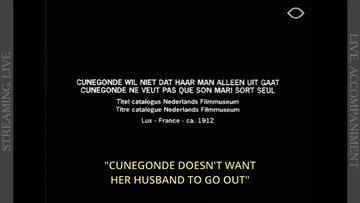
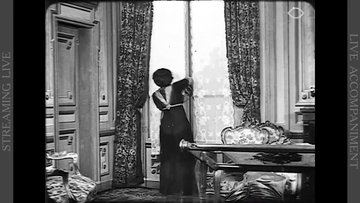
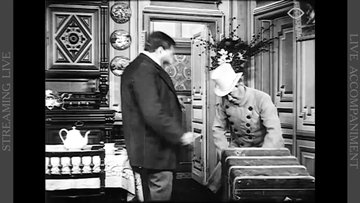
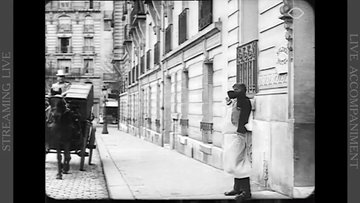
Cunegonde Doesn’t Want Her Husband To Go Out (France, 1912) https://imdb.com/title/tt8565670/
Some early films could have hilarious titles.

John Bunny in The Motion Picture Story Magazine, January 1912.
John Bunny (September 21, 1863 – April 26, 1915) was an American actor and was one of the first comic stars of the motion picture era. Between 1910 and his death in 1915 Bunny was one of the top stars of early silent film, as well as an early example of celebrity.
Wikipedia link: http://en.wikipedia.org/wiki/John_Bunny


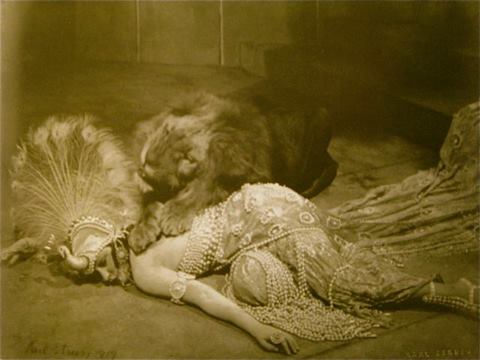
Gloria Swanson and a feline friend in Male and Female (USA, 1919)
IMDB link: http://www.imdb.com/title/tt0010418/?ref_=sr_1

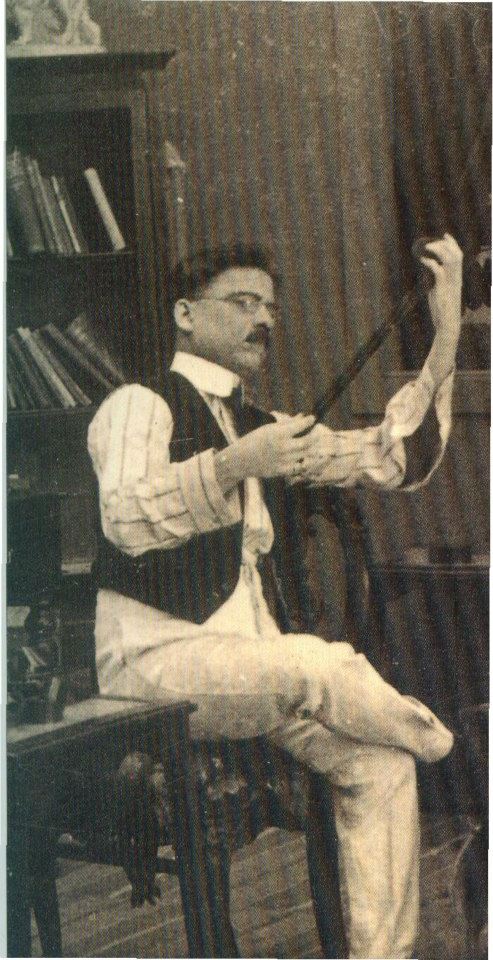
Dadasaheb Phalke, undated picture.
Dhundiraj Govind Phalke, popularly known as Dadasaheb Phalke (30 April 1870 – 16 February 1944) was an Indian producer-director-screenwriter, known as the father of Indian cinema.
Wikipedia link: http://en.wikipedia.org/wiki/Dadasaheb_Phalke

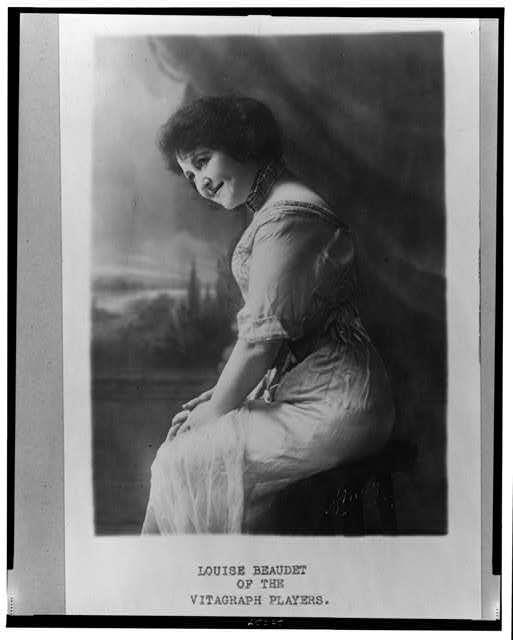
Title: Louise Beaudet of the Vitagraph Players / Stacy.
Date Created/Published: c1913 Nov. 7.
Summary: Louise Beaudet, silent film actress, vocalist, and dancer, three-quarter length portrait, seated, facing left in studio portrait.
Louise Beaudet (1860 – December 31, 1947) an actress for more than 50 years, starred in stage productions ranging from comic opera to Shakespeare and appeared in more than 60 silent films.
Wikipedia link: http://en.wikipedia.org/wiki/Louise_Beaudet


 Silent Beauties