Pauline Curley , 1916, MJ Moriarty, Silent Film Star, Playing Card.
Pauline Curley (19 December 1903 – 11 December 2000) was a vaudeville and silent film actress. Wikipedia link: https://en.wikipedia.org/wiki/Pauline_Curley
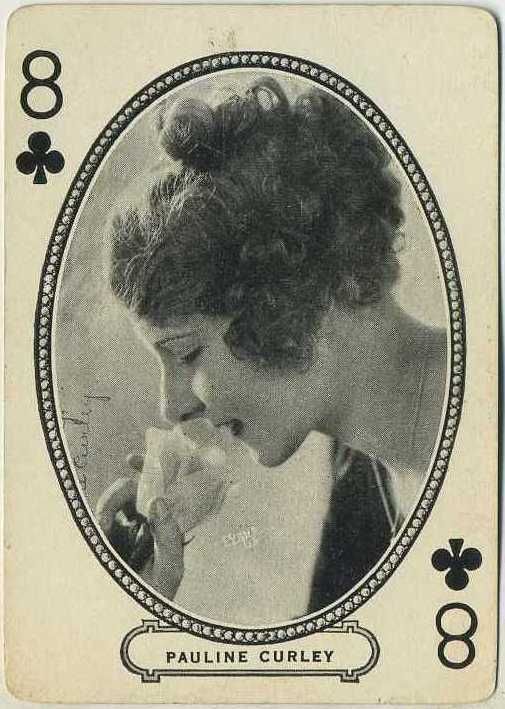

Pauline Curley , 1916, MJ Moriarty, Silent Film Star, Playing Card.
Pauline Curley (19 December 1903 – 11 December 2000) was a vaudeville and silent film actress. Wikipedia link: https://en.wikipedia.org/wiki/Pauline_Curley

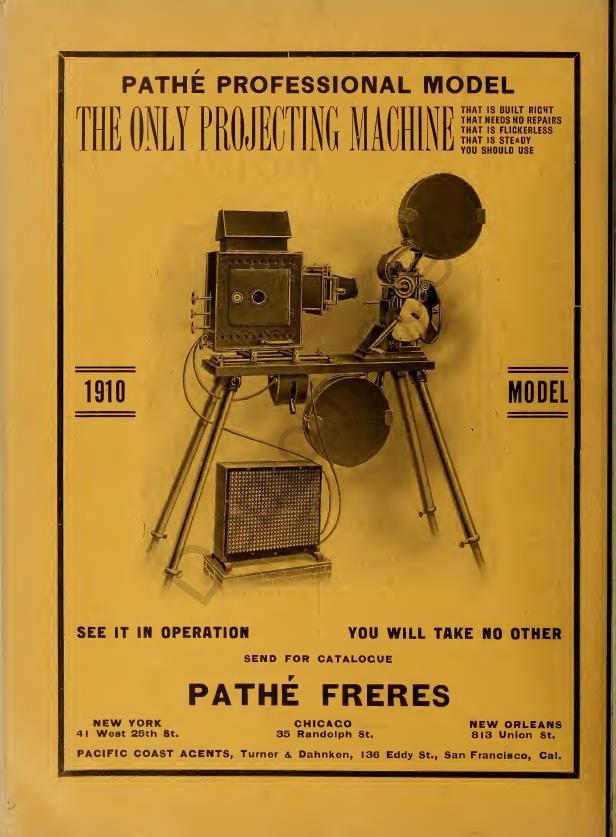
An ad in the magazine The Nickelodeon, November 1909.

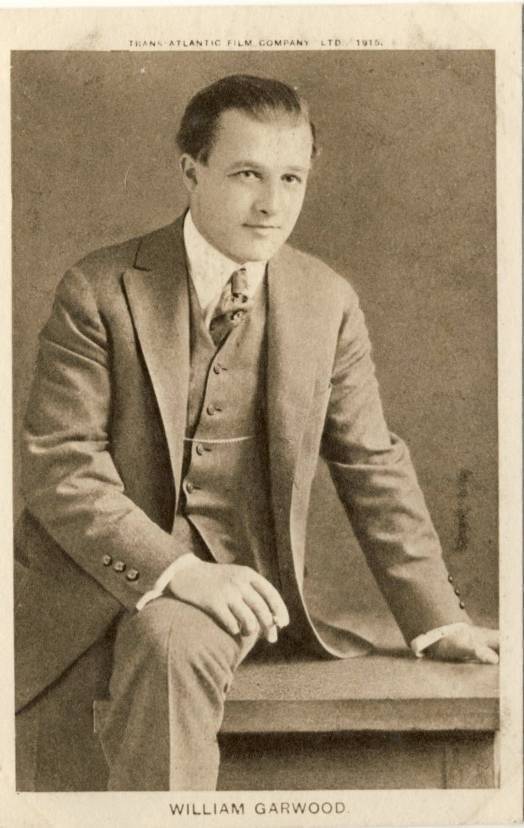
William Garwood Silent Film Actor… Trans-Atlantic Film Co.
William Davis Garwood, Jr. (April 28, 1884 – December 28, 1950) was an American stage and film actor and director of the early silent film era in the 1910s. Wikipedia link: https://en.wikipedia.org/wiki/William_Garwood

Advertisement in Moving Picture World – January 31st 1917.
Where Love Is (USA,1917). IMDB link: http://m.imdb.com/title/tt0184014/?ref_=m_ttmi_tt
Ann Murdock (November 10, 1890 – April 22, 1939) was a stage and silent film actress popular during the 1910s. She is sometimes billed as Anna Murdock. Wikipedia link: https://en.wikipedia.org/wiki/Ann_Murdock
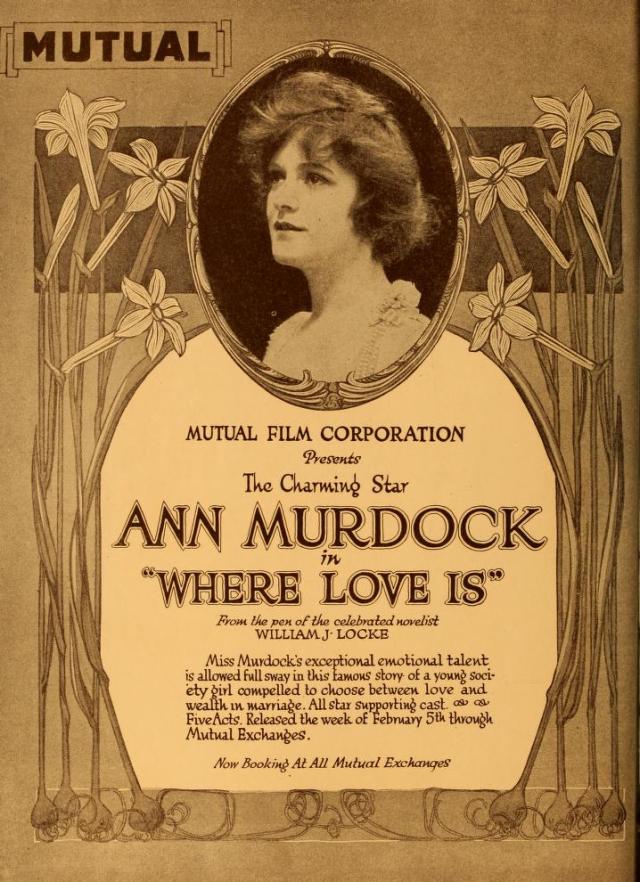

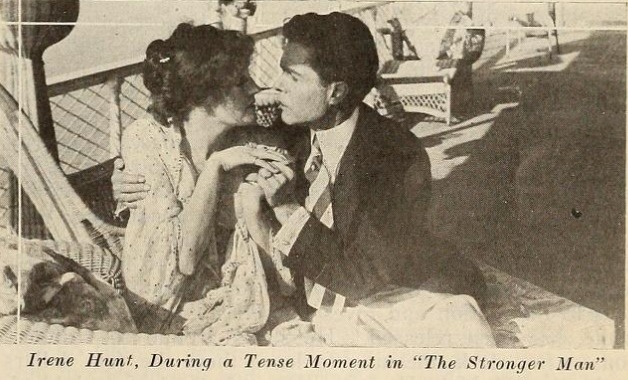
Reel Life, September 4th, 1915
The Stronger Man (USA,1915) https://www.imdb.com/title/tt0804338/
Irene Hunt (February 22, 1892 – October 13, 1988) was an American film actress of the silent era. She appeared in 120 films between 1911 and 1926 https://en.wikipedia.org/wiki/Irene_Hunt_(actress)

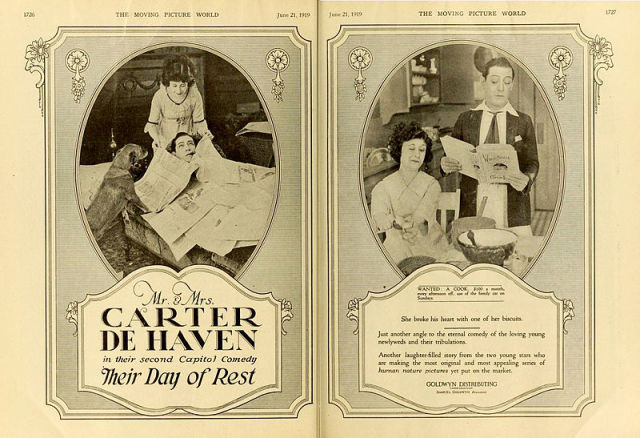
Carter and Flora Parker DeHaven in an advertisement for their film Their Day of Rest (USA,1919).
Advertisement, Moving Picture World, June 1919.
Their Day of Rest (USA,1919). IMDB link: https://www.imdb.com/title/tt0884212/?ref_=ttfc_fc_tt
Carter DeHaven (October 5, 1886 – July 20, 1977) was an American movie and stage actor, movie director, and writer. Wikipedia link: https://en.wikipedia.org/wiki/Carter_DeHaven
Flora Parker DeHaven (September 1, 1883 – September 9, 1950) was an American actress. Wikipedia link: https://en.wikipedia.org/wiki/Flora_Parker_DeHaven

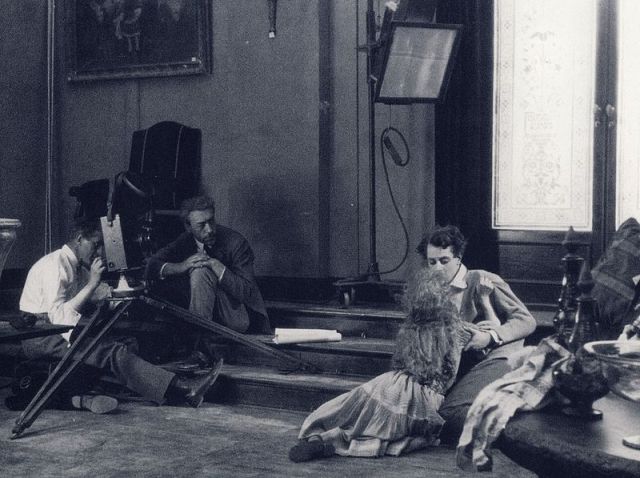
Cinematographer Julius Jaenzon, director Mauritz Stiller, Mary Johnson, and Einar Hanson during the production of The Blizzard (Sweden, 1923).
Einar Hanson (June 15, 1899; Stockholm, Sweden – June 3, 1927 [aged 27]); Santa Monica, California, USA), also known as Einar Hansen, was a Swedish silent film actor.
Wikipedia link: https://en.wikipedia.org/wiki/Einar_Hanson
The Blizzard (Sweden, 1923) https://www.imdb.com/title/tt0014108/

The Hussar of Death (Chile, 1925)
A silent film directed by and starring Pedro Sienna. The movie depicts the adventures of guerrilla leader Manuel Rodríguez during the Reconquista, culminating in his death in 1818.
Wikipedia link: https://en.wikipedia.org/wiki/El_H%C3%BAsar_de_la_Muerte


The Apostle (Argentina, 1917)
It is a 1917 lost Argentine animated film using cutout animation. Italian-Argentine immigrants Quirino Cristiani and Federico Valle directed and produced, respectively.
Wikipedia link: https://en.wikipedia.org/wiki/El_Ap%C3%B3stol#External_links


The Last Kiss (India, 1931)
The Last Kiss is a 1931 British Indian silent film, directed by Ambuj Gupta. The film was produced by the Dhaka Nawab Family and it is the first Bangladeshi film[citation needed] to be full-length. Shot in Dhaka, post-production work was done in Calcutta. The Last Kiss was released by the Mukul Theater. The film is considered lost.
Wikipedia link: https://en.wikipedia.org/wiki/The_Last_Kiss_(1931_film)


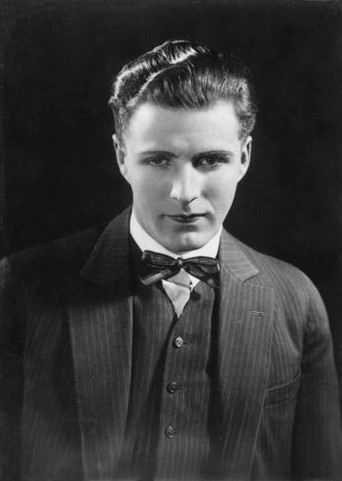
Werner Pittschau (24 March 1902 – 28 October 1928) was a German theater and film actor of the silent film era. During the 1920s he was a leading man in 30 films with famous film partners (Asta Nielsen, Anny Ondra, Tamara Karsavina, Carmen Cartellieri, Dina Gralla, Mady Christians, Carla Bartheel etc.), but his career was cut short by his death in an automobile accident, aged 26.
Wikipedia link: https://en.wikipedia.org/wiki/Werner_Pittschau

In the first few years of Keystone studios (founded in 1912), many of their films were one-reelers with quite simple storylines. Other studios produced similar comedies, both in the USA and abroad. Short films were still the most common length of films, as feature-length films were still at the very beginning. Films like Cabiria (Italy, 1914) and The Birth of a Nation (USA, 1915) –some of the films that would help to consolidate feature length films as more popular – were yet to be produced.
In a landscape that looked remarkably rural, Ford Sterling –with his typically exaggerated gestures and mannerisms – was by a window, flirting with Mabel Normand, who was in another window. However, there was another man interested in Mabel (“a persistent suitor”) and he came to her house to visit her. Sterling did not really seem pleased when he realized there was a competitor for Mabel`s affection. Sterling also came to visit Mabel, but the other suitor was still there and both men clashed. Sterling tried to attack the other guy, but ended up hitting Mabel with dirt instead. At this point, both men fought and Mabel tried to intervene and therefore she fell out of the window. The three of them threw things at each other.
A clergyman arrived at Mabel`s house in the middle of all chaos. It seems to have come to marry Mabel and the other suitor. Then, Mabel, the other suitor and the clergyman leave in a boat while Sterling tries to shoot them as he saw the boat departing. The Keystone cops were called to try to settle the mess. The cops started shooting too and embarked on another boat and one of cops fell on the river and a short time later they got stuck in the mud. Sterling attempted to stop the boat from leaving by throwing mud on the river.
More cops came to the scene with hoses and even a cannon. The hoses were useful to take their colleagues out of mud. Unfortunately Mabel fell in the mud right afterwards, but immediately the clergyman and her other suitor helped her out of the mud. And the three of them were eventually taken out of the muddy river. Meanwhile, Sterling was into trouble, as he was caught throwing dirt on the river.
Such simple one-reelers were very popular in the era and working-class audiences could easily relate to situations being shown. Keystone films were a hit since the beginning and its actors became successful comedians. As time passed, the studio produced feature-length films (the first one being Tillie`s Punctured Romance in 1914, with Mabel Normand, Marie Dressler and newcomer Charlie Chaplin in the cast). And Keystone studios became famous for discovering young comedians who would undeniably leave their mark in cinema history. For instance, young Roscoe ‘Fatty’ Arbuckle and Charlie Chaplin worked there in the 1910s. The studio was closed in 1933, already at the era of talkies.

 Silent Beauties