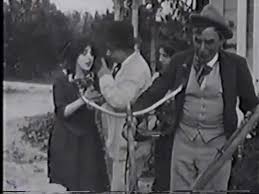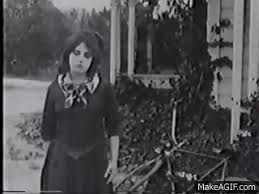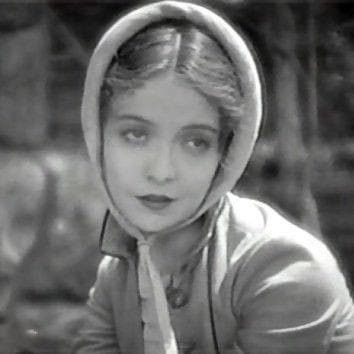
A Film Johnnie (USA, 1914)

Even for those who are not fond of silents, this film is full of historic value. By showing a sort of “film inside the film”, we can have a rare insight about what it was like to go to the cinema in the 1910s. We can also have an insight on the backstage of Keystone studios, as well as its working practices. 

Furthermore, Chaplin was at the very beginning of his career in films. We can see the evolution of the Little Tramp, who was originally a rough, impolite troublemaker, at first without the pathos that would soon make Chaplin famous worldwide. 

It is also possible to make comparisons between the plot of his film and the very beginning of Chaplin cinematic career, with him trying to be accepted in his new work and having a difficult attitude with his peers at the same time. There are stories of Chaplin having refused to be directed by Mabel Normand and clashed with other directors of Keystone studios. 

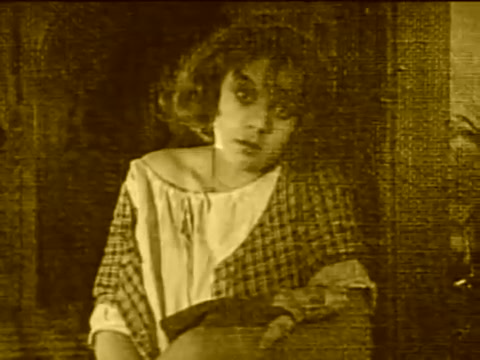
The Little Tramp goes to the cinema and falls in love with the girl in the picture of the publicity material outside the cinema. Of course that the girl turned out to be Mabel Normand and the film was produced by the Keystone studios. A noteworthy observation is that, even though it was Mabel Normand`s picture outside the cinema, the character turned out being played by another actress Peggy Pearce. 
There`s a rumor that Mabel Normand did not act in this comedy because Chaplin had previously clashed with Normand while making another film and she simply refused to work with him again. And that made the studio replace Normand by Pearce. 

Chaplin enters the cinema and ends up causing chaos with other moviegoers. He was not only impolite with other people, but also very naïve in taking what he saw on screen as if it was real. His love for the Keystone Girl only grows bigger. 

After a fight at the cinema and being kicked out by the audience, the Little Tramp ends up on the doorstep of Keystone studios. The reasons for it aren`t clear. Was he looking for his sweetheart? Looking for a job? Begging for money/food? We cannot say for sure. When the “Keystone players arrive at the studio”, as one of intertitles says, modern-day audiences can see some of the biggest stars of the studio of the day, including Roscoe “Fatty” Arbuckle, who in real life played an influence on how the Little Tramp character would be built up and was already an established comedy actor when Chaplin started working at Keystone studios in 1914. 

The Little Tramp finally got to enter the studio, but he created a huge chaos. Then, there was a fire and the actors and studio crew ran to the scenery in order to get some “atmosphere” for the film. In the first years of Keystone studios (which had been founded in 1912), it was a usual that films were made on the spot of real-life events.

This short film does provide a rare and accurate insight about entertainment early XX century, both under the perspective of young Hollywood industry and of audience and how they related to films. Highly recommended for those interested to know about the evolution of cinema in a fast and practical way.

The Furs (USA,1912)

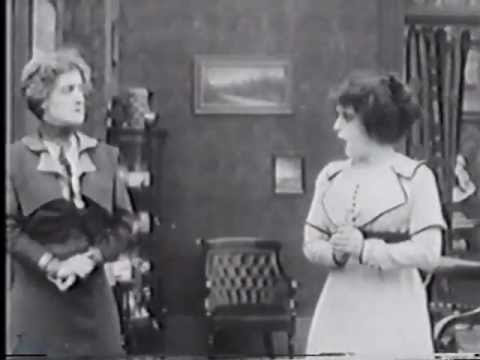
This film is a rare surviving silent short made by Mabel Normand and Mack Sennett at Biograph studios, which was released in 1912, only some months before Keystone studios was founded by Sennett in California.

Despite being at the height of her youth and vitality, Mabel`s acting is more restrained here than it would be in her subsequent Keystone slapstick comedies, which is adequate to the slower pace of this film. Still, we can see here some trademarks of future output of Keystone studios, especially by portraying Mabel as an intelligent woman, with some independence and strength of character, which is a contrast with Victorian women, damsels in distress who were totally dependent of their male guardians.

Mabel is a spendthrift and her mother-in-law does not agree with her extravagance, while her husband tries to please both Mabel and his mother. It is clear that both women do not really get along, but they have to live very close (or perhaps even in the same house) and it causes conflicts on a daily basis.  Mabel shows that she is not the type of wife who would tolerate a bossy mother-in-law without fighting back.

Mabel is not satisfied with the interference of her mother-in-law and goes shopping anyway. Upon her return, Mabel clashes with her mother-in-law again.  Meanwhile, her husband is running out of patience with all this conflict at home.

On the following day, Mabel gets some money out of her husband`s pocket without his knowledge. He realizes the money is missing, but does not attribute it to Mabel and thinks he lost it somewhere else. He stands up to have breakfast, only to see Mabel and his mother arguing again. Therefore, he says that “one must leave”.

Mabel sees some beautiful furs in a shop window and finds them simply gorgeous. Then she had the idea of pawning her furs, but unfortunately her plan would not have the result she expected, as the furs she wanted so much ended up going to her mother-in-law. And Mabel does not disguise how furious she really is.

This cute little film shows two legends of cinema (Sennett and Mabel) in the beginning of their careers in films and their unique comedic style could already be observed. It is also interesting that Biograph`s films by the duo tended to focus more in the lives of wealthier citizens (even Mabel`s clothing and hat were more elaborate than those she usually wore in her subsequent characters in Keystone films). Such paradigm would be deeply changed at Keystone studios, famous for showing the lives of working-class citizens.

Tomboy Bessie (USA,1912)

Although Mabel Normand was really young when she made this film (circa 20 years old), we can observe that she played a character much younger than herself. This is particularly noticeable by the way she hopped, the big ribbon on her head and some slight overacting. But it does not compromise the quality of her performance anyway.


Mabel plays here a rather different role from the determined, strong-willed and independent women that she portrayed on screen so often in her films at Keystone studio. Still, the vibrant comedic style of Mabel was already visible. The characters of this film were also more human-like, realistic and without that frantic pace that would be so famous in films by Keystone studios, which would be open only some months after this film was released.


This film was made by Biograph studios, the same famous studio where D.W. Griffith started his career in films. As Griffith was more focused on dramas, Mack Sennett ended up being responsible for the comedies of the studio. Both men had started in Biograph as actors before 1910. That was something natural, as it was an era when film crew could have different roles in the studio, sometimes even in totally different areas, like direction, acting, wardrobe, etc. This multitasking gave a chance to actors be involved in all aspects of film production and realize what would be most comfortable for them to work with.


Mabel was a very mischievous and active kid, always full of energy to play. It was tiresome for adults around her to handle such energetic little one. She was also a headache to the love life of her aunt.
The suitor of Aunt Cissie (Andrew) was supposed to amuse the kid in order to be authorized to marry his sweetheart (he was “pleading for the hand of fair Cissie”, as it was said in one of intertitles). However, Mabel proved to be a hard task.


Another noteworthy thing is the nearly Victorian courtship shown in this film, where the man had to prove himself worthy of his sweetheart by doing something rather impressive. That was part of the plot of countless other silent films throughout the world. The simple outdoors landscape, with animals and without cars or crowded places shows to modern audiences a lifestyle that has been away for a very long time. 

Mabel’s Dramatic Career (USA,1913)

Mack fell for the kitchen maid. They were a happy couple, but Mack’s mother (played by actress Alice Davenport in a rather stagy acting) was against the romance and her opposition caused lots of conflict between Mabel and her.

After a while, it came a woman from the city and Mack’s mother thought she was a better partner to her son. Understandably, Mabel got jealous of the newcomer. After a while, Mack started to get along very well with this new girl and Mabel became outraged. Therefore, a fight was inevitable, and Mabel was forced to leave the house, heartbroken.

Mack proposed to the other girl, but he ended up being rejected as the woman seemed to be tired of Mack after a short time and they both ended up fighting in the most typically slapstick way possible, including things being thrown against each other (an element that was relatively common when romantic arguments were portrayed in films by Keystone studios).

Mack regretted having let Mabel go. Meanwhile, she arrived at the city and looked for a job in a cinema studio full of actors with fake facial hair and portraying exaggerated characters (which turned out to be the own Keystone studios and actors in real life). Mabel showed the actors that she could act, was hired by the studio and had steady work there for the next few years.

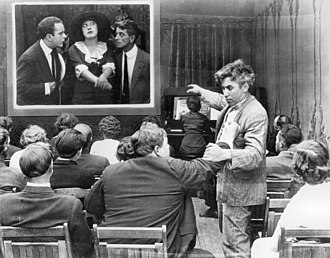
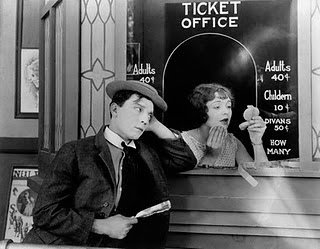
One day, Mack saw Mabel’s picture in the publicity poster of a film and recognized her immediately. Mack entered the cinema and watched a film by Keystone studios (Yes, the studio was not really shy of doing some self-propaganda) and was really overexcited by seeing Mabel on screen. His excitement was so over the top that he disturbed other audience members to watch the film quietly. At this point, it must be highlighted that one of audience members is played by actor Roscoe ‘Fatty’ Arbuckle, who had started working at Keystone studios in that same year.

Chaos broke out when Mack Started shooting at the screen and scared everyone around him, including the projectionist. Despite all problems he caused, Mack did not give up as he was determined to kill the onscreen villain (played by actor Ford Sterling, who was very popular at the time). Mack got to find the villain and soon discovered that the actor who played the villain was married to Mabel in real life and they had two children together.

As always, Mabel Normand acts in a very natural, vibrant way. There is a rumor that Mack Sennett was mocked by the own employees of Keystone studios for not exactly being the best actor in the world. That is an exaggeration, Sennett’s humor was simple but very much in line with the typical acting of 1910s comedians, especially when he played hobos and not particularly smart characters on screen. I personally think Mabel is even more beautiful than usual in this film and it is a joy merely to look at her facial expressions and the joy she conveyed on screen. Mack Sennett was very active as an actor in the first years of Keystone studios, but after a while he left acting to focus on management and directorial tasks at the studio, until it closed its doors in 1933.
This simple one-reeler can still be very easily understood and the occasional overacting does not make it any less funny. It is a relaxing and entertaining slapstick comedy short up to this day. This film also has great historic value because it provides modern-day audiences with a rare glimpse of how it was like to go to the cinema back to the 1910s.

His Wedding Night (USA,1917)

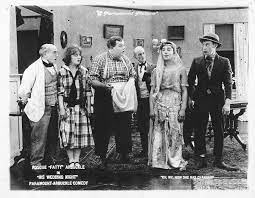
This film (together with Coney Island, released in that same year) can show to modern audiences how daily life was like back to the 1910s, which sort of items could be sold in a drugstore, for instance (Including beverages), purchasing habits of people, etc. It has two stars, Keaton was in the beginning of his career at the time and had immediately shown his competence, but he was not yet a star on his own right. He had not yet consolidated his world-famous stone face character. However, it would not take long until Keaton achieved prominence. Roscoe `Fatty’ Arbuckle was a mega star at the time and his comedies were full of physical gags.

In this film, Arbuckle worked as a clerk in a drugstore. Both he and St. John loved the same girl (Alice). Alice`s father ended up giving her hand to Arbuckle. St John got angry and planned a revenge. Meanwhile, Keaton showed up to deliver a wedding dress to Alice and ended up dressing it to show her how it looked like. St John and his accomplices ended up kidnapping Keaton by mistake, there was a huge mess but the expected happy end came.

Although still playing the role of a grown up baby, sometimes with silly facial expressions, we can see the evolution of acting of Roscoe ‘Fatty’ Arbuckle compared with his films at Keystone studios only some years before. His gestures were more self-contained, gags more elaborate and scenery was modern. Furthermore, there was a troupe of comedians who worked with him and they formed a rather uniform and experienced team.

Of course, that there was still lots of physical humor, especially when his real-life nephew, Al St. John, came to the scene. Nevertheless, it is actually an accomplishment, considering the good physical abilities, not only of Arbuckle himself (who was reportedly even very flexible and an excellent dancer in real life), but also of St. John and Buster Keaton. All those actors excelled in physical humor and that is one of things that made them so popular among audiences back then. Some stereotypes of slapstick comedies are present here, like rather unromantic arguments among couples, ethnically insensitive jokes, food being thrown, people being thrown as well, etc. However, situations themselves were a bit closer to reality than typically slapstick comedies.

In the end of film, the actors could show his skills to physically demanding scenes even better. Unfortunately Arbuckle`s career would be virtually over four years later due to a huge scandal. Buster Keaton would enjoy lots of fame in the 1920s and his output stands out to this day. Unfortunately Keaton`s career would fall into obscurity for some decades as of 1930s, but he lived long enough to regain his popularity and further recognition to his work. Al St John would find steady work in westerns for some decades and made a smooth transition to talkies. Even though he was not immensely popular, he got to reinvent himself and remained in films for a very long time.

A Muddy Romance (USA, 1913)

In the first few years of Keystone studios (founded in 1912), many of their films were one-reelers with quite simple storylines. Other studios produced similar comedies, both in the USA and abroad. Short films were still the most common length of films, as feature-length films were still at the very beginning. Films like Cabiria (Italy, 1914) and The Birth of a Nation (USA, 1915) –some of the films that would help to consolidate feature length films as more popular – were yet to be produced.

In a landscape that looked remarkably rural, Ford Sterling –with his typically exaggerated gestures and mannerisms – was by a window, flirting with Mabel Normand, who was in another window. However, there was another man interested in Mabel (“a persistent suitor”) and he came to her house to visit her. Sterling did not really seem pleased when he realized there was a competitor for Mabel`s affection. Sterling also came to visit Mabel, but the other suitor was still there and both men clashed. Sterling tried to attack the other guy, but ended up hitting Mabel with dirt instead. At this point, both men fought and Mabel tried to intervene and therefore she fell out of the window. The three of them threw things at each other.

A clergyman arrived at Mabel`s house in the middle of all chaos. It seems to have come to marry Mabel and the other suitor. Then, Mabel, the other suitor and the clergyman leave in a boat while Sterling tries to shoot them as he saw the boat departing. The Keystone cops were called to try to settle the mess. The cops started shooting too and embarked on another boat and one of cops fell on the river and a short time later they got stuck in the mud. Sterling attempted to stop the boat from leaving by throwing mud on the river.

More cops came to the scene with hoses and even a cannon. The hoses were useful to take their colleagues out of mud. Unfortunately Mabel fell in the mud right afterwards, but immediately the clergyman and her other suitor helped her out of the mud. And the three of them were eventually taken out of the muddy river. Meanwhile, Sterling was into trouble, as he was caught throwing dirt on the river.

Such simple one-reelers were very popular in the era and working-class audiences could easily relate to situations being shown. Keystone films were a hit since the beginning and its actors became successful comedians. As time passed, the studio produced feature-length films (the first one being Tillie`s Punctured Romance in 1914, with Mabel Normand, Marie Dressler and newcomer Charlie Chaplin in the cast). And Keystone studios became famous for discovering young comedians who would undeniably leave their mark in cinema history. For instance, young Roscoe ‘Fatty’ Arbuckle and Charlie Chaplin worked there in the 1910s. The studio was closed in 1933, already at the era of talkies.

The Gusher (USA,1913)

Exaggerated gestures, fake mustaches, simple plots, one-reelers (films that lasted around 11 minutes), actors falling on their butts, scenes with lots of smoke, and actresses performing their own stunts were a commonplace in films produced in the first years of Keystone studios. The studio was founded the previous year and we can see a relatively small number of studio regulars in comparison with subsequent years. Mabel Normand and Ford Sterling (among others, like Fred Mace, Mack Sennett himself and Roscoe `Fatty` Arbuckle as of 1913) had worked in Keystone studios since the beginning and were quite popular among audiences.

The Gusher is a story about a young Mabel Normand who has two suitors (Ford Sterling and Charles Inslee) and has to choose one of them (Ford Sterling). As revenge, the rejected suitor made up a plan to sell bad land of an oil field to Mabel`s sweetheart. Sterling ended up actually buying the land, only to listen right afterwards that it was not a real oil well. He was devastated (which only increased his overacting) and, to make matters worse, Sterling even caught the rejected suitor (Charles Inslee) trying to seduce Normand.

However, in the middle of all despair, the field started to actually produce oil and Sterling became wealthy enough to marry Mabel. The rejected suitor set fire to the field while the wedding was being held. A man told Sterling about it in the middle of the celebration and chaos ensued when everyone present at the wedding (including the bride and groom) went to the field on fire. The Keystone Cops were called to solve the situation, even though they were not very smart themselves, as we all know. We can see it by the fact that the cops kept repeatedly falling on the ground without any apparent reason.

It turned out that Sterling himself got to find the rejected suitor and punish him. But the field was still on fire at the end of the film and no one had even attempted to control it, not even the firefighters were called. The end was weak and left audiences in the dark about some very crucial points. For instance: Did Sterling got to recover his oil field and keep on earning money with it? It is also not known if the rejected suitor was arrested and it seemed that he got to leave the scene of crime, despite being caught by Sterling. It is a one-reeler, but the plot could have been better developed without even adding extra time to the film or only adding a few minutes more.

Something different added in this film was an oil field. It seems that the plot could have been merely an excuse to use the stock footage of an oil field on fire, but the different setting gives a touch of originality to the film anyway. It is worth paying attention not only to the technology of the 1910ies, but also to the glimpse of both female and male fashion that this film provides.
The Merry Widow (USA, 1925)

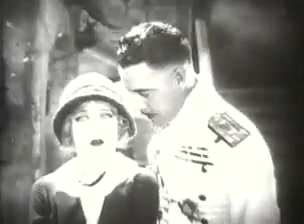
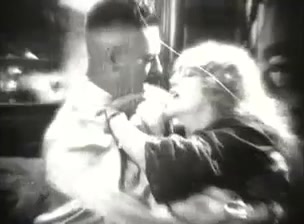
Director Eric von Stroheim has a larger than life reputation to this day, due to his multiple clashes with studios about budget and artistic freedom and even his tense relationships with some actors in the set. But this film, being one of his biggest successes, both financially and among audiences, proved that Stroheim could also excel in more mainstream films with well-established actors.


This film is an entertaining musical, starring the heartthrob John Gilbert (at the height of his fame and delivering a fine, passionate performance) and Mae Murray (an actress with good comedy and dancing skills, who was formerly in the Ziegfeld Follies).

This film had a careful production by MGM, which was already one of most prestigious studios of the era. The scenery is grandiose and the pace is quite relaxed, almost a fairy tale. Erick von Stroheim took time to introduce the characters. There is clever use of visuals and images, as Stroheim was almost literary when it came to attention to details of the plot.


John Gilbert played Prince Danilo Petrovich, a womanizer. His cousin, Crown Prince Mirko is also a womanizer and they both often competed for affections of the same women, although Mirko lacked the charm and elegance of Danilo and deep inside he was envious of it. Mae Murray was Sally O’Hara, a dancer (a role that fit perfectly the dancing qualifications she had in real life). Both Danilo and Mirko got attracted to Sally, as well as wealthy Baron Sadoja (the Baron turned out to be a feet fetishist and that gave room to some quite funny scenes). Sally chose Danilo as her sweetheart and they both fell in love with each other and Danilo wanted to marry Sally.

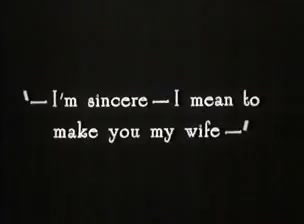
However, king Nikita forbade Danilo to marry her because she was a plebeian and a dancer and a prince was supposed to have the duty of marrying a proper woman to his dignity due to loyalty to his kingdom. Therefore, Danilo ended up leaving Sally at the altar because he could not bear the pressure of his family.

After such disappointment, Sally accepted marrying older Baron Sadoja, who had conveniently passed away at the wedding night. Sally inherited Sadoja’s estate as well as the title of Baroness.


One year later, both Danilo and Sally meet in Paris. They both started dancing in the ballroom and talked about the past. The point is that Crown Prince Mirko was also in Paris and it became clear to Sally that Mirko showed interest in her only because of her money and she suspected that Danilo’s affection for her was not sincere either.

Danilo challenged Mirko for a duel, even though Sally begged him to give up this idea. It seemed Danilo had died in the duel, but he only got wounded. Meanwhile, King Nikita passed away and Mirko inherited the throne, but it would not last because he was assassinated right afterwards. The second in the succession line was Danilo, who became king and was finally free to marry Sally, which he did without hesitation. 

Sherlock Jr. (USA,1924)

Buster Keaton is famous for his masterpieces The General (USA, 1926) and Steamboat Bill, Jr. (USA, 1928), but this cute little gem is within the same level of aforementioned films and one of most elaborate Keaton works in terms of special effects.

With a highly relatable plot of a boy in a humble existence who wished to have a more successful life, naturalistic acting with touches of romanticism (mixed with a plenty of physical gags, typical of Keaton’s work) this charming little comedy has stood well the test of time and could delight modern-day audiences without difficulty. After all, cinema always has the power of transforming lives and make people’s dreams come true.

Buster Keaton works as a projectionist who studies to be a detective too. He operates the projector in a small town movie theater and also does the cleaning. His working routine is shown in the beginning of the film, which provides a good glimpse of what 1920s movie theaters looked like. As the said in one of initial intertitles of the film “ (…) While employed as a moving picture operator in a small town theater he was also studying to be a detective”. Keaton did not always manage to multitask his profession and his studies, but he had good intentions and did the best he could.

Keaton is also in love with a pretty girl, but he has an evil rival for her affections. None of them is particularly wealthy and could not afford giving her expensive gifts, for instance. One day both suitors visit the girl in her house and suddenly her father had his pocket watch stolen. Keaton volunteers to find out who had stolen it, but he isn’t particularly skilled as a detective yet and, to make things worse, his rival gets to put the pawn ticket of the watch in his pocket. Keaton ended up being accused of the crime and is kicked out of the house of his sweetheart. 

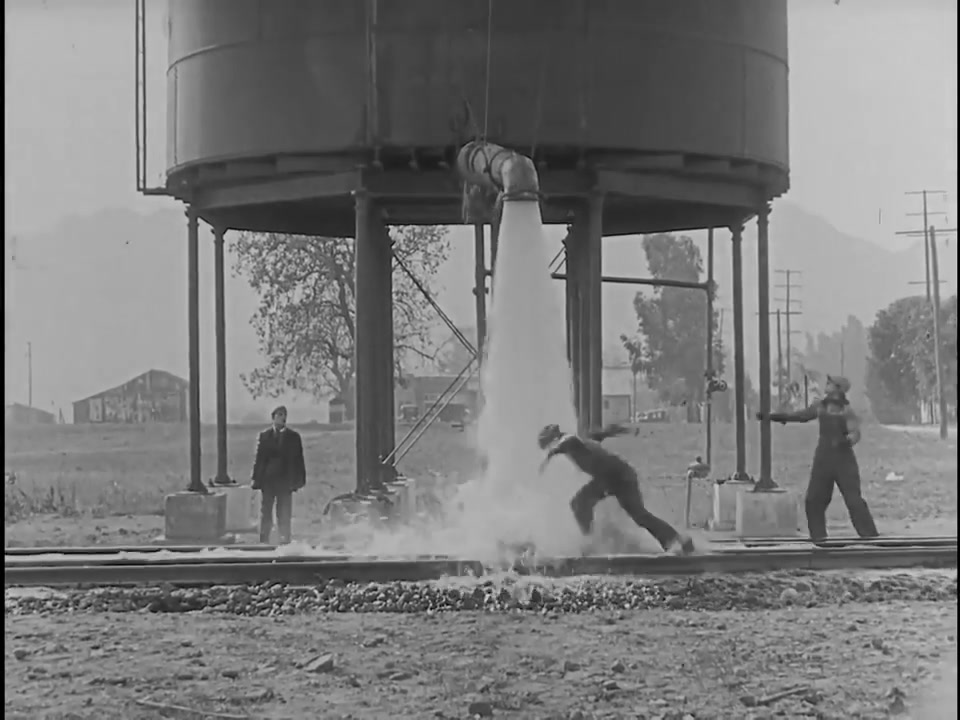
Buster Keaton was well-known for making his own stunts, many of them quite hair-raising and risky, and he did not care if it was dangerous or not. He seldom got hurt, but this time he had hurt himself very badly – and without even knowing it. While making this film, Keaton suffered at least two accidents, one of those became very spoken about by Buster Keaton scholars. In a scene Keaton followed closely the other suitor right after being kicked out of his sweetheart’s house until both of them embark a train and -for offscreen reasons -this scene became famous. It is in this scene where the most serious accident occurred. While on top of the train he was struck by the flow of water from a water tower. The force of the water was far greater than he had anticipated, which caused him to fall off the rope straight on the train track. He got to finish this scene, which was a chase, then interrupted the filming briefly and was back to work some days later. Around eleven years later, during a routine checkup, Keaton was told by a doctor that he had broken his neck in the past based on a x ray which showed a callus had had grown over the fracture on his neck. The second accident was during a bicycle chase scene displayed close to the end of the film, which was less serious than the first accident mentioned above.

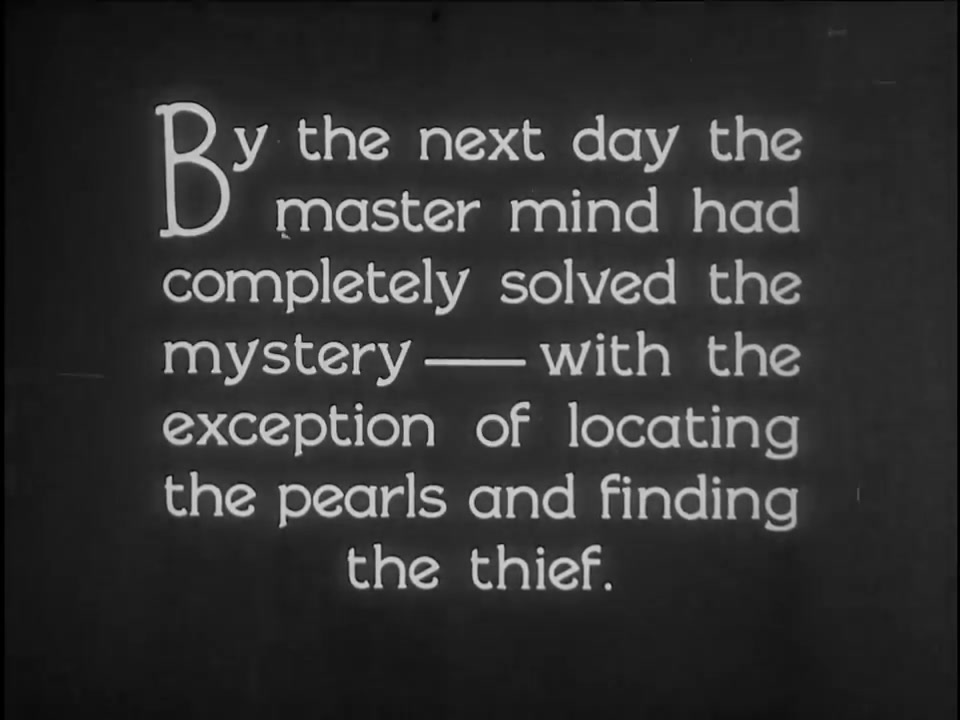
What makes Sherlock Junior a special film is that it is a film within a film with many incredible gags and techniques. The whole show begins when Keaton fall asleep as a projectionist while showing a film in the movie theater. This film within the film is called “Hearts and Pearls”. Inside his dream, as a projectionist, Keaton tries to enter the “Hearts and Pearls” film that was being shown on screen, but he was kicked off by one of the actors. Subsequently, Keaton manages to enter the screen and becomes part of the film “Hearts and Pearls” and in this film inside the film the famous detective Sherlock Jr. (Keaton himself) is called to solve a crime. The pearls had been stolen in the house of a wealthy family and the real criminals prepared a trap for Sherlock Jr. -who was called “the crime-crushing criminologist” according to one of intertitles -but the trap did not work out and the detective left the house free from any harm and solved the crime right afterwards.

Meanwhile, the girl went to the pawn brokers carrying her father’s watch and asked the salesman to describe the man who had pawned that watch. He had described her other suitor and at that moment the suitor was coincidently passing by the store and the salesman had confirmed it was that guy who had pawned the watch.

When Keaton awakened and found out that his Sherlock Junior adventure had been just a dream, the girl was in his workplace to tell him that her father had committed a serious mistake and that he found out Keaton was innocent and did not steal the watch. Then, the film “Hearts and Pearls” was still being shown on screen and while talking to the girl he realized that his life had finally got similar to the plot of the film and this time he was not dreaming. It was true, his dreams had started to come true.

The plot is easy to understand and very human. After all, many people have already dreamed with social recognition and success while performing their ordinary duties. The romanticism between Keaton and the girl is similar to 1920s Harold Lloyd’s comedies and by this time the narrative style was well-established in Hollywood, not too different from the narratives from modern-day films.

Foolish Wives (USA,1922)

Director Eric von Stroheim, despite making long and extravagant films – often having as scenery lands far away – he could also provide fluid, light-hearted plots with touches of humor. He was a competent director, who particularly excelled in fairy tale -like plots with touches of comedy, as in this film.

Stroheim could often have problems with the studios due to overbudgeting and excessively long films and it was not different here. The original printing lasted around eight hours and it was cut by the studio to a more conventional format and it shrank even more throughout the years. Despite having made a name for himself as a skilled director, his multiple clashes with studios made him as of early 1930ies end up being an actor in other people’s films. He did have some noteworthy roles, such as, for instance in Sunset Boulevard (USA, 1950) though. 

In a mansion by the sea in Monte Carlo (according to the first intertitle: “The Villa Amorosa – secluded yet within easy reach of Monte Carlo -leased for the season by three members of the Russian aristocracy”) it lives a man who socially identifies himself as His Excellency Captain Count Wladislaw Sergius Karamzin -but who is merely a poor scoundrel  who seduced and manipulated women in order to obtain financial advantages from them – (a role played by Stroheim himself) is a member of former Russian nobility who is in the habit of seducing rich women in order to obtain financial advantages. He has the assistance of his two “cousins”; “Princess” Vera Petchnikoff and “Her Highness” Olga Petchnikof (both of them partners in crime and possibly his lovers too).

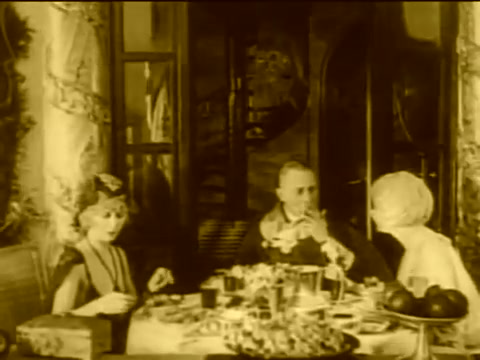
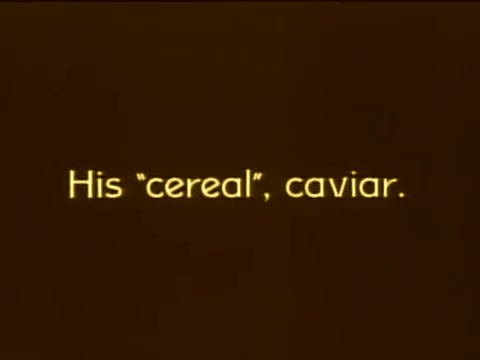
The three of them have an lavish and idle lifestyle, which even included caviar as breakfast, as it can be seen in a scene in the beginning of the film. Stroheim has reportedly requested the studio to purchase real caviar for the sake of realism on camera. Indeed, the breakfast scene – with a table full of sophisticated food in a huge mansion and with a maid to serve them -gives the audiences a good idea of the level of luxury of the “family”. 

Then the group receive the visit of Cesare Ventucci, who supply the group with counterfeit bills which would be passed in the Cassino. Ventucci has a daughter with special necessities called Marietta who he raised by himself after his wife passed away and it becomes clear to the audience that Count Karamzin was developing an interest for the girl.

Being a compulsive womanizer, the count also made advances (and even marriage promises) to Maruschka, the maid. This part of the film ends up irreversibly impacting the film later on.

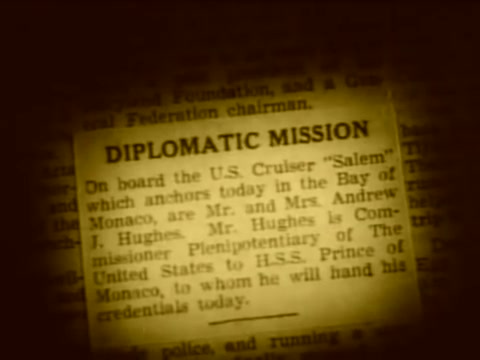
One day the count heard about the arrival on board of the U.S. Cruiser “Salem” of the Commissioner Plenipotentiary of the United States and his wife, called Helen Hughes. She was a naïve woman, younger than her husband (she was 21 years old, while he was 41 years old). Although Mr. Hughes realized that the count was flirting with his wife and was never away for too long, the count got to easily enchant her with his charm and extroverted personality. Furthermore, the friendship with those distinguished foreigners would give the group more social legitimacy and nobody would suspect that they never belonged to the Russian nobility after all. 

And this association with the fake nobility members would end up involving Mr. Hughes in some rather embarrassing situations. For instance: 

A. The Count was in the habit of going out with Helen Hughes together with his “cousins”. One day, they went to the countryside and the Count walked alone with Mrs. Hughes while one of his cousins was on the table waiting for their return. However, it suddenly started to rain torrentially and the Count and Mrs. Hughes ended up being stranded in a more isolated place, just the two of them, leaving the “cousin” behind. 

This “cousin” called Mr. Hughes and told him that his wife was safe with them at the Hotel des Reves and, due to the heavy rain, she would not be able to return home that night. Meanwhile, Mrs. Hughes was fainted in a scary-looking house being taken care of by the Count and an older woman. The count told Mrs. Hughes that her foot needed rest and that the rain prevented them from returning home that night. 

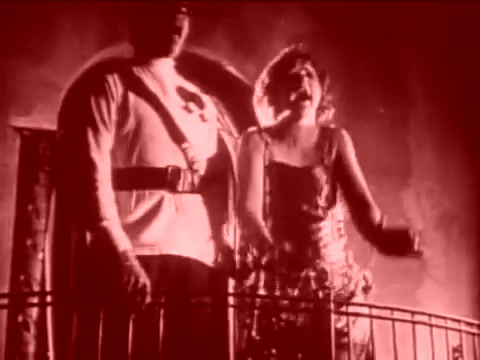
B. Once the Count told Mrs. Hughes that he urgently needed money, as he had a life or death matter to solve and asked her to meet him in a building at night.  Maruschka, seeing that the Count was did not really care about her and that his marriage promise was not true, ended up setting the building on fire. Both the Count and Mrs. Hughes are trapped and the firefighters were called. The Count jumped in order to save himself, leaving Mrs. Hughes behind. She eventually got to jump too and was looked after by her husband, who saw the Count’s letter asking money for his wife and realized she was being the victim of a scam. 

The Count ended up being rejected by the local high society due to the ensuing scandal and he subsequently tried to seduce Marietta, but her father sees it and ends up murdering the Count and throwing his body on the sewage. His “cousins” were arrested afterwards and the Hughes couple continued with their marriage without further problems.

Cobra (USA,1925)

I have always personally believed that, despite occasional typecasting and overacting in some films, Italian actor Rudolph Valentino’s acting skills did shine bright in his more romantically-oriented films. Unfortunately his acting ended up overshadowed by his heartthrob reputation and the tragic consequences of his death, with only 31 years old in 1926. 

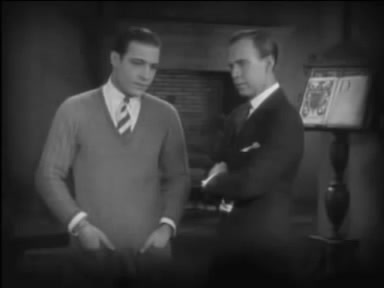
Valentino plays the impoverished Italian nobleman, Count Rodrigo Torriani, a philanderer who was often in the company of beautiful women. In the beginning of the film he befriended an American tourist (Jack Dorning) and, as he had shown a deep understanding of antiquities during their talks, Dorning invited Torriani to work with him in New York, as an antiques export. The proposal was gladly accepted. 

A short time after arriving in New York, Torriani realized that he would not really get rid of his weakness for beautiful women. He fell genuinely and purely in love with Dorning’s secretary Mary Drake, but she did not return his interest, which was an irony because it was the first time Torriani has ever loved a woman. 

On the other hand, he has also met Elise, a gold digger, who was looking for a rich husband. Elise was immediately interested in Torriani, thinking he was rich, but Torriani had no interest in her whatsoeverf. When Torriani told her that all the money actually belonged to Dorning, she directed her attention to him even though she had never forgotten Torriani. Having realized that Dorning was interested in Elise, Torriani encouraged him to have a relationship with her, which quickly happened. 

Dorning fell madly in love for Elise and they soon got married. However, after around one year of marriage -although Dorning was still in love and happy – it became clear that Elise was being unfaithful to her husband. To make things worse, Elise started to make advancements to Torriani again, to the point of forcing herself to him in his office. Torriani, in consideration for his friend, resisted her seduction as much as he could but, when she invited him to go to a hotel with her, he ended up accepting her proposal. But, as soon as they arrived at the hotel, Torriani felt guilty of betraying his friend and left the hotel immediately before anything more intimate happened between them both. 

It turned out to be a wise decision because the hotel caught fire that same night, killing both Elise and one of her other lovers (who she called to stay with her in the hotel after Torriani left). The bodies of both people were so severely burned that it was not possible to identify them. After having learned of his wife’s disappearance, Dorning was heartbroken. For a while he could not know where his wife was or if she would ever return. He fell into depression and Torriani took care of him, unable to return what happened at that night at the hotel. He did not dare to make his friend suffer by knowing which kind of woman Elise was.

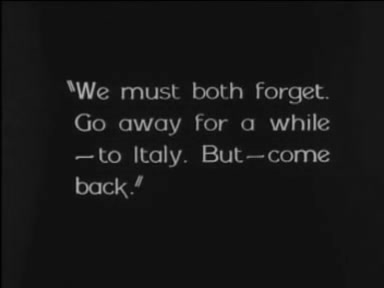
After a while, while browsing through Elise’s papers, Dorning found letters of some of her lovers to her and he also found out that she was in the habit of frequenting that hotel that caught fire and she was probably one of people who passed away. He also found out a letter of Torriani to Elise, refusing her love. Dorning was proud of his friends loyalty, but it was the moment when Torriani confessed everything that happened that night between him and Elise and that it was him who had taken Elise to the hotel the night she died and that he felt too guilty to remain in the United States and that he would return to Italy. Dorning answered saying it was better if they both forgot what happened and that Torriani could return to Italy to rest, but he asked his friend to return after a while and keep on working with him. 
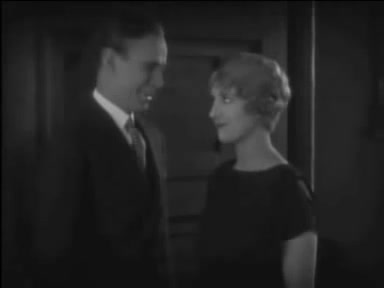
Torriani indeed returned and it seemed that everything would run smoothly, but it was not what happened. Mary Drake seemed to be finally interested in Torriani, but he was still feeling too guilty about Elise’s death and could not immediately return her interest due to his grief. After a while, he heard that both Mary Drake and Dorning were dating and that Dorning was very happy with her. He talked to Dorning and he confirmed to Torriani to be deeply in love with Mary Drake. 

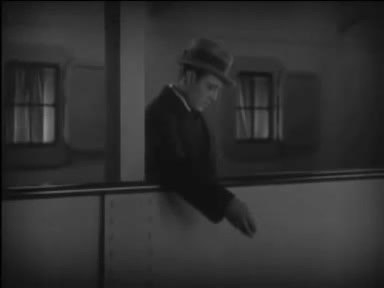
After having heard of it, Torriani decided to renounce to the only woman he has ever truly loved. He lied to her claiming he was still the same womanizer of always and, feeling guilty and determined not to be on the way of his friend’s happiness for a second time, Torriani left the United States and returned to Italy, this time definitively. 

One year later Valentino passed tragically away and his funeral has caused an unprecedented commotion. His successful career lasted only around five years (from 1921 to 1926). His fate in talkies is only a matter of speculation, as all his films were made during the silent era. Nevertheless, I do believe that if he got to totally avoid typecasting in ethnically-stereotyped films and devoted himself to romantic dramas, it would have solidified his career and make him being more seriously taken by some critics. But unfortunately there was no time for it.

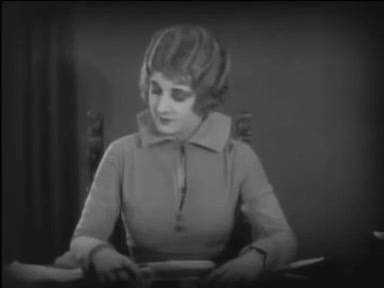
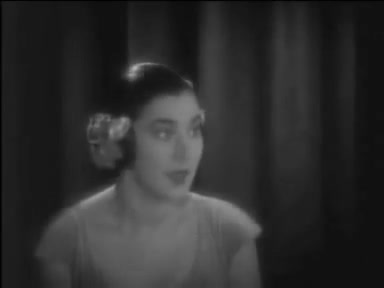
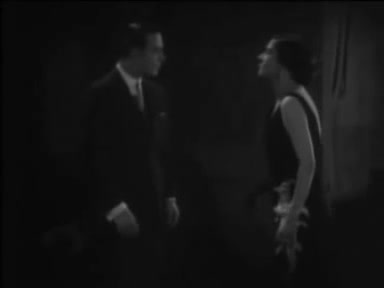
The Conquering Power (USA, 1921)

This film was made a short time after huge Rudolph Valentino’s hit, The Four Horsemen of the Apocalypse (USA, 1921) and it was the second and last collaboration of Valentino and Rex Ingram, the latter would subsequently direct Ramon Novarro’s films.  The Conquering Power (USA, 1921) was based on the novel Eugénie Grandet by Honoré de Balzac. The plot is about the conquering power of love, and all barriers it is capable to overcome, plus the maturity of a man from boyhood to adulthood due to adversities of life. It is also portrayed how the effects of greed can be harmful to a person.

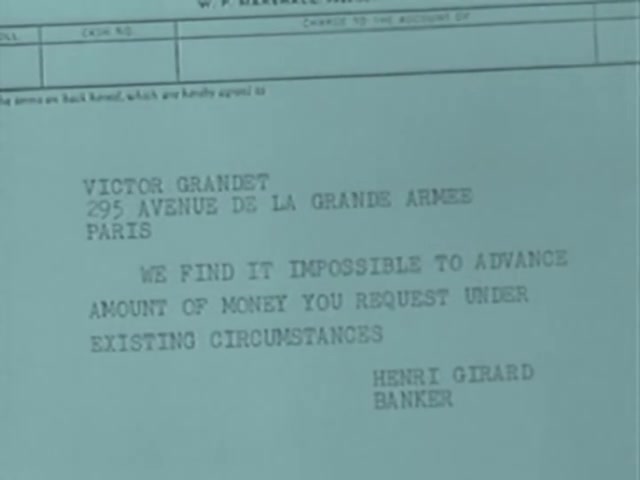
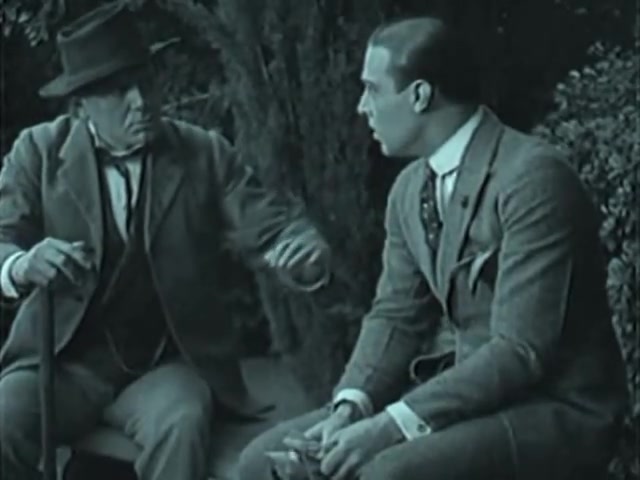
Valentino plays the role of Charles Grandet, a French playboy who lived a careless life and all worldly pleasures to the full, as it can be seen by his lavish birthday party in the beginning of the film, which was interrupted by the earlier return of Victor Grandet, his father, from a trip. Upon his return, Victor had a serious conversation with Charles about his brother, Père Grandet, who he had not seen for around twenty five years and recommended Charles to be on friendly terms with him. Victor seemed to be rather distressed and it is hinted that he had serious financial problems.

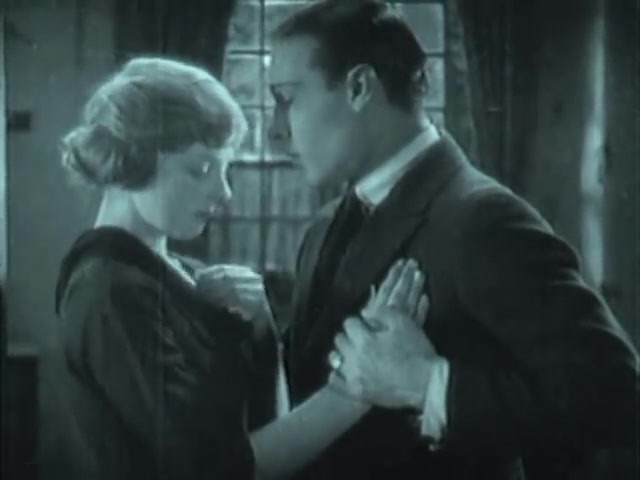
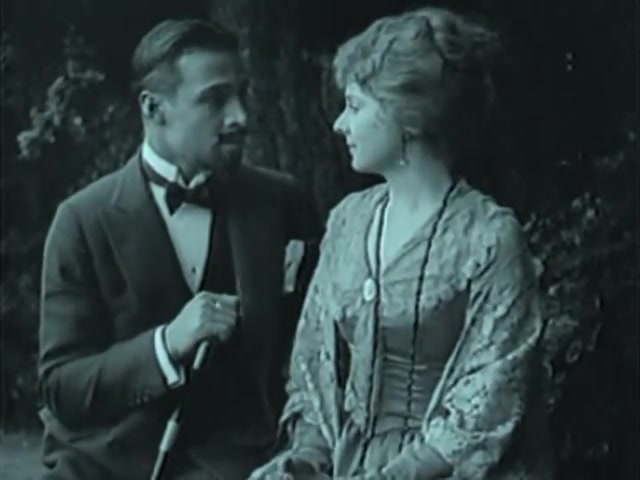
Victor had committed suicide a short time afterwards and after his death, Charles ended up living with his uncle. Père Grandet, despite of being rich himself, he was a miserly, who treated both the poorer people from his province and his own family with an iron fist. At the house of his uncle Charles met and fell in love with his cousin, Eugenie Grandet. Eugenie was a virtuous, beautiful and sweet girl, quite in demand by the suitors of her village. 

Charles brought to his uncle’s house a letter by Victor, who claimed that he had lost his fortune due to stock market speculation and he hoped that Père would be a father for his son. The tone if this letter suggested that Victor would die soon, which actually happened and this tragic event left Charles penniless. 

While love flourished between both cousins, Père received a letter stating that Victor’s debts had been reduced and it meant that Charles has not lost all his money, after all. To avoid that Charles recovered his money and that his love for Eugenie took root, Père decided to send Charles away for the Martinique. However, before Charles’ departure, Père made him sign a document renouncing to all his inheritance, something that Charles found strange as his father had left no estate. Despite that suspicious signal, Charles did not realize that Père could have been behind any scam to take advantage of him.

While Charles was away he wrote to Eugenie regularly, telling her about his life in Martinique, that he was prospering there, etc. Nevertheless, his letters never came to her because Père  was hiding everything and it made Eugenie think that Charles had forgotten about her. On the other hand, Père had written Charles claiming that he had arranged a marriage for Eugenie and therefore it would be advisable he did not keep any further correspondence with her. The claim was a lie and there was no marriage, but Charles could not possibly know. But both Charles and Eugenie never forgot each other.

One day Père asked Eugenie to see her gold because he wanted to invest it, but she could not give it to him because Eugenie had lent it to Charles previously, so he could have some money to restart his life. When Père realized Eugenie had given her gold to Charles, he locked her in her bedroom and it was when the worst ordeal of Eugenie began. However, the news of Eugenie’s imprisonment in her room became the topic of the village and the villagers have also noticed how maddened Père was. 

Some scenes later it is revealed to the audience that Eugenie was not actually Père’s daughter and that  Eugenie actually had the right of demanding a division of his fortune if only she knew the truth. 

Speaking of the truth, Eugenie eventually found out Charles’ letters to her hidden in her own house, none of them had ever been given to her. She also found the letter that stated that Victor’s debts were reduced and that Charles was not penniless, after all. The same letter that had never been disclosed to Charles, who left to Martinica thinking his father had not left any estate. 

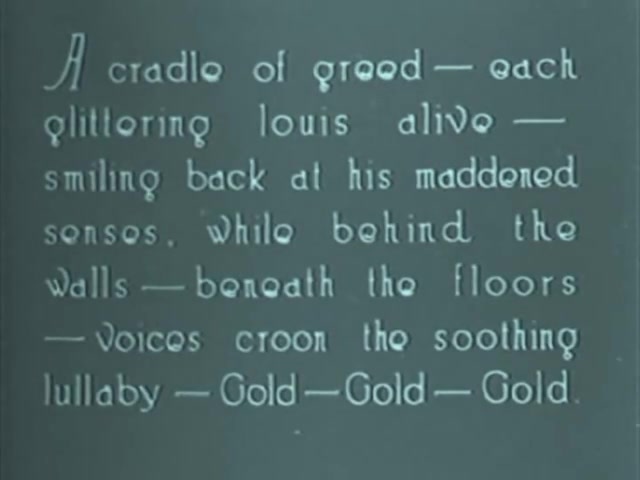
Père found out that Eugenie found the letters. She runs away and he gets locked in his cellar, totally maddened by his own greed and evilness. This is one of the most famous scenes of the film, beautifully played and acted by actor Ralph Lewis (who played the role of Père in a convincing and skillful way) and the favorite scene of many people. Right afterwards Père passed away, leaving Eugenie a very rich woman and it was suggested to her to look for a husband. She announces her engagement, but shortly after is reunited with Charles.

My personal favorite part of the film is the end, when after some years Charles returned from France, now a very rich man and they both met each other again in the same place where they used to gather together in the past, this time older and with different appearances. However, the love and joy in seeing each other was still the same. Their facial expressions of happiness were something very touching to see, as they show that love was the real conquering power, even beyond the action of gold and time. Charles did not come to the village before thinking that Eugenie was married, but she was actually still single and it was when they were finally reunited.

Create a website or blog at WordPress.com

Up ↑