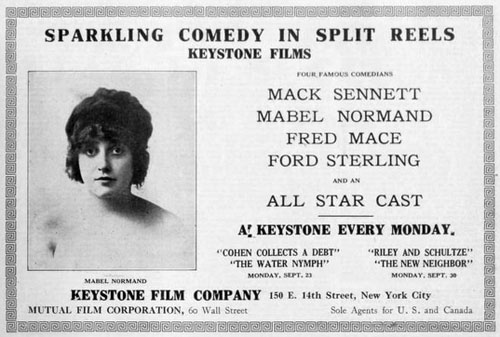
This early film by Keystone studios is more famous for its historical context than its rather simple plot and it is amazing how much history this split reel can have (A “split reel” was a film shorter than a one reeler, which means it lasted less than 11 minutes). It portrays a era when the leisure options of working class and middle class citizens were changing and it was still relatively new to go to the beach to swim. Bathing suits were also a new phenomena and still a bit frowned upon. So, seeing Mabel in a trampoline, jumping on the water in such relaxed way was something really groundbreaking because many women have just started to enjoy their free time this way.
Mack Sennett already directed and acted in comedies in his prior studio, Biograph, the same studio that gave D. W. Griffith to the world. But in Keystone studios, Sennett got to put his own style in the comedies, with characters making broad gestures, showing lives of working class citizens in a fast pace, lots of physical gags and risky stunts, without the melodrama touch of his films at Biograph studios.
Another interesting characteristic of the output of Keystone studios was making fun of well-established social institutions, specially authorities (the Keystone cops being the most famous example of it) and romantic relationships, like marriages, for instance. The latter would be even more deeply spoofed in situational comedies of 1920s of both Keystone studios and other ones.
Mack and Mabel were sweehearts, but Mabel had not met Mack’s parents yet. Thus, Mack had the idea of playing a trick on his flirtatious father by asking Mabel to vamp him (which would mean to seduce him in nowadays’ terms) while everyone was on the beach in a sunny day.
Nevertheless, one of intertitles implies that Mack’s father was not exactly a faithful husband (“Mack’s Papa, a faithful husband when locked in at home”) and he predictably got too carried away with Mabel until the moment Mack tells him she is his own girlfriend.
Another noteworthy thing are the dexterous stunts of Mabel Normand in the trampoline and how skilled she was as a swimmer. This film is a really precious witness of a society whose urbanization was happening really fast for the era’s standards and of the new world of entertainment and delight that was being opened to people beyond the borders of the countryside. Without mentioning that this film could have been the inspiration for the famous Sennett’s Bathing Beauties, that would be released by the studio some years later.
If not all that glitters is gold, not everything that looks ugly is really hideous. The film starts with a invocation to nature and the bucolic life of the countryside of a Scandinavian spot. The countrymen wore those typical peasant clothes and lived in typical landscapes of forests, lots of spaces of untouched nature and rivers.
A new parson must be elected in a village in 17th century Norway. Sofren was applying for the vacant post after having struggled hardship for years. His sweetheart Mari had remained faithfully by his side and waited for him during his years of difficulties. Mari’s father will not allow Sofren to marry her until Sofren is truly a parson. Sofren’s two rivals to the post had the utmost faith that they would win based on their beautiful clothes and education they received in Copenhagen, which implied that those fellows had a more sophisticated background than Sofren’s. Anyway, the competition was fierce, specially because the education did not prevent Sofren’s opponents from being either too boring or too ridiculous and the congregation did not find their sermons particularly interesting.
The congregation had appointed five wise and trusted men to decide who would be chosen as the new parson and Sofren was chosen. But there was a problem, which was the fact that according to the laws of the parish, Sofren was supposed to get married to Dame Margerete, who was the widow of last parson and much older than him. And Dame Margerte insisted on her right to be married. To make things worse, Sofren had heard she might be a witch and it would be the fourth time that Dame Margerete was marrying in such circumstances. She was not marrying due to sentimental reasons, but merely because it was her only way to keep the house and managing it, as she felt she was too old to leave the household she got so attached to.
Sofren and Mari decided it would be better if he married the widow, so he could become parson and when the widow died he would marry Mari. Meanwhile, Mari would live with them pretending to be Sofren’s sister and help with the house tasks. Sofren also tried to be “the master of the house” and give the orders there, but unfortunately to him the widow made it really clear that he would not be in charge of the household matters.
Time passed, Dame Margerete had not died yet and Sofren did not have any close contact with Mari, specially because the widow (who was now Sofren’s wife) had both her eyes on his whereabouts. But one day Mari unexpectedly had a domestic fall and seriously hurt her leg. More time passed and Sofren grew fond of Dame Margerete because she had taken care of Mari day and night with lots of care. Surprisingly, Dame Margerete implied she knew that Sofren and Mari were not siblings and she also told them that she lived in similar circumstances with her first husband before they both got married.
Finally, the widow passed away, Mari and Sofren eventually got to marry and the memory of Dame Margerete was fondly kept in their minds for a long time afterwards. A sentimental end to a film that is a mix of comedy, folklore (specially in the dancing scenes), romance and drama. A romanticized view of peasantry life. Good use of landscapes and photography in a subtle humor frame, different from the marks slapstick x situational comedies, which were so much used in Hollywood at that time. The jokes are not necessarily meant to make the audiences laugh but to highlight that people could be more sneaky than they looked like at first. The most funny moments were provided by Sofren and his wide range of reactions throughout the film (sadness, happiness, gratitude, despair, etc)
The so-called silent era officially spanned from 1895 to 1927, even though those dates are still controversial, from the first films being shown by Lumière brothers, Thomas Edison, etc. until the release of The Jazz Singer (USA, 1927), which is considered the first talkie. Let’s just not focus on other landmarks and use those dates to delimit the silent era.
Many people claim they cannot understand silent films properly. Nevertheless, films made at the end of silent era (after the main American studios like Universal, Fox, Paramount, etc were founded) are easier to understand, as narrative structures were already consolidated. Films like The Big Parade (USA, 1925), Ben Hur (USA, 1925), Wings (USA, 1927), Sunrise (USA, 1927), Metropolis (Germany, 1927) and so on and so forth, can be much more technologically advanced than we can expect. In other words, their stories are told according to standards that can be comparable with modern films.
However, when we see the films produced in first years of silent era, until around 1915, when D.W. Griffith revolutionized film making with the highly controversial The Birth of a Nation (USA, 1915), we realize they are much more difficult to understand. It happens for some reasons, one of them is that it took a while until cinema got to develop its own “language” and “grammar,” so films were really connected to popular forms of culture, such as vaudeville, circus, magic, fair attractions, magic lantern, which were very popular ways people had fun in the end of XIX century, beginning of XX century. Such representations were opposed to more classic forms of art, such as literature and painting, theatre, etc.
Therefore, it really comes as no surprise that in those first years films were not shown in places where they were the only attraction, they shared the same space as other types of mass distraction, such as vaudevilles and burlesque shows. Mass media was advancing, so, for instance, newspapers had been much more common since XIX century already, news were spread more easily, novels were being read by more people and in many countries urbanization was advancing, which represented a small revolution in the typical peasant life. So, films were a result of all those changes brought about by industrialization and technology. In other words, a completely new world opened up for people and they felt deeply insecure at first.
Sensationalism also started being more widespread, especially because it did help sell more newspapers (some things don’t ever change, huh?). but it was not only that. The grotesque sensationalism was not only connected with economic exploitation, but it was also a way of people representing their feeling of vulnerability and insecurity in this new urban environment.
Thus, many references of early films can be seen in elements of popular culture like current jokes, news, songs, famous plays, novels, etc. So, the audience somehow already knew the plot. Some films that represent this trend are Uncle Tom’s Cabin (USA, 1903); Tom, Tom, the Piper’s Son (USA, 1905); The Whole Dam Family and the Dam Dog (USA, 1905), etc.
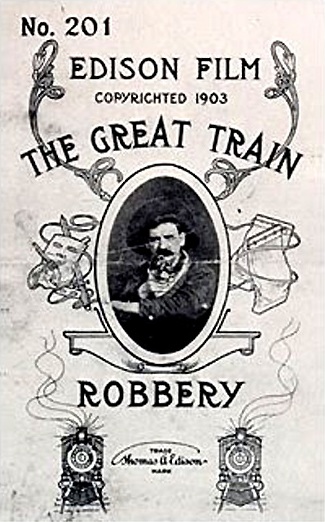
Everyday life was shown in many short films since the first short films were shot by Lumière (for example: Démolition d’un mur (1896), among others) and Edison. An aspect of private life that was particularly highlighted was public spaces, as in films like The Great Train Robbery (1903) and Romance of the Rail (1903). One might say those very early silents are hard to understand by nowadays’ standards, but we must keep in mind that cinema has evolved very fast, particularly in its first 3 decades.
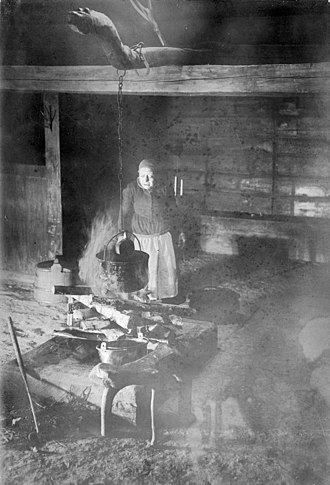
Something that can be easily noticed in those films is that life at that time compared with the one we have nowadays clearly revolved around manual labor, both to men and women.
This can be easily noticed, in slapstick films in general, such as Mabel Normand’s films by Keystone Studios. She was a rather athletic actress, who did most of her own stunts, which was not uncommon in early Hollywood and already in 1910ies we can see a long list of daredevil stars who did so. At that time not even domestic duties were a piece of cake. Many women used entire days to simply wash their clothes, for example. We also may not forget that in countries like the United States, in the first years of cinema, especially until 1915, when feature films established themselves, most of the audience of those short films were laborers and immigrants, the ones who were more involved with that manual labor.
Those events were not only related to rural life and habits, but also to news and urban life. An example of technology being readily shown in films is that trains were commonplace throughout the silent era, from Leaving Jerusalem by Railway (1896) to standard Hollywood productions like The General (1926). After all, cinema itself was a result of fast industrialization that started in the Northern Hemisphere as of middle XIX century, so it is natural that it portrays the wonders of recent inventions.
Let’s take a look at one of Normand’s films and briefly analyze some factors. In the short film A Dash Through the Clouds (1912), Normand in the beginning of the film enters an airplane that is rather fragile for nowaday’s standards.
Those films were somehow important for women’s rights, especially because women were commonly depicted as brave and intelligent enough to be out of trouble due to their own ingenuity, rather than being rescued by a protective man. An example of this new type of heroine can be seen in the serial The Hazards of Helen, released between 1914 and 1917. Even though in other films women were still portrayed as fragile little creatures who fainted at every little difficulty, we can consider it good progress towards acknowledging women could be as skilled and strong as men. Evidence of that is the featured image of this article. Despite being usually shown as a Victorian beauty, a little girl, always kind and fragile, Actress Mary Pickford (1892-1979) in real life was a real pioneer and responsible for many aspects of film making and the first female superstar Hollywood ever produced. But that is another story.
The Thanhouser studios had a very nice output of drama films, but the studio unfortunately lasted only a bit over one decade. It was found prior to 1910, which puts this studio among one of the first cinema studios founded in the United States.
A young orphaned girl is romantically interested in her guardian, who was a friend of her father. As the girl’s father was dying, he left his daughter to be taken care of by his friend, who took the orphaned girl to the home of his own mother. Time passed, the girl became part of the family and ended up having feelings for her guardian, although he had no idea about it.
However, guests came from the city, another girl showed up, the orphaned girl’s guardian got a intense interest in the visiting girl and the orphan girl was jealous.
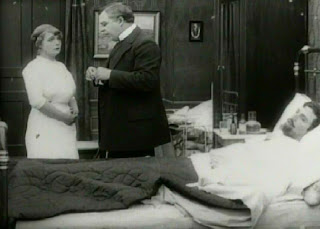
After a car accident where both girls were injured and shared the same hospital room, the orphan found herself alone with the other girl and a bottle of medicine. After acting impulsively, she tried to kill the other girl with the medicine. The doctor witnessed everything and allowed the orphan to think she had killed the girl, so she could learn a lesson.
Time passed and the orphaned grieved immensely, but after a while she realized that the visiting girl was still alive. Not without having regretted deeply the attempted murder of her rival.
Although this film has some stagy acting and overacting at its climax, it remains a beautiful, delicate film.
The biggest irony of this film is that actress Florence La Badie (1888-1917), one of main stars of the studio, who played the visiting girl, ended up dying in a car accident in real life with 29 years old at the peak of her fame and her death was openly mourned by her fans. Perhaps, it was this precocious death which made La Badie being nearly forgotten by subsequent generations even though she was a highly popular star in her own era.
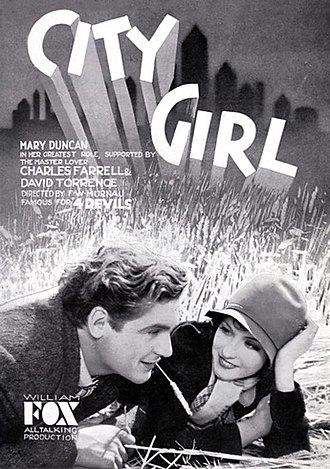
German filmmaker F. W. Murnau made a very good work in this film showing the clash between two worlds. Urbanization was already a undeniable reality in many countries of Northern hemisphere back to 1920s, including the United States. Although farms still existed in America and kept their original country lifestyle, the existence of big cities around them could no longer be denied. The stereotypes of innocence related to the countryside and excitement around city life are also challenged. At the same time, Murnau managed to keep his typical romantic style of showing two lonely souls falling in love despite all chaos, poverty and uncertainty around them.
Lem is a relatively naive son of a farmer from Minnesota, who went to Chicago in order to try to sell the wheat crop of his father’s farm for the best price possible. He met a sweet waitress in the big city called Kate and decided to marry her and take her to the farm with him. But things would not be easy.
In addition to arrive back home as a married man, Lem could not sell the wheat for a good price and he ended up losing money. That was disastrous news to his father, as his family desperately needed the money of that transaction. They were facing financial difficulties in the farm and struggled to make ends meet. The timing of this film was also interesting, considering it was made at around the time of The Wall Street Crash of 1929.
When Lem arrived back home with Kate, she was accepted and welcomed by his mother and sister, but not by his father. In addition of having his authority challenged by a marriage he had no idea about, he also resented Lem about the low price of wheat and instinctively blamed Lem’s bad transaction to his marriage with Kate.
In addition to have a hard time to handling her dictatorial, even physically abusive father in law, Kate also had a problem to adjust to the lifestyle of a farm. Things went from bad to worse when she became a object of curiosity of other men of the country and one of them even made some advancements towards her. It led to a misunderstanding of Lem’s father thinking it was Kate who was encouraging those advancements. Even Lem started having doubts about his wife’s faithfulness. One night, after a particularly heated arguments, Kate decides to leave Lem. Lem got to find her and bring her back home, but not without running the risk of being involved in a huge tragedy.
A particularly interesting thing is that Kate’s difficulties in handling her marriage did not come from out of the countryside, but they all came from that apparently calm and idyllic environment. The country could also be a threatening environment, where people could no longer be trusted and safety could not be taken for granted.
Although the plot of this film is related to the loss of overall excitement in American society at the end of so-called roaring twenties, this film stood well the test of time. It shows with accuracy the difficulties of a recently-married couple in adjusting to each other and circumstances around them. In addition to lots of love, it is required a sense of commitment, faith in your partner’s character and responsibility in dealing with that relationship in the context of both family and labor routine. Actor Charles Farrell’s acting as Lem was pretty convincing as a simple, hard-working man with a heart of gold.
There are not enough words to write about a such film. Its theme is more alive than ever, although it portrays a war back to an era when going to the war still had a somewhat romantic aura of dying for a cause in the name of your country. Although the horrors of WW2 could not even be predicted back then, WW1 brought enough tragedies and disrupted millions of lives.
Some of the best war films show the lives of unknown people, their dreams, ambitions, their normal pace of life being completely engulfed in a war and changed forever. Common people, whose names are not in history books, but who borne most of toll of war. Families separated, love stories brutally interrupted, entire youths torn apart forever for reasons that were completely out of their control. People who either perished or had to carry on despite a huge amount of pain. It’s impossible not feeling overwhelmed.
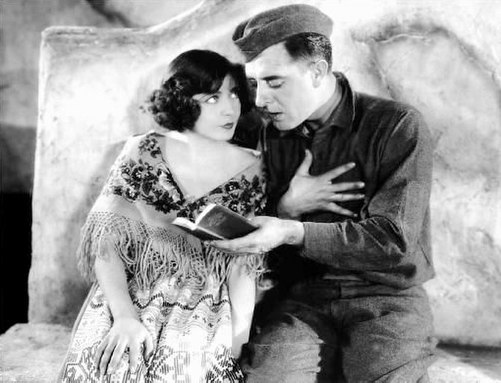
Back to late 1920s, the biggest Hollywood studios were already big and gave a plenty of examples of the sophistication that could be achieved with a high investment in both technology and human skills. John Gilbert and Renee Adoree provided beautiful pieces of acting without ever being over the top or stereotypical. Adoree is always a pleasant screen presence, showing lots of feelings in a restrained way, but really convincing, a type of acting that could resemble Lillian Gish in her heyday.
This film can perhaps be considered the best work of John Gilbert on screen. Although he is perhaps more famous today for his films with Greta Garbo (where he also worked quite well, by the way), the character Gilbert played in The Big Parade was full of complexities and dramatic nuances that gave him full room to show off his passionate, energetic, emotional acting. And Gilbert really did not disappoint. A complex role, which he ran smoothly, in such realistic way that he could say we are seeing a friend or a relative right in front of us, as if the audience was just taking a look at a situation from real life portrayed in a documentary.
Without focusing too much whether war was something justifiable or not, the film portrays the influence of facts out of ordinary people’s control into their lives. Although the plot could be quite sad there is a good balance between light comedy, fine irony, romance and drama. Although it is not uncommon to portray on screen the maturity of a young and careless young man into adulthood by suffering the horrors of war, this film shows it under a nice perspective. James Apperson (John Gilbert) not only endures terrible moments at war, but he also had a good time with his friends, found out true love in the arms of a French girl (Melisande, played by actress Renee Adoree), even though they both couldn’t speak each other’s language, for instance.
The end might have been relatively happy, but until a balance is accomplished, it is portrayed how much James struggled to handle the death and suffering of his friends, but also his own physical wounds. The lives of everyone involved in war, either directly or indirectly, was changed forever. Love might have been unexpectedly found, but the mental scars would have to be handled.
The “war to end all wars” turned out to be, both on screen and in real life, much more tragic and longer than expected. And many other wars would come. The Big Parade has the distinction of being the first great pacifist war film in the United States, even prior to famous All Quiet on the Western Front (USA,1930). Something that also unites both Adoree and Gilbert is not only the fact that this film brought them to stardom, but also that both of them would die young not too long after this film was released. It was also the first noteworthy picture of filmmaker King Vidor, who would have a successful directorial career ahead of him.
Failmaker Victor Seastrom was still completely unknown in Hollywood back to 1913, but when he finally reached fame in the United States in the 1920s he already had a solid cinematic career in his native Sweden and made films good enough to still be appreciated by nowadays’ audiences, as this film shows.
Making a good use of Swedish countryside landscapes and portraying family life of 1910s, this film is the witness of a lifestyle that has been gone for a long time, even in Scandinavian countries. Manual labor might have been strenous, but the bigger families seemed more united and life simpler. Or perhaps it is just modern audiences romanticizing the lives of Northern Europe peasants, but it is quite interesting to see how they lived, considering how urbanized most of the world has become.
At that era, in many countries, the passing of the husband/father of the family represented a big social and financial loss to the family, specially if the wife was left with small children to be raised.
Ingeborg Holm lived a happy and prosperous life with her husband and children, but it all comes to a end when her husband gets sick and passes away with what looks like tuberculosis, a rather deadly disease at that era.
She tried to keep the grocery market, but the business eventually bankrupted. She was broke, ended up under poverty relief and separated from her children, who were taken to foster parents.
Unfortunately one of Ingeborg’s children gets ill and needs to undergo a operation and she run away from the shelter where she lived to see her child. After a while, the policemen managed to find Ingeborg and arrest her. The toll of all suffering of being widow and without her kids took a huge toll on Ingeborg and she was permanently mentally impaired.
Fifteen years pass and it shows one of Ingeborg’s children visiting her after spending some time at the sea. Her mental health did not really progress and she could not even recognize her grown up son at first. After a while, he explained to his mother who he was and Ingeborg realized it was her son.
The transition of time between the time when Ingeborg got hopelessly mentally impaired and the visit of her adult son was a little bit abrupt, though. And it could have been shown what happened with the other Ingebor’g kids. What about the sick kid? Was the operation successful or did the kid pass away? It was not mentioned and perhaps it would help the time transition being a bit more natural.
Although the acting of main actors was a bit over the top and stagey, considering the naturalistic Hollywoodian-like acting, which would soon become the standard in cinema, the film stood well the test of time. It showed a fairly realistic situation in the society of the era, rural life was also still relatively common. The camera work was nice and the imagery of film was very pleasant to the eyes, good lighting and characterization too.
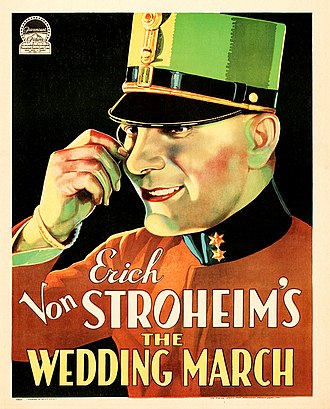
Eric von Stroheim does earn his reputation as a director. Despite the lavish production of his films, the narrative is quite often fluid and smooth, without tiring the audiences. Even the background music gives an impression to the audiences that they are indulging in a ballet dancing, where the characters are always portrayed with all their human faults, but with a pinch of sarcasm and humor too.
At the same time, he deals with love in a romantic way, but not forgetting about realism. Another noteworthy point of Stroheim’s films is that they always look modern, no matter if the setting is in a distant era. This is probably because the audiences can still relate to the feelings portrayed on screen and also due to beautiful wardrobe and scenery, that are still a feast for the eyes and stood up the test of time very well.
As an Austrian, Stroheim wanted to show the end of nobility days and of gentleman values in Vienna, all of those things coming to a brutal end with the beginning of WW1.
The setting of this film is Vienna, 1914 in the eve of WW1. Stroheim also takes part in this film as an actor, where he plays the role of Nikki, a noble man in financial crisis due to his spendthrift and the solution for him to recover financial power is marrying a rich woman for her money. He is willing to do so, but things change a little after the Corpus Christi procession, an important religious and military celebration. The nobleman meets a girl (Mitzi) in the middle of the crowd and it was love at first sight, even though the woman had a quite obnoxious fiancé, a butcher called Schani.
Unfortunately, there is an accident with Mitzi and the nobleman visits her at the hospital. Later, they meet again in the restaurant where she works as a harpist. Love flourishes, but Schani is threatening towards Nikki all along, which scares Mitzi and, in exchange for Nikki’s safety, she ends up leaving him and the two lovers move on to their previous love commitments, Nikki marries a rich woman and Mitzi and Schani remain committed.
After the two lovers having enjoyed bliss and fulfillment through true love, their happiness is disrupted by social obligations, a situation quite similar to the disruption of happiness in dear old Austria before the horrors of WW1 reached the country. An entire lifestyle was lost forever, but the memory of the happy days would remain forever in the hearts of those who lived it.
A typical 1910s melodrama, with provides some of greatest imageries of early cinema and reveals the high quality of Danish films of the decade, including the special effects. Denmark had a quite vibrant production of films prior to WW1, and the most famous actors of this generation were Asta Nielsen and Valdemar Psilander (By the way, both of them were NOT part of the cast of this film).
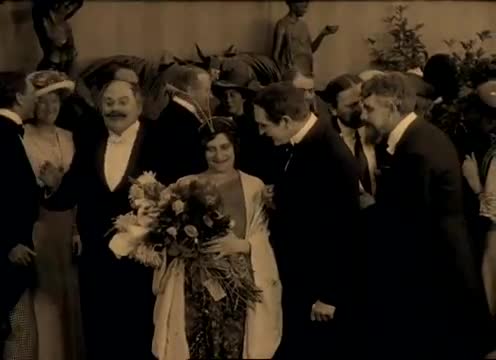
It is impossible not to compare the plot of this film with the infamous sinking of the Titanic in the previous year. Although the film is slow-paced, the plot has a plenty of action all along. Showing the calm days of Danish aristocracy prior to WW1, the acting is very stagy, even stationary compared with the naturalistic acting that had started been adopted by Hollywood, this film also has a touch of modernity. It shows Angèle, the wife of Dr. Friedrich Kammacher, a scientist (a bacteriologist), suffering from mental disease. All those scientific matters being still new and highly researched back to 1910s, an echo of XIX century progressist ideas that had science in high esteem. We can also see by the professions of main characters and scenery that the film is portraying lives of members upper classes.
Dr. Kammacher had the disappointment of having his research papers rejected by the academy and when Angéle is finally brought to a mental hospital, her husband kissed his children goodbye and decided to go on a journey in other to recover. When he arrived in Berlin he met a erotic dancer called Ingigerd, and got immediately fascinated by her. After hearing she was going to the United States, he left his past life behind and followed her on board the ocean liner “Atlantis”. Things were going fine until it happened a shipwreck. A drifting lifeboat with the people who survived the tragedy was rescued and they were taken aboard another ship. Ingigerd was one of survivors. They all eventually managed to arrive in New York and this part of film included some very beautiful takes of New York, which provides a lovely glimpse of how the landscape of the city looked like back to the 1910s.
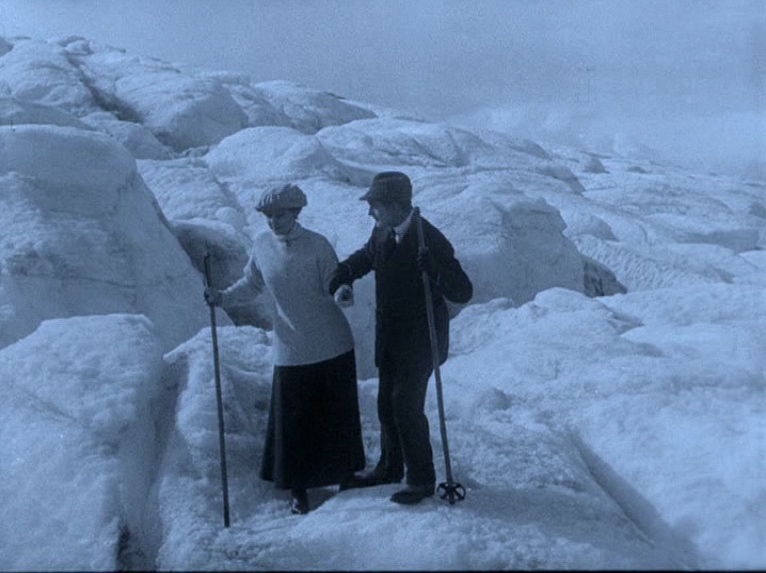
Dr. Friedrich Kammacher also survived the shipwreck and was welcomed by his friends in NYC and he got together with Ingigerd there. However, time passes and their relationship has problems, mostly because Dr. Friedrich Kammacher is annoyed by Ingigerd’s artistic career and her personality, and they become estranged. Disheartened and suffering from depression since the shipwreck happened, he goes to a distant cabin in the mountains. Perhaps, considering nowadays’ medicine, Dr. Kammacher might even had post traumatic syndrome due to the shock of the tragic event. Dr. Kammacher got very ill while in the cabin after knowing his wife had passed away, but he is taken care of and cured. He has an affair with Miss Burns, who even promised Dr. Friedrich Kammacher to be a good mother for his children, and they both return to Denmark in order to reunite with Kammacher’s family and start a new life.
Although many people consider the shipwreck scenes the highlight of the film, this is not really fair. Atlantis has some of most beautiful imagery shown in a silent film, the elegant wardrobe of the cast is also a noteworthy aspect, together with the scenery. The landscape scenes are breathtaking and the using of coloring was brief, but very proper. It is also interesting to see the mix of modernity in the approached subjects (science, medicine, arts) and an acting that would soon become old fashioned.
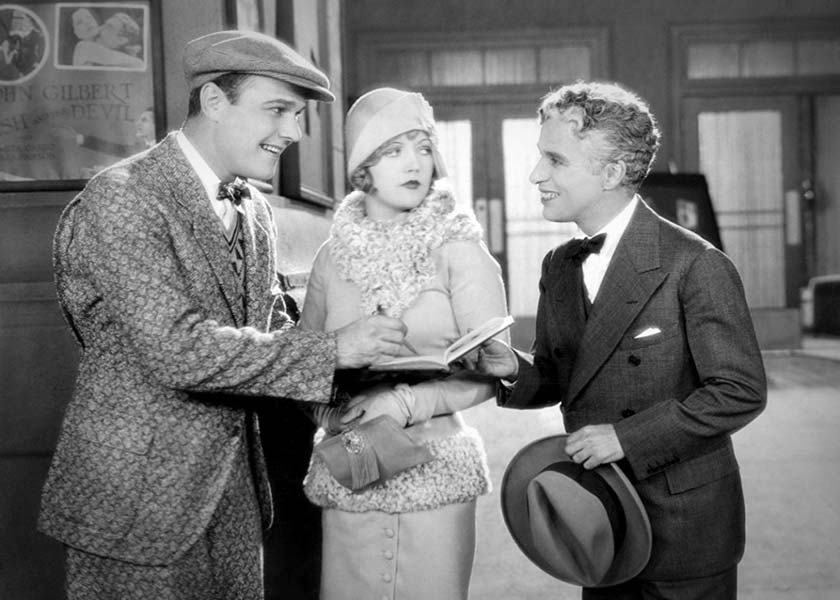
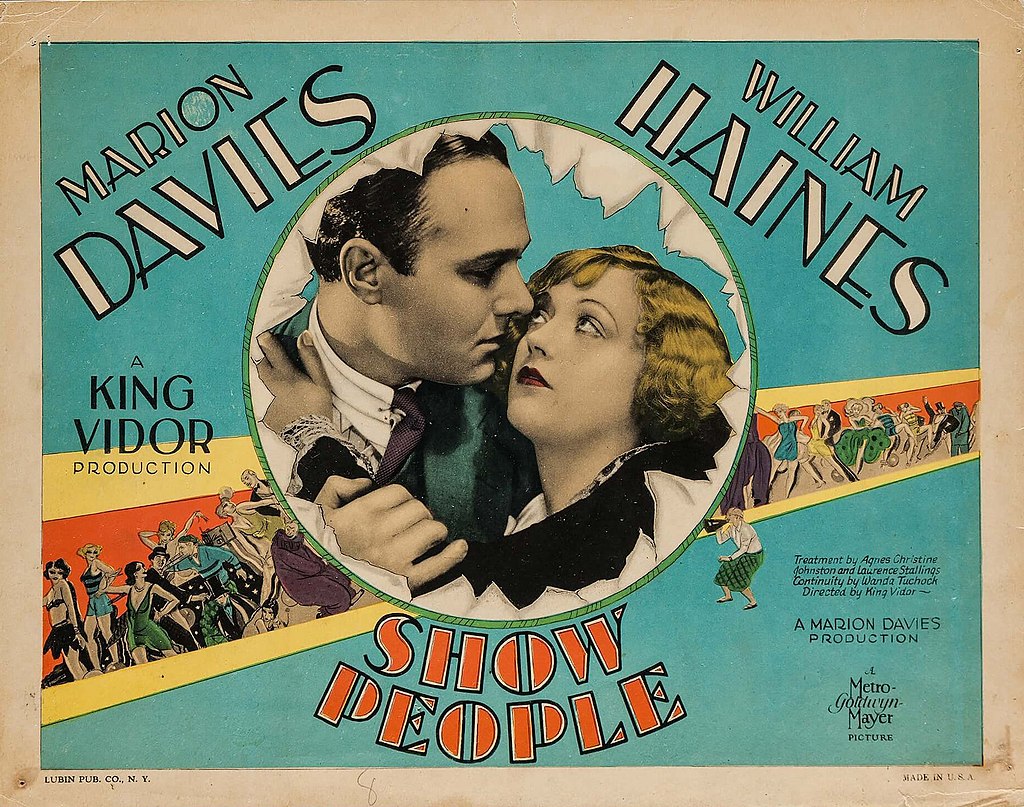
Hollywood making fun of itself, already a magical place at late 1920s, full of stars and lively parties, this film even included the cameos of real Hollywood stars as themselves, like Charlie Chaplin, Douglas Fairbanks and John Gilbert. This film also shows the traps of fame and pride and how fast things could change to the best or the worst. A delicious comedy, with impeccable comedy timing, showing that MGM was not only good with dramas and epic movies, but also with comedies.
Marion Davies became infamous by her long-term relationship with millionaire William Randolph Hearst and by the negative impact It had over her career. But, in reality, Davies had an innate talent as a comedian and in the few films where she could show such talents she never disappointed the audiences. Ironically, the film shows the dichotomy between drama x comedy and that some people thought that dramatic films and plays were superior to comedies, specially slapstick comedies. The irony is that it was exactly the opinion Hearst had about Davies career, which would be unworthy of her dignity to act in comedies, and Hearst’s interference in her films did more harm than good to Davies in the long run.
A colonel from Georgia takes his young daughter (Peggy Pepper) to Hollywood in the hopes of showing the studios she is a good actress. Peggy gets immediately enchanted with Hollywood and upon her arrival she bumps into John Gilbert on the street. Yes, the man himself, already a mega star and famous all over the world. She seemed to be a rather naïve girl, not used with the bright lights of the big city and unaware of how competitive things were in Hollywood but she would soon realize it.
Peggy is befriended by a guy (Billy Boone) who helped her get into films in a small studio by acting in slapstick comedies. At first, Peggy was not happy with that because she expected to be into high-class dramatic films rather than in custard pie, physical comedies. But it turned out that her comedic talents were acknowledged and the audiences really liked Peggy’s films.
After a while, Peggy is “discovered” by a bigger studio, where she could act in the high-class dramas she had always dreamed about making. At first, she hesitated to leave Billy behind, but, as time passed, she was induced by her new leading man to acquire a completely new personality and hanged out with new friends, ignoring Billy. Meanwhile, Billy was still struggling in the same way he did before. Billy even tried to see Peggy, but she did not care very much. As her career progressed, she even pretended she did not know Billy.
Eventually, Peggy became so full of herself that her behavior even started interfering with her work in films, especially because she started to act like a royalty member rather than an actress who owed obedience to her bosses and had responsibilities to handle. And Billy would not let Peggy forgetting him easily, especially after knowing she was about to marry her new leading man. He tried to make Peggy come to her senses, but there was a fight involving a custard pie. The clash eventually had a good result and Peggy started to see things in a more reasonable way. She cancelled her convenience marriage and recommended Billy for a role in one of her films and, even more importantly, she was finally grateful for everything Billy had done for her in the old days. Then, they both realized their old good connection and love flourished between Peggy and Billy again.
With naturalistic acting of children, similar to what the audiences would see years later in Our Gang films, this film deals with the theme of friendship that crosses social statuses and social rules. Behind the Western scenery there is a rather universal plot. The tender relationship between a boy and an adult man would also be brilliantly shown in another famous film, launched by Charlie Chaplin on the following year, The Kid (USA, 1921).
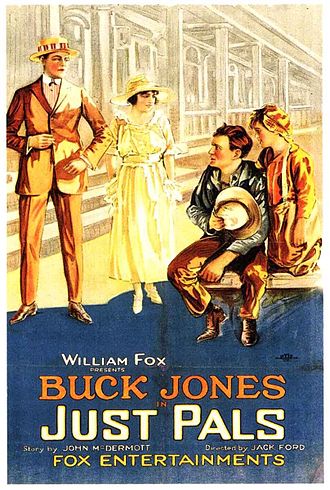
A recurrent character is classic westerns is of the rude cowboy with a heart of gold and strong sense of ethics and loyalty despite the lack of a formal education and such character is also shown in this film. A kid who was not liked by the adults of his place because he was considered too indisciplined. A man (Bim), who was as marginalized at the town as the boy, develop a solid friendship after Bim defended the boy of being beaten up. At first, they were just colleagues who got along well regardless of the difference of age. Time passes, the mutual affection between them develop until it becomes a virtually fatherly connection, especially after the boy risked his life in a moving train so he could get a uniform, as Bim would only be offered a job as a porter if he had a uniform. So, the boy tried to get a uniform to Bim.
Their mutual bonds of affection have deeply positive effects on both Bim and boy. Bim managed to persuade the boy to attend the school and Bim realized he had to be more responsible and find a job so he could provide for the boy. But the boy got injured after falling off the train in an attempt to get the uniform. Bim got desolated and took the boy the house of the city’s doctor. The doctor and his wife tried to separate Bim from the boy by saying to Bim that he should cut off contact with the boy and afterwards by telling to the boy that Bim had abandoned him.
A dishonest accountant persuaded the town’s elementary school teacher to deliver him the school’s fund to compensate a loss he had while making business and claimed he would return her the money as soon as the school needed it. The school suddenly needed the funds, the teacher asked the accountant to return the money, but he did not do it. In desperation and afraid of having her reputation misjudged, the teacher attempted suicide by drowning herself in the local river, but she survived. Bim took the blame of the money deviation to protect the teacher’s reputation. He did it out of love, as it had been previously shown in the film that he loved her, but he was embarrassed of saying it to her, as he was the bum of the town and not socially respected.
A gang of robbers threatened to rob the city, Bim tried to stop the criminals from doing so but he was misjudged as a member of the gang by the town’s sheriff. There was an attempted lynching of Bim and chaos happened. He is about to be hanged on a tree by furious dwellers of the city, but the boy appeared on the scene and told the adults that the man who really planned to robbery of the town was inside of the school. While the lynching was taking place, the crooked accountant showed up at the school and demanded the teacher to hide him and that he was running away from the city and the teacher had to go with him.
The boy’s plead took the desired effect. Bim is released and the furious mob enters the school in time to find the accountant fighting with the teacher. The accountant tried to run away, but he is caught by the police and the money of the school’s fund was with him. The teacher was very touched by the sacrifice Bim made for her sake and both him and the boy became the heroes of the town. Bim was almost separated from the boy again when a man arrived in town saying he was the boy’s father, but it turned out his son was actually another kid.
After a while, after enjoying respectability for a while, both Bim and the boy arrive at the school, in socially accepted clothing and looking a bit awkward. It is clear from the beginning that Bim wanted to ask the teacher if she would date him and she apparently gladly accepted it. And the film ended happily, with Bim keeping the boy, both of them leading straight lives, and Bim also had the girl he had always loved.
This film, despite its overt melodrama acting, also has some gothic elements, especially in the scenery, which is a type of thing that could be found in films by Ingmar Bergman decades later. The way the main characters express love and grief is through a stationary, stagy acting that was already out of fashion at late silent era.
An army man (Citizen Hogan), who was actually an Irish patriot serving in Algeria, asks for a leave of absence so he can return home in Ireland because he had to kill a man despite the fact he was wanted by the law there due to his patriot activities. The reasons of Hogan’s return were not disclosed at the beginning of the film and would only be known a while later.
In Ireland, a hangman is about to pass away and is having huge crisis of conscience due to the people he sent to death. The flames on the fireplace of his living room can be taken as a symbolism of his life that was about to be over.
His daughter loved a man dearly (Dermot McDermot) and he wanted to marry her. However, her father preferred that she married John D’arcy, a man of dishonest character, but with money and good social position. She detested D’arcy but eventually married him out of respect for her father’s wish. Dermot was devastated when he heard the sad news. Her father died a short time after the marriage. D’arcy started to drink and being completely nasty with his wife and she openly avoided him.
Meanwhile, a mysterious man showed up in town. It was the same army man showed in the beginning of the film and he was looking for John D’arcy. They both had clearly met before, and whenever D’arcy put his eyes on that man he seemed to be really afraid and uneasy. In fact, D’arcy had already been married with the army man’s sister, but D’arcy had left his sister and she died right afterwards. This is why Citizen Hogan wanted revenge.
D’arcy showed more and more signals of mental instability as time passed. Eventually, Citizen Hogan finally managed to confront D’arcy at his own house and it is suggested a duel. A fire started at the mansion and it attracts the attention of the entire neighborhood. Dermot McDermot and Citizen Hogan managed to leave the place on time, but D’arcy got trapped and is killed in the fire.
Hogan returned to the desert right afterwards, after having created a good friendship with Dermot. And both Demont and the hangman’s daughter could finally become together without anyone else’s interference, as she was now a widow.
The psychological profile, as well as reasons behind their attitudes could have been a bit deeper in this film. But this film has a good camera use, good sceneries and acting and a gloomy atmosphere that built up suspense well. The mansion and furniture had some interesting gothic touches, which is not something common to be seen in a dramatic film. Although not a particularly innovative film, it is convincing and well-acted. And it is also noteworthy for having shown John Wayne in his first recognizable role in films. As a uncreadited extra, he was a spectator in the horse racing who was so excited with the race that he ended up hitting the fence in front of him.
















 Silent Beauties