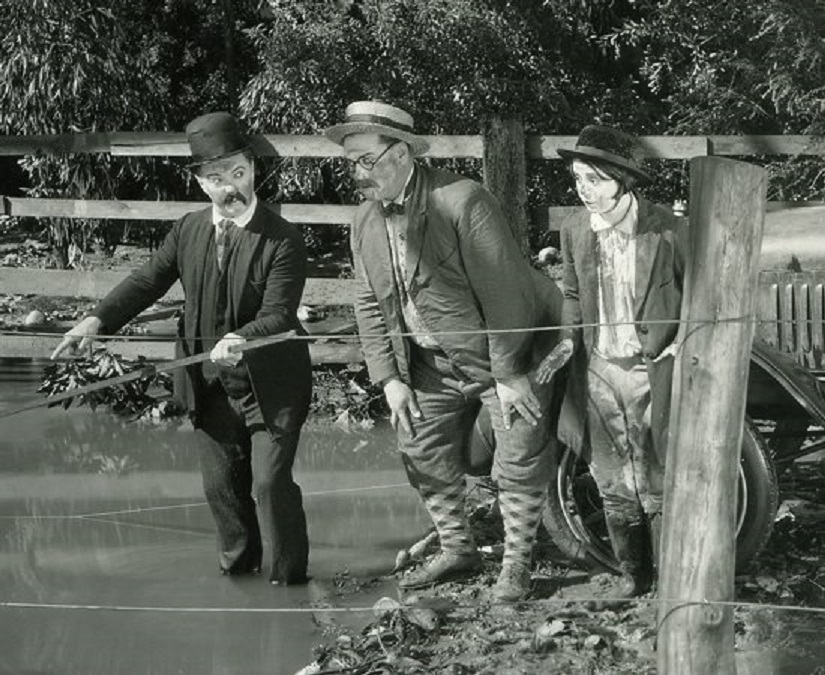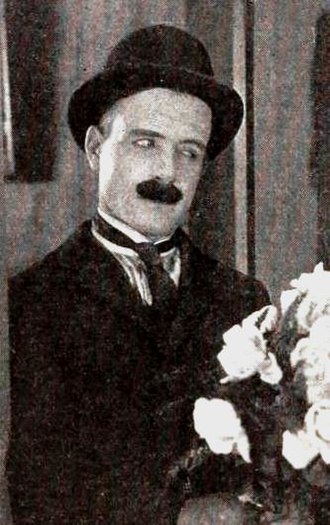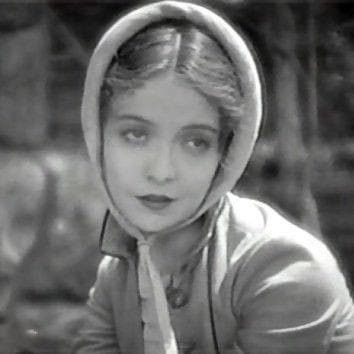
Know Thy Wife (USA,1918)

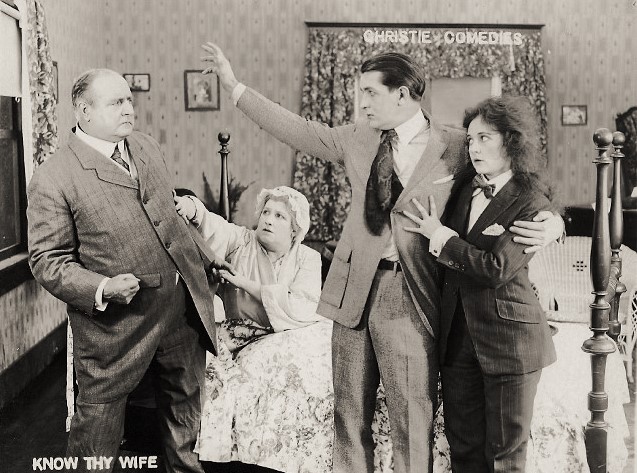
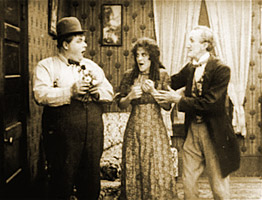
In this typical situational comedy, Bob is a lad away from home and he met and fell in love with Betty. In the beginning of film she asks him what his parents would think of her. He told her she should wait and see what would happen, as he had the right to pick out his own wife. That answer did not sound very promising. Perhaps it was a kind of sixth sense that made Betty wonder it?

However, his parents were looking forward to Bob return home and they had their own matrimonial plans to his son, including choosing a prospective wife to him called Lillian. Lillian really looked wealthy and socially respectable, as it was said on one of intertitles.

Bob got shocked when he knew his parents had already chosen a wife to him. Seriously, it was something quite outdated, even for 1918 standards, but comedies are not often realistic, so let’s not think about it. 

One day Bob received a letter from his parents, saying that they would love him to bring his roommate home, so he could be the best man of his wedding. And this is how Bob brought Betty home, disguised as his old friend, Steve. 

Then, Bob’s parents made him take Lillian to the theater, while Bob’s father took Steve (who was actually Betty in drag) –against his will –to see the bright lights. What could possibly go wrong? Some women flirted with poor Steve. On the other hand, Lillian tried to get closer to Bob. Then, Bob and Lillian coincidently show up after the theater in the same restaurant his father and Steve were and all of them start sharing the same table. 

After a while, it was impossible to hold that lie any longer and Bob ended up confessing to his parents he had married Betty. Fortunately, his parents ended up reacting very well to the sudden news and Betty got along very well with her in laws. 

Although the plot ended up being too compressed in such short film and the gags could be exploited for a longer time, the film is rather light. The gags were by non means innovative, but it is a cute romantic comedy, with a sophisticated touch and beautiful scenery and clothing. 

Flapper Fever (USA,1924)

Like most situational comedies, this one also talks about equality of genders and marriage. 

At the Rosebud Theater, located in the town of Bird Center, there will be a presentation by the Rawsbury Sisters and the local men are very excited about it in advance. We can see by the placard that the girls would not wear lots of clothes in their act and their legs were bare. How outrageous! The actresses clearly represented the 1920s young liberated women, the so-called flappers. 

By the way, in one of intertitles it is mentioned that the guys were not exactly Valentinos, in a clear reference to Italian actor Rudolph Valentino, then at the height of his popularity in America, as a symbol of beauty and desired by many women. Another mention to Valentino is made in “The Sheiks of Bird Center”, which was a reference to his most famous film. 

The guys were very excited about the show in the opinion of their wives, who are not happy with their husbands’ behavior. The wives are defined as “watch dogs”, which signals their morally strict posture, related to Victorian values and they are also older than the actresses. We can see here another traditional prompt in 1920s comedies: Henpecked husbands. So, the wives bring them to the purity league, probably to avoid them to misbehave during the Rawsbury Sisters act.

However, the husbands would not miss the opportunity to meet the girls in person and they went to the hotel where the actresses stayed to greet them. Unfortunately to those men, their wives caught them red-handed having fun and dancing with the actresses at the hotel. But the guys would not give up the actress so easily. So, the wives tried to censor the Rawsbury Sisters’ act by inspecting their costumes and act before they appear at the theater, as one of intertitles says. And the opposition of Victorian X modern 1920s moral standards gets even more noticeable in this part of the film. Such clash would remain unsolved and not even the misunderstanding in the end of the film could sweeten the wives. 

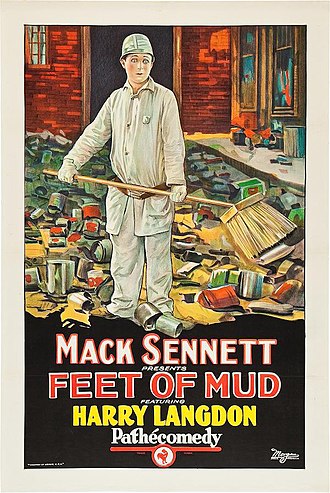
Feet of Mud (USA,1924)

The character that would bring Harry Langdon world fame was already fully well-rounded in this film. There was a football game (American football, to be more precise) between the Mohicans and the home team. Then we are introduced to Harry Langdon’s character, naive, not understood by others and helpless on circumstances around him. Langdon is in love with a girl who has another suitor and was a substitute in the football team, merely because there were not better players available. 

Football is always a very physical sport, but that specific game seemed to be particularly violent and players left the field in a very bad condition, looking more dead than alive. Comedy films about physically weak guys who overcame difficulties were common and were made even by the most famous comedians of silent era, like Charlie Chaplin, Buster Keaton, Harold Lloyd. So, this is Langdon’s version to a rather known comedic plot. 

Langdon is called to play and the audience does not take him seriously, specially because he was not a strong, muscular man. However, against all odds, Langdon got to stand out in the game. 

Then, he tries to marry his sweetheart, but her father did not give his permission, unless Langdon got to keep a job with the City Engineer. The girl’s father wanted Langdon to be as skilled in his professional life as he was in the football field. The “engineering” job ended up being street cleaner in a rather crowded and busy city, full of garbage. Langdon tries to do his best in the new job, but he cannot help being involved in many troubled situations. 

Langdon catches the train and finds himself in the Chinese area, where a kind of inner war was going on. His sweetheart shows up there with her father and a group of tourists. Violence suddenly escalates, the girl is in danger and it’s Langdon who saves her despite all his initial fear. 

The Chinatown was portrayed in a rather stereotyped way, as a place of poverty, violence and a kind of exotic curiosity to be seen by white tourists. Those jokes can be considered ethnically insensitive. 

When Love Took Wings (USA,1915)

This film is ahead of its time with regard to showing airplane scenes. Nevertheless, it was not new in Keystone studios, which had been making films with airplanes since its very first year, being “A Dash Through the Clouds” (USA, 1912) a fine example of a early Keystone film with very this same sort of plot. 

This is a typical Keystone film of 1910s, with a plenty of broad gestures and physical humor, including the traditional kick on the butt gag. 

In a unspecified rural area, a girl (played by actress Ollie Carlyle, who was somehow physically similar to Mabel Normand, then a star of Keystone studios), had a very jealous father and three suitors. Those characters lived in a rural area and all suitors tried to get the girl’s love. The suitors are in conflict among themselves and with the girl’s father, but nothing prevented the suitors from keep on coming. Not even the risk of being beaten by her father keep those men away from the girl. 

The girl is taken out of home, against her will, by one of her suitors. Her father calls the police. Another suitor finds them and a fight starts. 

Then, ‘Fatty’ Arbuckle and the girl see an airplane and they fly away. Yes, they were minding their own business and suddenly found a empty airplane. A chase happens, with cars and even a bicycle trying to reach the airplane. Despite all mess, both Fatty and the girl landed without a scratch. And they both tried to get married, but something unexpected prevents the marriage from happening. 

At the end, the suitors end up giving up the girl, although one of them unwillingly remain. Actually, he was forced by her father to marry her, as the other two suitors had already run away. 

This film, no matter how exaggerated it is, gets to show the influence of some recently invented technological items in daily lives of people, like the telephone, car, airplane, etc. The chases involving different means of transportation were relatively common in comedies of this studio and were often very funny, also giving a modern touch to those films in the eyes of audiences of the era. 

Fatty’s Chance Acquaintance (USA,1915)

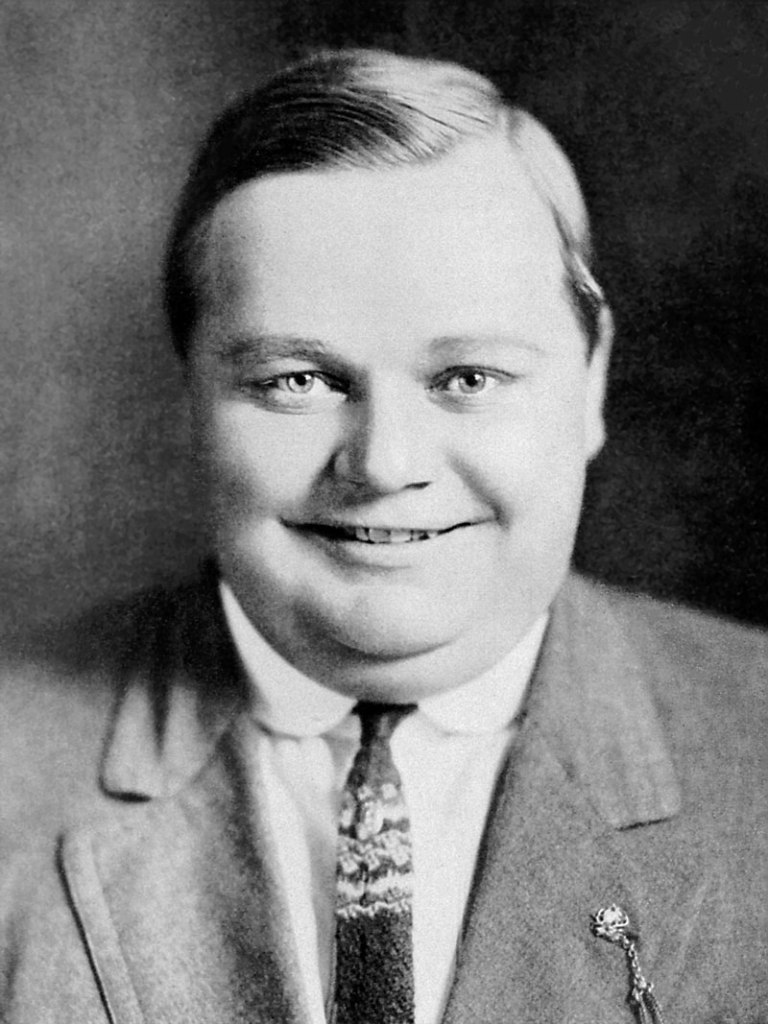
Actor Roscoe ‘Fatty’ Arbuckle, in his first years at Keystone studios, often played roles of helpless men who behaved like babies. Not the best characterization by Arbuckle, but he fortunately honed his humor and played more sophisticated roles after a short time in his cinema career.


In this film it is visible a common example of setting in silent comedies of the era, which is the use of parks. They were widely employed by directors due to their natural lightning and beautiful landscapes, everything for free.


In this specific film Fatty, who seems to behave like a grown up child, is a henpecked husband and he is even beaten by his wife in public. They both sit on a bench in a park while the wife mercilessly oppressed Fatty.


Meanwhile, a pickpocket arrives at the park with a pretty female companion. Fatty’s wife refuses to buy him a soft drink. A short time later, he drinks some water in a outdoors water fountain and ended up talking briefly to the pickpocket, who soon leaves.


While the wife stays alone, she falls asleep. The pickpocket approaches and takes money out of her purse. She does not realize she was robbed, but a policeman witnessed everything. While the theft happened, Fatty spots the pickpocket’s friend and starts flirting with her.


The policeman confronted the pickpocket, who got to run away. Fatty gets his wife’s purse while she’s asleep on the park bench and goes to a restaurant with the other woman, where they have an ice cream. Unfortunately, Fatty did not realize his wife had just been robbed and there was no money in her purse. In the next scene, we can see the policeman was still trying to catch the pickpocket, without much success.
Then, another couple sits besides Fatty’s wife. She awakes and thinks it was that couple who stole her purse. And she tries to take the woman’s purse away, without realizing it was NOT her own purse that the other woman was holding.


When Fatty had to pay the restaurant bill, he realized there was no money in his wife’s purse. Then, he returns to the park, where he meets the pickpocket again. Fatty gets some money with him to pay the bill. The pickpocket gets very angry after realizing Fatty had taken his girl to the restaurant and a there is a fight between both men.


Fatty’s wife finds her purse and sees him embracing the other woman at the restaurant. While the pickpocket is laughing at Fatty’s misfortune from a distance, the policeman returns and finally gets to arrest the criminal. As expected, the film ends with Fatty’s wife beating him due to his flirting out of turn.

Fatty’s Faithful Fido (USA,1915)

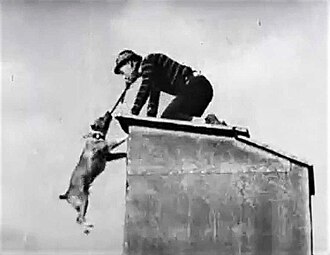
In the beginning of film we see a cute scene of Fatty drinking water with his dog Fido. Both of them are close to a Chinese laundry. Fatty enters the place together with Fido and there are some women sweeping the floor. Both Fatty and Al St John love the same woman and the men end up fighting in front of the laundry. The guys keep on antagonizing each other in a typical slapstick fashion and such situation gives room to a plenty of physical gags, including throwing bricks and Fido mercilessly trying to bite Al St John at all costs.


There is a ball at the Chinese laundry and we can clearly see that the woman likes Fatty more than Al St. John. In this scene we can see that Fatty was more agile than it seems at first. Al St. John arrives at the ball, he confronts Fatty and at that same night he hires two other tough man to beat Fatty up. They’d be supposed to identify Fatty based on a cross that was marked on his back. However, that mark was deleted and Al St John had the same cross marked on his back, so the guys mistaken Al St. John for Fatty and starting beat up Al St. John.


Fatty arrives in the middle of this fight and realizes he also had that same cross on his back and he attacks Al St. John too, which causes a generalized violence outbreak in the ballroom. Not even poor little Fido was spared.


As always in Keystone films of 1910s, the physical gags were beautifully performed, mostly due to above-average acrobatic skills of Al St. John (whose legs seemed to be made of rubber in some scenes) and of Roscoe ‘Fatty’ Arbuckle. The supporting actors were regular players of the studio and equally used to play these kinds of films. The gags are rough, even gross, for nowadays’ standards, but slapstick humor was far more common at that era and those films were a huge success, specially among working classes and immigrants, who were the bulk of cinema audiences in the United States at the silent era. Such films had a universal humor, easy to be understood and it did not really matter whether the audiences were formed by foreigners or nationals, which was a factor that helped building up the American identify of immigrants who recently arrived at the country. 

Plagues and Puppy Love (USA,1917)

Actor Larry Semon was a famous silent comedian with a pretty distinctive style. His films had the style of cartoons, with a plenty of chases (often involving more than one means of transportation) and special effects. The cartoon influence is no coincidence, as Semon used to be a cartoonist and graphic artist prior to his career in films. His films also had elaborate sceneries and a good edition work stringing the gags together.


In the first scene we see a rather cute girl walking her dog in a unusual way, which gives a funny touch to the scene. Then, there is a man with a big fake beard behind her. The girl rejects the man and keeps walking (running, actually). She sits on a outdoors bench and the man sits besides her. Then she realizes there was already another man sitting on the bench and she does not get happy about it.

All of a sudden, it appears a man who was behind the bushes and this third man also sits on the bench. Apparently, the girl had a plenty of prospective suitors, although all of them seemed to bore her to death. As if it was not enough to have three suitors, a fourth man shows up. He was a policeman and got to kick out all the other men, but he did not please the girl either and ended up being bitten by her dog.


After a short time, Larry appears and she seems to like him very much. Even her dog was very pleased to see Larry. While the policeman confronted Larry, the other three suitors showed up again. Larry managed to kick out the policeman and in this very scene we can see a special effect similar to those of cartoons that is very typical of films by actor Larry Semon.


But the other suitors do not give up and here they are again. Anyway, the dog was able to get rid of them this time, although the dog was really tiny. Judging by the speed and fear of those men we could think they were running from a lion or any other wild animal.


Larry had problems with some kids, who tie up the dog with some balloons as a revenge. Consequently, the dog ended up flying away. All other suitors show up once more and the girl promises her “hand and fortune” to the man who gets to save her dog. This generates a chase involving all characters of the film, who tried to save the dog as fast as they could.


The dog finally landed safely in the hands of his owner, then Larry goes away with the girl in a balloon, together with the dog. The other suitors try to prevent them from leaving, but it is useless. 

The Midnight Cabaret (USA,1923)

There appeared three men in a house, all of them with completely fake beards and they start opening a hole on the floor. Then, we suddenly see three other people eating on a fancy table, two men and a girl. 

We soon realize that the men with fake beards were located in upstairs floor to the one where the three other people were having a meal and the bearded men “fish” the food from those people who were eating on the table with the assistance of a piece of rope and hooks.  

The people on the table were served more food. At the same time, the girl left to another room with a chubby guy. While the food was served, the bearded men fished the whole tray. It brings some disturbance to the people who were eating on the table, as it’s not always easy to lift food to the upstairs floor without spilling any of, after all.

Meanwhile, the girl was dancing in the ball room with the chubby guy and a generalized fight took place, which made some of those men being kicked out of the place. In the middle of all mess, the girl was crying and was comforted by a waiter

A short time later, the waiter and the girl share a table and eat some ice cream. The men gather together, go upstairs and ask for some help from the bearded men who were “fishing” their food.  They wanted the help to teach a lesson to the guy who was sharing a meal with the girl. So, all guys throw a piece of rope from upstairs’ hope. The guy who was on the table with the girl was smoking and accidentally sets the tip of the rope on fire. It would not be a big deal weren’t for the fact that there was a bomb tied on the other tip of rope. The bomb fell down and ended up on the table where the girl and the waiter were sitting. But the waiter gets to throw the bomb on the street before it explodes.

The guys try to throw another bomb from the upper floor, but the waiter gets to prevent it from exploding. Actually, the waiter escaped all attempts of throwing a bomb at him by the other guys.

The waiter run away and took shelter in a ball room. He was followed by the other guys, who carried guns and tried to shoot the waiter, but it does not work and the waiter got to escape unscratched all threats against his life. 

This film has some simple, but effective, special effects and a quick slapstick pacing, which are the strong points of this film. Physical gags were just average, which was compensated by good edition and camera use.

Don’t Park There (USA,1924)

Urban chaos x countryside peacefulness was already an issue in some places back to 1920s, which makes this comedy relate to modern-day audiences more than average silent films would. The subject matter has not really got old.

The perplexity of the countryman, who had to go to the city to purchase things, is something we can easily understand and the fact that nowadays big cities are far busier than the city portrayed in this film only makes the gags funnier. 

The countryman is played by Will Rogers, a actor who who would become quite famous a short time later. He played the role of a countryman who lived in the White Horse Ranch, which was located far back in the woods. It is easy to assume that its dwellers were not often in touch with big cities. Roger is given the assignment to purchase “a bottle of Doane’s Horse Liniment”. After a while, he reaches the edge of town and slowly streets become busier with both cars and people. Rogers, his horse and slower life pace represent symbols of a era that was already fading back to 1920s.

The car was one of symbols of modernity. And it is even shown a Ford factory. Rogers managed to easily enter the factory and ended up taking one of its cars without anyone opposing resistance to it. He has lots of difficulty to drive among the heavy traffic of busy streets of the city. Then, he has to face the challenge of finding a parking space, perferably near a drugstore. There were not vacancies available and parking limitations did not make any sense to the countryman, who was not really used to those rules. He ended up parking the car extremely distant from his destination.

This situation gives room to some very funny gags involving cars, which was not something uncommon in filsm produced by Hal Roach studios, and such gags were even present in some Laurel and Hardy late silents. 

Finally, the end has a touch of irony. After Rogers finally reaches the drugstore and tell the salesman what he wants to buy, the salesman tells him that the liniment has not been produced for twenty years, which definitively shows that the country dwellers were no longer in touch with the modern world and its trends.

Do You Love Your Wife? (USA,1919)

In this film we can already see the situational comedies by Hal Roach studios at their full splendor with all typical elements: slower pace compared with slapstick comedies (specially those produced by rival Keystone studios in the 1910s), a focus on realistic situations in more sophisticated settings, witty intertitles. One of most common subject matters of Hal Roach films.

A young Stan Laurel plays the role of a janitor in rather average gags and this film does not really indicate he would become a start less than a decade later. 

There is a mention to a “vampire” and we can’t help remembering Theda Bara, who reached the peak of her short-lived popularity back to 1910s by playing the role of mysterious vamps, who seduced men, wrecked their marriages and brought them to ruin and misery. Of course a “faithless husband” (who is dressed up in a fairly sophisticated way, which leads the audience think he might be a wealthy man) falls prey to her seductiveness. Well, she is not as seductive as she could be and the parody of the screen vamp generates some funny gags, like when the vamp is rather to kiss the unfaithful husband, she ends up sneezing.

The janitor causes a plenty of embarrassments with his vacuum cleaner while he is cleaning the hall in a hotel, specially when he accidentally vacuums the dress of a young lady. 

After a while, the husband is caught in the act with the vamp by his wife and she claims she is going to shoot both him and the vamp. The janitor hears the noise of a shot, enters the room. Meanwhile, the vamps trying to defend herself by throwing a vase on the enraged wife, but ends up hitting the janitor instead. 

After another incident, the unfaithful husband realized the vamp was flirting with another man right under his nose. He realizes he was wasting his marriage with a good woman and decides to reconcile with his wife, to the amazement of the janitor, who had just witnessed the wife about to shoot her husband. 

A Prodigal Bridegroom (USA,1926)

Compared with 1910s comedies that made his former Keystone studios famous, Mack Sennett really adjusted his short films to tastes of audiences of the Jazz Age. This film is more situational-oriented, slower and intertitles were all witty, in the same style that made rival Hal Roach studios famous. However, some characteristics of the previous decade output with Keystone studios remain alive in this film, like ridiculous fake beards and eccentric characters.


This is a witty comedy and, although it talks about common-life situations, it devises some gags based on absurdity (specially on how ridiculous people they can behave when completely in love) and stereotypes on country people. There’s a fine cast, with some of most popular actors of Mack Sennett studios back to 1920s, specially cross-eyed Ben Turpin, who was at the height of his career. Speaking of Turpin, the first intertitles of the film provide a good sum up of his career (which started before 1910) and how his artistic style was honed throughout the years. It’s very much worth paying attention to this reading.


It was hard to be more eccentric than Ben Turpin and his cross-eyed figure. He plays the role of Rodney St. Clair, a poor boy who was happily in love with Lizzie Boone, a rather innocent, hayseed country girl (played be actress Thelma Hill). They both enjoyed their love in idyllic countryside scenery and peace ruled. Although they were about to get married, both Rodney and Lizzie also had unrequited love from other suitors.


Things started changing when Rodney went to a big city in order to earn some extra money (“butter and egg money”) and attracted the attention of gold-digger vamp Gertie Gray (played by Madeline Hurlock). Gertie was the opposite of Lizzie. The vamp was modern, cosmopolitan, dressed up according to the latest fashion, but she was a sneaky person.


When Rodney is back home the wedding was already ready, but he unfortunately ended up taking the vamp woman home with him, without any consideration for Lizzie’s feelings. Then, Rodney tells an absurd (and unreal story) on how he had met the vamp in the big city and why his marriage with Lizzie was supposed to be off.


Finally, Rodney learns on the real unfaithful character of the vamp woman, who kissed a plenty of men behind his back, including his own father, which even caused a fight between father and son. The role of Rodney’s Father was played by Andy Clyde, in a hilarious performance of an aged man, with a ridiculous fake beard, who couldn’t accept his old age.


But it was too late for him to return to Lizzie. She had already married her other suitor, while Rodney was left all alone, with both of his former sweethearts turning their backs on him. 

São Paulo, a Metropolitan Symphony (Brazil, 1929)

Rhythmic cutting, machine movement, a progressist place, being driven by the industrialization and its hardworking inhabitants. A promising city, which would soon be one of most economically strong cities of Latin America. Or at least, that was the view of the film makers, who were clearly influenced by the film Berlin, Symphony of a City (1927).

The industrial vocation of São Paulo is fully shown in this film, alternating the movement of machines with showing its dwellers in a collective way. Perhaps the only exception to this collective mentioning of people is the historical reconstitution of Independence proclamation of Brazil, which took place at September 7th 1882. The reconstitution is rather romanticized, showing it as a act of bravery against the oppression of Portuguese colonizers, which was expressed in the rather famous expression (supposedly said by future emperor Dom Pedro I, “Independence or death”). 

It is interesting that the director did not avoid showing the poorest citizens and focused on a wide range of people. It was even mentioned the fact that there were beggars in the city, although they were not directly shown and the needy citizens would be supported by the generosity of the wealthier ones. 

While people were shown, it was also highlighted the means of transport (mostly cars, streetcars and trains). We can see that nearly everyone who walked on the streets were men, which involuntarily portrayed feminism in Brazil pretty accurately. Apart from the environment of elementary schools, taking and picking up children from schools and one or two women dentists in the Odontology College, we do not really see women both in outdoors environments or working out of home. Women were much more socially limited there than their counterparts in Northern hemisphere. For instance, divorce would only be officially approved in Brazil in the 1970s and, apart from being teachers and nurses, female work was not really common among middle classes and, actually, frowned upon by many people, including women themselves, who would find it shocking and against the nurturing female nature. 

It is very interesting that a penitentiary was shown and portrayed as a place where inmates received a human treatment because crime was considered merely a “moral disease” and reformation was quite possible. And criminals themselves worked both in the penitentiary itself and were occupied with manual labor and treated with military discipline and it was made clear to them that discipline would be a decisive factor for them to succeed once they were reintegrated into society again. Inmates were also exposed to the Catholic church (which matches the fact that the entire Latin America was strongly Catholic at the time) and it was made clear that religion was not something mandatory, probably to avoid audiences consider that proselytism was taking place in the prison and to emphasize that the religious teaching and masses were mostly part of the attempts to improve moral values of criminals.

Another interesting thing is that the city, both among poor and wealthy citizens, was always ordered, morally organized. Even when people were having fun out of home they were never seen engaged in drinking, womanizing, or in any illegal activity. After all, they were law-abiding, honest citizens, working hard to build a better, urbanized country being grounded on the wonders of technology. Not coincidently, we see airplanes in the end of the film, one of utmost symbols of technology and progress back then. At the same time, it is implied the huge influence of exportation of coffee and coffee plantations in the income of São Paulo, which shows how agricultural São Paulo still was despite all urbanization and industries. 

The role of sports and military were also praised in this film, as being both beneficial to youths (all of them men, btw) and that the military were working to build a better country with their bravery. A touch of militarism, which is too clear to be ignored and its influence was present in the overall culture of Latin American countries both in 1920s and 1930s. This is not surprising specially because São Paulo was also already at the 1920s the city that received the bulk of Italian immigrants in Brazil and Mussolini’s fascism was already a nasty reality in Italy since 1922.

Create a website or blog at WordPress.com

Up ↑